Vai ai contenuti

Biathlon - Le Olimpiadi d'Italia

Salta menù
LE OLIMPIADI D'ITALIA
Salta menù

Biathlon

TORINO 2006 > LE GARE > Sci > Nordico
BIATHLON

Fucile sulla spalla, a caccia di medaglie

Rifle on the shoulder, chasing medals

La resistenza fisica di un atleta che deve coprire 20 km di sci da fondo, la fredda precisione di un tiratore che deve colpire cinque bersagli, la ferma volontà di un campione che deve superare molti concorrenti, tutti ben addestrati

The physical endurance of an athlete who has to cover 20 km of cross-country skiing, the cold precision of a shooter who has to hit five targets, the firm will of a champion who has to overcome many competitors, all well trained
BIATHLON: POTENZA TEDESCA - BIATHLON: GERMAN POWER

È Michael Greis l'uomo simbolo del dominio tedesco nel biathlon a Torino (ben 11 medaglie, 6 dalle donne, seguono Russia e Francia con 2 ori a testa): il ventinovenne bavarese contribuisce al successo della staffetta e vince anche la 20 km individuale e la 15 km con partenza in linea, lasciando all'asso norvegese Ole Einar Bjoerndalen un argento e un bronzo. Bjoerndalen che puntava a vincere in tre Olimpiadi consecutive ed è invece il simbolo di una Norvegia senza medaglie d'oro, dimostra cosa significhi lo spirito dei Giochi: "Mi ha battuto uno dei rivali più forti. Non ho rimpianti, è stato Greis a superarsi". Ma il biathlon vede anche la squalifica della russa Olga Pyleva, privata dell'argento nella 15 km, perché non sfuggita ai severi controlli antidoping. Nel biathlon ai XX Giochi olimpici invernali,  vennero assegnate medaglie in dieci specialità. Le gare si sono svolte dall'11 al 25 febbraio sulle piste di Cesana-San Sicario.
Michael Greis is the symbol of Germany's dominance in biathlon in Turin (11 medals, 6 from women, followed by Russia and France with 2 gold medals each): the 29-year-old Bavarian contributes to the relay's success and also wins the 20 km individual and 15 km mass start, leaving Norwegian ace Ole Einar Bjoerndalen with a silver and a bronze. Bjoerndalen, who was aiming to win three consecutive Olympics and is instead the symbol of a Norway without gold medals, demonstrates what the spirit of the Games means: "One of my strongest rivals beat me. I have no regrets, it was Greis who outdid himself." But biathlon also saw the disqualification of Russia's Olga Pyleva, who was stripped of silver in the 15 km, because she did not escape strict doping controls. In biathlon at the XX Olympic Winter Games, medals were awarded in ten specialties. The races took place from February 11th to 25th on the Cesana-San Sicario slopes.


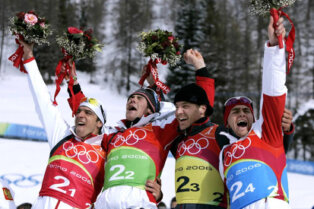
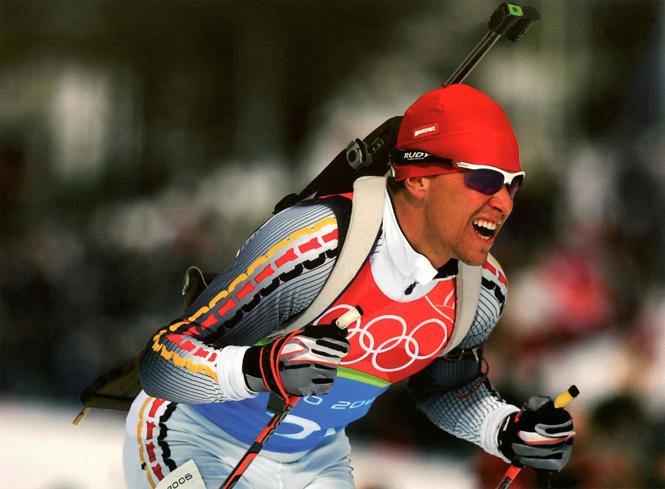
Grande protagonista del biathlon maschile di Torino 2006, il tedesco Michael Greis, vincitore di 3 medaglie d'oro, qui nella 4x7,5 km (dal Rapporto Ufficiale)
The men's biathlon event at Torino 2006 was dominated by Michael Greis of Germany (seen here in the 4x7.5 km), who won three gold medals

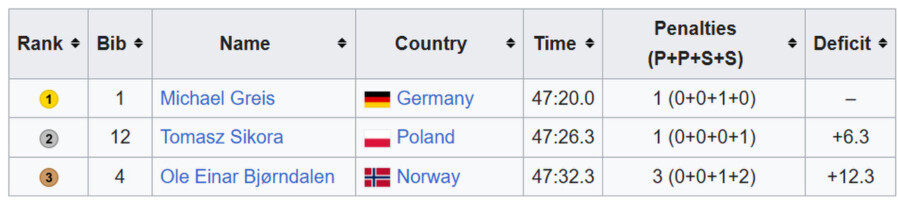
La 20 km individuale è la disciplina più lunga e dura tra le specialità di Biathlon e si è svolta il primo giorno di gara dell'Olimpiade. La vittoria è andata a Michael Greis (Germania Germania) che ha preceduto Ole Einar Bjørndalen (Norvegia Norvegia) per soli 16 secondi, dopo che questi aveva quasi compromesso la sua gara a causa di alcuni errori ai primi poligoni, poi recuperati con la prestazione sciistica. Il terzo gradino del podio è andato a Halvard Hanevold. Greis si è poi ripetuto nella 15 Km in linea, battendo il polacco Sikora e il norvegese Bjørndalen.

The 20 km individual is the longest and toughest discipline among the Biathlon specialties and took place on the first day of competition at the Olympics. Victory went to Michael Greis (Germany) who beat Ole Einar Bjørndalen (Norway Norway) by just 16 seconds, after he had almost compromised his race due to some errors at the first ranges, which he later recovered with his skiing performance. The third step of the podium went to Halvard Hanevold. Greis then repeated his feat in the 15km road race, beating Poland's Sikora and Norway's Bjørndalen.
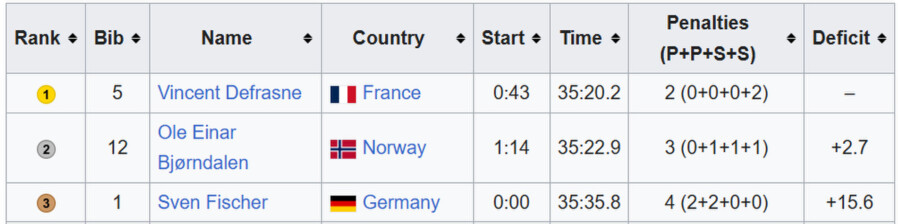
La 10 km sprint  vede la seconda affermazione tedesca alle olimpiadi di Torino 2006 con la vittoria di Sven Fischer (Germania Germania), detto Lo squalo grazie alla prova al poligono senza errori. Il tedesco ha preceduto due atleti norvegesi: Halvard Hanevold e Frode Andresen, quest'ultimo molto abile sugli sci. Al tedesco, però, non è riuscita l'impresa della doppietta come al suo connazionale Greis e nella 12,5 Km ad inseguimento si è dovuto accontentare del bronzo, preceduto dal francese Defrasne e dal norvegese Bjørndalen.
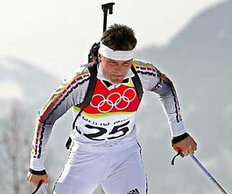
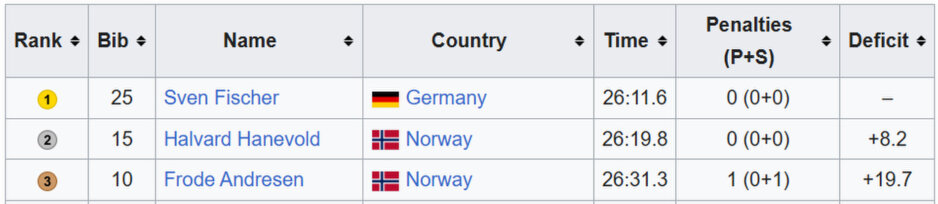
The 10 km sprint saw Germany's second victory at the 2006 Turin Olympics with the victory of Sven Fischer (Germany), known as Jaws thanks to the error-free test on the shooting range. The German preceded two Norwegian athletes: Halvard Hanevold and Frode Andresen, the latter very skilled on skis. The German, however, failed to achieve the double feat like his compatriot Greis and in the 12.5 km pursuit he had to settle for bronze, preceded by the Frenchman Defrasne and the Norwegian Bjørndalen.
Sven Fischer
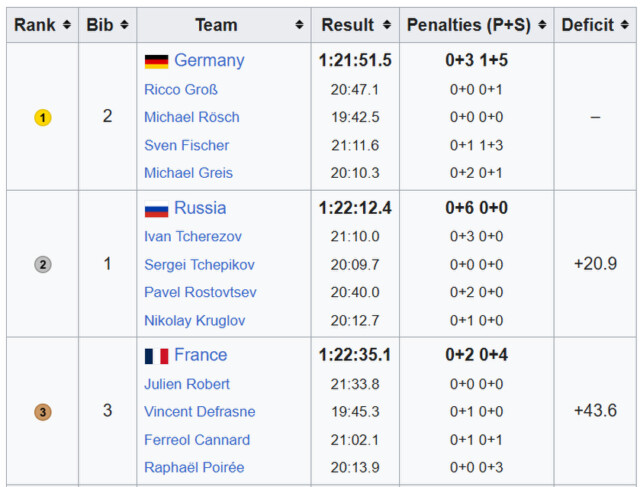
Con la vittoria nella staffetta 4x7,5 chilometri, la Germania conquistò la sua quarta medaglia nel biathlon in queste Olimpiadi Invernali.
Già dopo la terza delle otto prove al poligono di tiro, la squadra tedesca, formata da Ricco Gross, Michael Roesch, Sven Fischer e Michael Greis, aveva un buon vantaggio su tutti gli inseguitori, tanto che concluse la gara con 20,9 secondi di vantaggio sulla Russia, medaglia d'argento. Terzo posto per la Francia, che allo sprint finale precedette la Svezia, grazie anche ad una caduta, appena prima del traguardo, dello svedese Carl Johan Bergman.
La Norvegia, grande favorita della vigilia, si è dovette accontentare del quinto posto, nonostante l'ultima strepitosa prova del cinque volte campione olimpico Ole Einer Bjorndalen.
With their victory in the 4x7.5 kilometer relay, Germany won their fourth biathlon medal at these Winter Olympics. Already after the third of the eight tests at the shooting range, the German team, made up of Ricco Gross, Michael Roesch, Sven Fischer and Michael Greis, had a good advantage over all their pursuers, so much so that they finished the race 20.9 seconds ahead of silver medalist Russia. Third place went to France, who finished ahead of Sweden in the final sprint, thanks in part to a crash, just before the finish line, by Swede Carl Johan Bergman. Norway, the heavy favorites going into the race, had to settle for fifth place, despite a stunning final performance by five-time Olympic champion Ole Einer Bjorndalen.
dal Rapporto Ufficiale

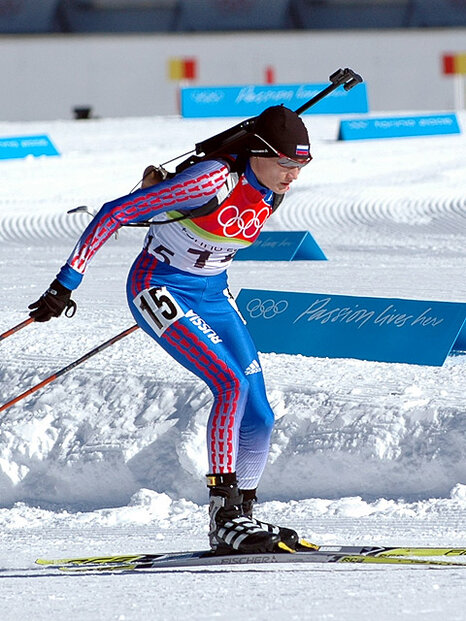
15 km individuale femminile - La vittoria è andata alla russa Svetlana Išmuratova, nota per la precedente lunga serie di podi senza alcuna vittoria. La tripletta russa è stata scongiurata da Martina Beck (Germania Germania), giunta terza dietro a Ol'ga Medvedceva. Quest'ultima dopo la gara è stata squalificata per doping e privata della medaglia d'argento che è andata alla tedesca Beck, mentre il bronzo è stato assegnato alla quarta, poi terza, Al'bina Achatova.
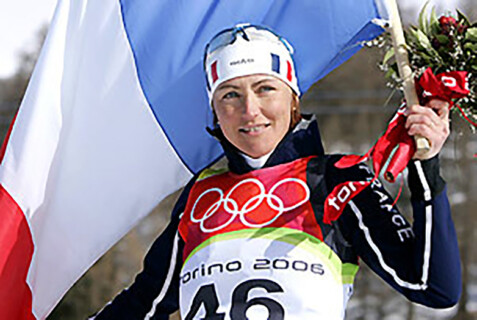
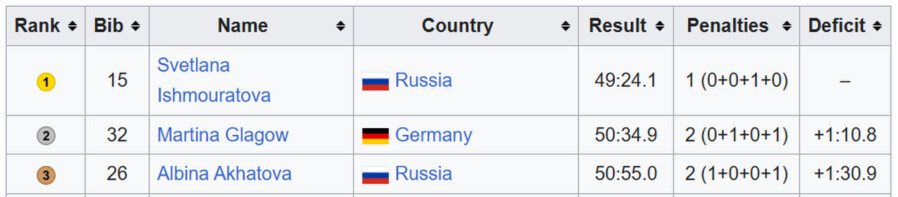
Women's 15km individual - Victory went to Russia's Svetlana Ishmuratova, known for her previous long run of podium finishes without a win. The Russian hat-trick was averted by Martina Beck (Germany), who finished third behind Olga Medvedtseva. After the race, the latter was disqualified for doping and stripped of the silver medal, which went to Germany's Beck, while the bronze was awarded to fourth, then third, Albina Akhatova.


Florence Baverel-Robert (dal Rapporto Ufficiale)
Svetlana Išmuratova (dal Rapporto Ufficiale)
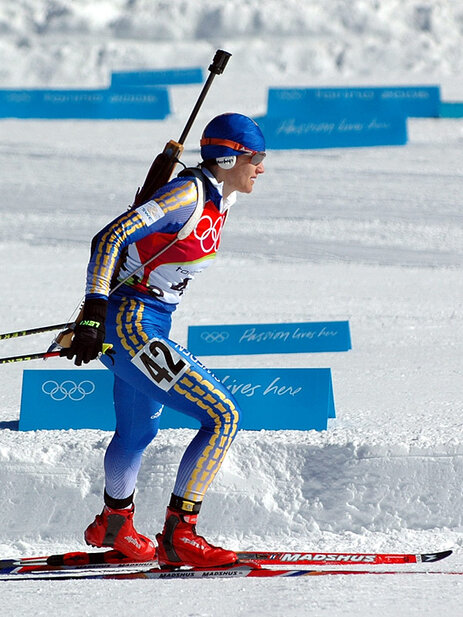
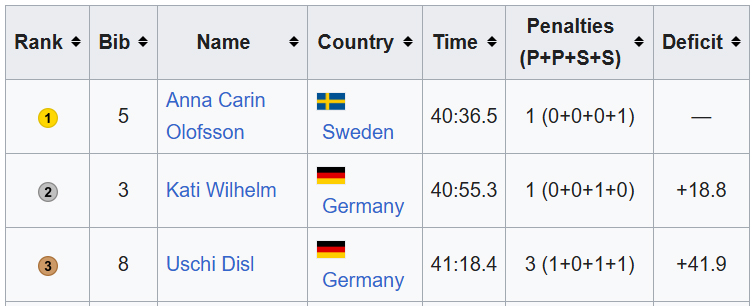
Anna Carin Olofsson (dal Rapporto Ufficiale)
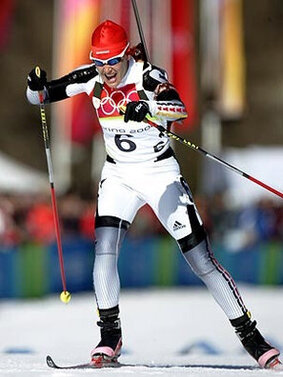
Kati Wilhelm (dal Rapporto Ufficiale)
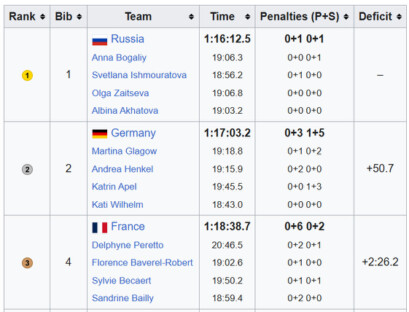
dal Rapporto Ufficiale
SALTO CON GLI SCI
SKI JUMPING
PATTINAGGIO DI FIGURA
FIGURE SKATING
Torna ai contenuti