Canoa
CANOA - CANOEING
Anche nella Canoa, le medaglie messe in palio erano 7: K1 e K2 uomini e donne, C1 e C2 uomini, staffetta maschile 4x500. Nel K1 e K2 la differenza tra i due sessi era data dalla distanza: mille metri peer gli uomini cinquecento per le donne.
Also in Canoeing, there were 7 medals up for grabs: men's and women's K1 and K2, men's C1 and C2, men's 4x500 relay. In K1 and K2 the difference between the two sexes was given by the distance: a thousand meters for men, five hundred for women.
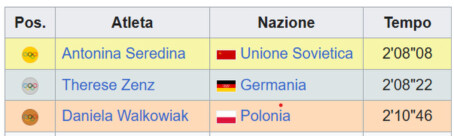
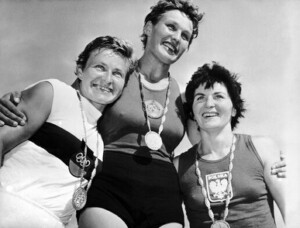
Alle finali delle competizioni femminili riuscirono ad arrivare solamente atlete del nord Europa: sovietiche, tedesche, polacche, ungheresi, svedesi, romene e danesi. La prima finale femminile fu quella del K1 dove vinse la sovietica Seredina, sebbene la tedesca Zenz le avesse dato filo da torcere fino al rush finale, al terzo posto la polacca Walkoviak.
Only athletes from Northern Europe managed to reach the finals of the women's competitions: Soviets, Germans, Poles, Hungarians, Swedes, Romanians and Danes. The first women's final was the K1 one where the Soviet Seredina won, although the German Zenz gave her a hard time until the final rush, with the Polish Walkoviak in third place.

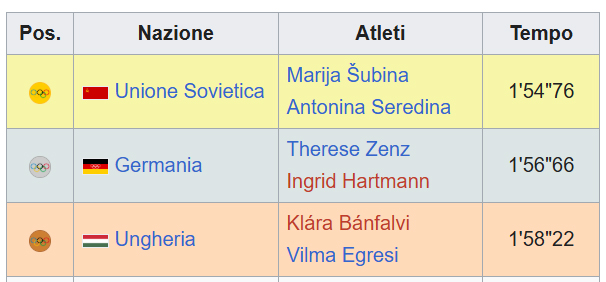
Le due avversarie del K1 si ritrovarono di fronte anche nella finale biposto, il lizza anche Ungheria, Polonia, Danimarca, Romania, Italia, Austria e Cecoslovacchia. Le sovietiche partirono bene seguite dalle solite tedesche. Fu un'altra battaglia fino all'ultimo metro ed ancora una volta la spuntarono le sovietiche, il bronzo se lo misero al collo le ungheresi.
The two K1 opponents also faced each other in the two-seater final, with Hungary, Poland, Denmark, Romania, Italy, Austria and Czechoslovakia also competing. The Soviets got off to a good start followed by the usual Germans. It was another battle until the last meter and once again the Soviets emerged victorious, the Hungarians put the bronze around their necks.
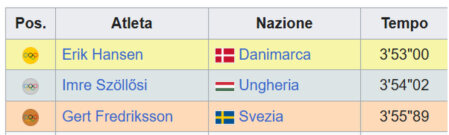
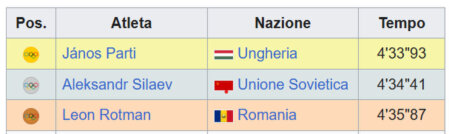
In campo maschile, cinque diverse nazioni si alternarono sul gradino più alto del podio. Cominciò la Danimarca che nel K1, con Erik Hansen, non incontrò difficoltà nel regolare al traguardo l'ungherese Szollosi e lo svedese Fredriksson. Quindi toccò all'Ungheria, nella monoposto canadese (C1), dove Janos Parti, dopo aver rintuzzato gli attacchi del sovietico Silaev e del rumeno Rottman, si presentò da solo al traguardo.
In the men's field, five different nations took turns on the top step of the podium. Denmark began, with Erik Hansen having no difficulty clearing Hungarian Szollosi and Swede Fredriksson at the finish line in K1. Then it was Hungary's turn, in the Canadian single-seater (C1), where Janos Parti, after repelling attacks from Soviet driver Silaev and Romanian Rottman, showed up alone at the finish line.
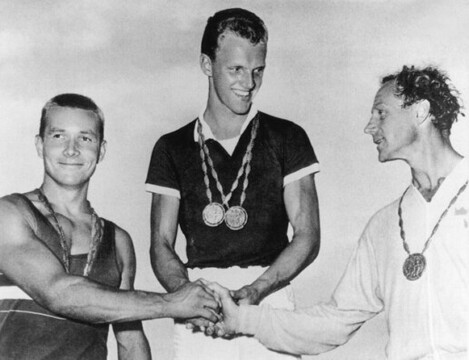
Erik Hansen
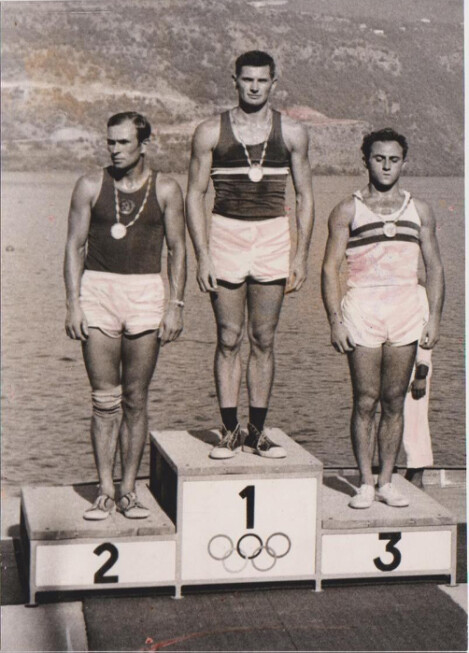
János Parti
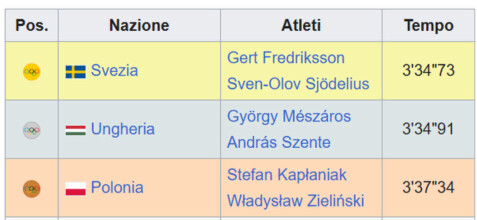
Nel K2, la gara più incerta ed attesa del programma, dove tornava in gara il campione olimpico svedese Gert Fredriksson, all'età di quarant'anni suonati. Si voleva vedere se il vecchio campione (già vincitore di 5 ori olimpici nelle edizioni dei Giochi di Londra '48, Helsinki '52 e Melbourne '56), sarebbe stato in grado di pilotare il partner Sven Olev Sjodelius alla prima vittoria olimpica.
In K2, the most uncertain and anticipated race on the program, where Swedish Olympic champion Gert Fredriksson returned to the competition at the age of forty. The aim was to see whether the old champion (already winner of 5 Olympic gold medals in the editions of the London '48, Helsinki '52 and Melbourne '56 Games) would be able to pilot his partner Sven Olev Sjodelius to his first Olympic victory.
Fino ai 500 metri l'impresa parve improbabile, dato che i sovietici avevano preso decisamente la testa della corsa seguiti dagli ungheresi, vale a dire i due equipaggi vincitori delle semifinali. Ma ai 600 metri Fredriksson ordinò al compagno di aumentare le frequenze delle pagaiate e in 200 metri riuscirono prima ad agganciare e superare i sovietici e poi ad appaiare gli ungheresi che riuscirono a battere per soli 14 centesimi di secondo (25 centimetri). Terzi i polacchi che beffarono i due sovietici, crollati nel finale.
Up to the 500 meters the feat seemed unlikely, given that the Soviets had definitely taken the lead in the race followed by the Hungarians, namely the two crews that won the semi-finals. But at 600 metres Fredriksson ordered his partner to increase the paddling frequencies and in 200 metres they first managed to catch up and overtake the Soviets and then pair up the Hungarians who managed to beat by just 14 hundredths of a second (25 centimetres). Third were the Poles who mocked the two Soviets, who collapsed in the finale.
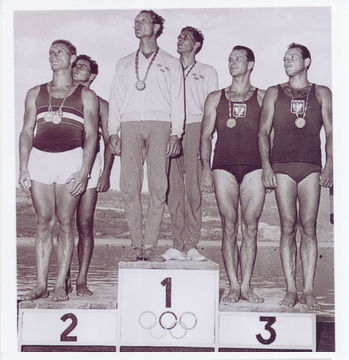
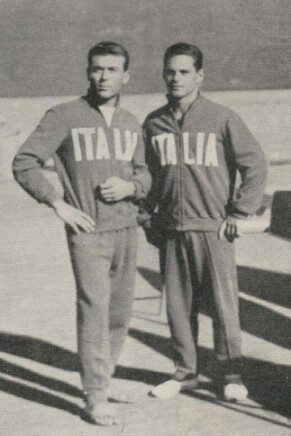
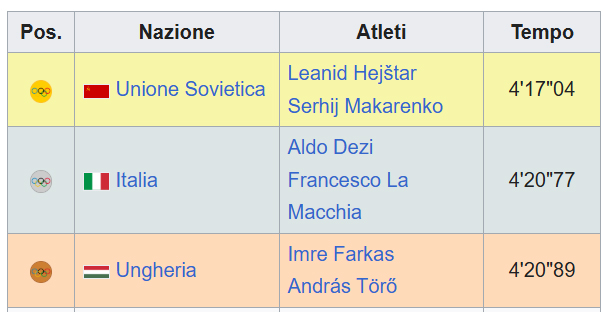
Nel C2 si profilava una sfida tra sovietici, italiani ed ungheresi. Era un evento molto atteso per la presenza nella finale di un equipaggio di casa. Alla partenza lo schieramento era formato da URSS, Italia, Ungheria, Francia, Romania, Austria, Cecoslovacchia, Bulgaria e Germania. Al via tutti gli equipaggi partirono come razzi per guadagnare subito una buona posizione. Per i primi 500 metri gli italiani riuscirono a tenere testa ai sovietici, poi Makarenko e Geyshter decisero di andar via e lo fecero con una facilità indescrivibile. Gli italiani tentarono disperatamente di resistere, ma fu un tentativo vano, i sovietici vinsero con quattro secondi di vantaggio proprio sugli italiani Francesco La Macchia e Aldo Dezi, terzi i magiari.
In C2, a challenge loomed between the Soviets, Italians and Hungarians. It was a highly anticipated event due to the presence of a home crew in the final. At the start, the deployment consisted of the USSR, Italy, Hungary, France, Romania, Austria, Czechoslovakia, Bulgaria and Germany. At the start all the crews set off as rockets to gain a good position at once. For the first 500 meters the Italians managed to hold off the Soviets, then Makarenko and Geyshter decided to leave and did so with indescribable ease. The Italians desperately tried to resist, but it was a vain attempt, the Soviets won by four seconds over the Italians Francesco La Macchia and Aldo Dezi, with the Magyars third.
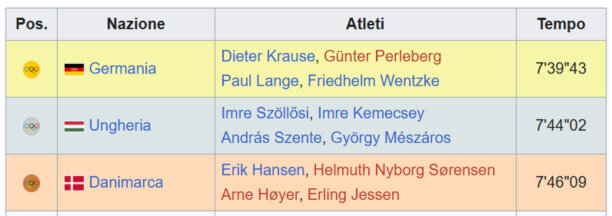
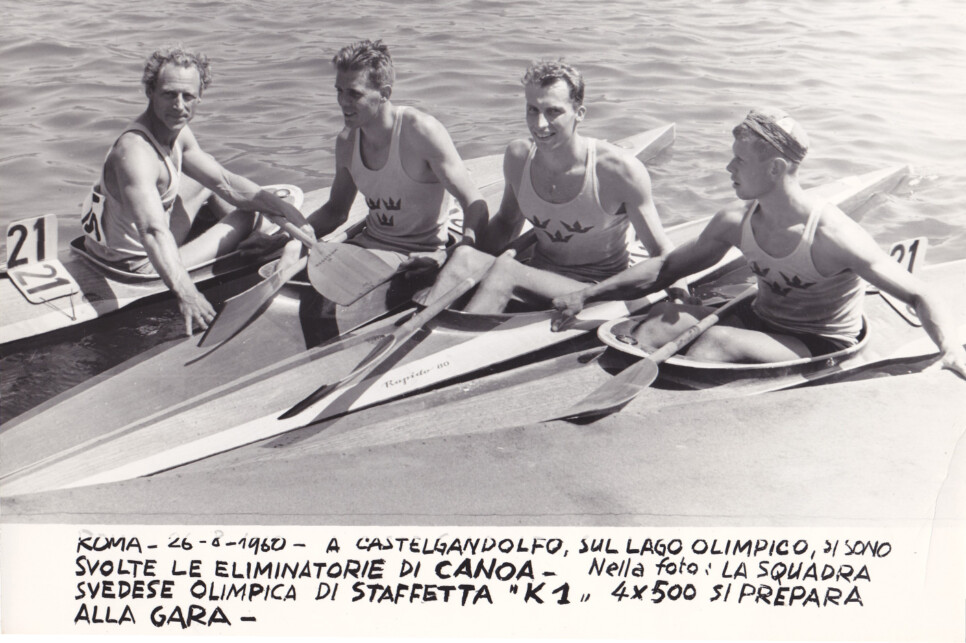
Il programma olimpico di canoa si concluse con la staffetta maschile K1x500, l'unica finale che si disputò con soli sei armi. Il quartetto tedesco formato da Dieter Krause, Friedhelm Wentzke, Paul Lange e Guenter Perleberg precedette di due secondi al traguardo i più leggeri quartetti di Ungheria e Danimarca.
The Olympic canoe program concluded with the men's K1x500 relay, the only final to be played with just six weapons. The German quartet of Dieter Krause, Friedhelm Wentzke, Paul Lange and Guenter Perleberg finished two seconds ahead of the lighter quartets of Hungary and Denmark.