Sciabola
GARE DI SCIABOLA - SABRE COMPETITIONS
Terminate le prove per le due specialità "elettriche", toccava ora alla sciabola, l'arma bitagliente, quella d'elezione degli ungheresi, che alle Olimpiadi vincevano ininterrottamente il torneo individuale dal 1924 e quello a squadre dal 1928. I turni eliminatori, iniziati l'8 settembre, così come quelli di semifinale, 9 settembre, filarono lisci ed in finale giunsero i favoriti, due per ogni scuola che primeggiava in questa specialità: quella ungherese (Karpati ed Horvath), quella polacca (Pawlowsky e Zablocky) e quella sovietica (Tyshler e Rylskyi), più l'italiano Calarese ed il francese Arabo.
Once the trials for the two "electric" specialties were over, it was now the turn of the sabre, the twin-sharp weapon, the Hungarian weapon of choice, who had won the individual tournament continuously at the Olympics since 1924 and the team tournament since 1928. The elimination rounds, which began on September 8, as well as the semi-final rounds on September 9, went smoothly and the favourites arrived in the final, two from each school that excelled in this specialty: the Hungarian one (Karpati and Horvath), the Polish one (Pawlowsky and Zablocky) and the Soviet one (Tyshler and Rylskyi), plus the Italian Calarese and the Frenchman Arabo.
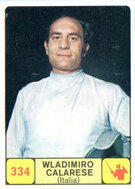
Kàrpàti si aggiudicò l'oro con cinque vittorie, subendo solo da Calarese e da Rylskiy, il suo compatriota Horwath, il francese Arabo e l'italiano si giocarono le atre due medaglie in un ulteriore spareggio che consegnò la doppietta ai magiari ed il bronzo a Wladimiro Calarese.
Kàrpàti won gold with five victories, conceding only to Calarese and Rylskiy, his compatriot Horwath, the Frenchman Arabo and the Italian. The other two medals were played out in a further play-off that gave the Magyars a double and the bronze to Wladimiro Calarese.
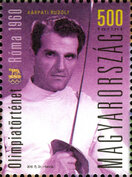
Rudolph Kàrpàti
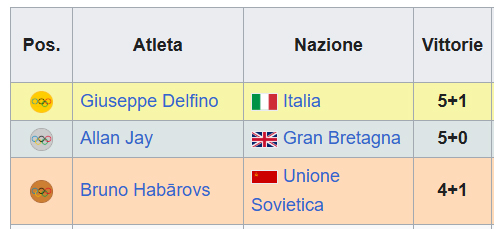
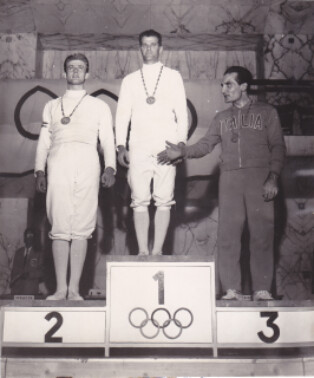
Il podio del torneo della Sciabola individuale

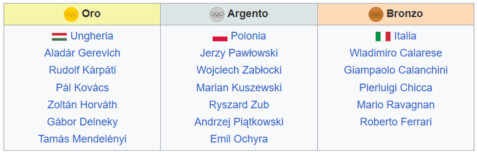
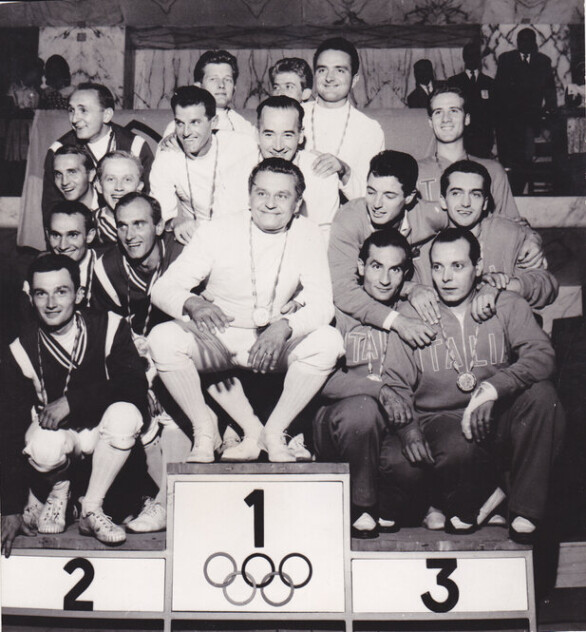
L'ultima gara maschile, la sciabola a squadre, vide avvicendarsi sulle pedane concorrenti di 16 paesi. L'Ungheria, favoritissima, presentava la medaglia d'oro e quella d'argento dell'individuale e poi altri quattro schermidori, tutti con importanti esperienze in molte edizioni delle Olimpiadi, qualcuno addirittura dal 1932 (Aladár Gerevich era alla sua sesta Olimpiade e Pal Kovacs alla quinta). I magiari s'imposero 9 a 7 nella finale sui polacchi, mentre l'Italia soffiò agli Stati Uniti la medaglia di bronzo.
The final men's competition, the team sabre, saw competitors from 16 countries take turns on the platforms. Hungary, the clear favorite, presented the gold and silver medals in the individual event and then four other fencers, all with important experience in many editions of the Olympics, some even from 1932 (Aladár Gerevich was at his sixth Olympics and Pal Kovacs at his fifth). The Magyars won 9-7 in the final over the Poles, while Italy snatched the bronze medal from the United States.
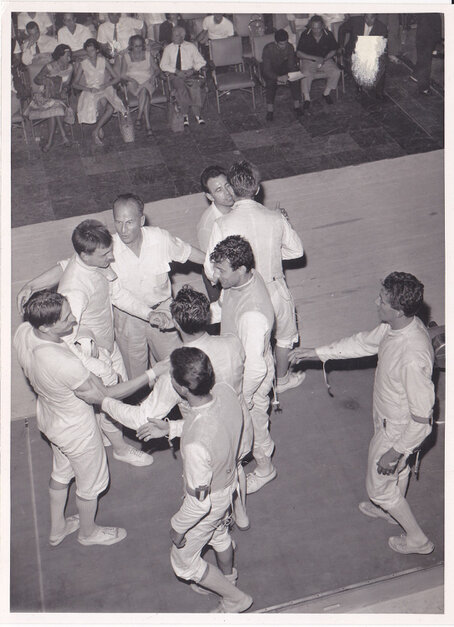
L'Italia conquista la medaglia di bronzo battendo gli USA
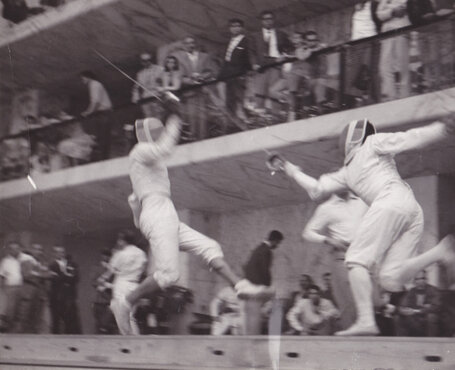
L'assalto tra Ferrari (ITA) e Arabo (FRA) nel torneo a squadre
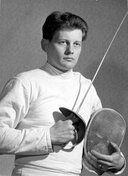
Tamas Mendelenyi
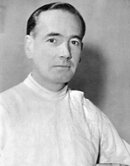
Pal Kovacs

