Vai ai contenuti

Sport equestri - Le Olimpiadi d'Italia

Salta menù
LE OLIMPIADI D'ITALIA
Salta menù

Sport equestri

SPORT EQUESTRI - EQUESTRIAN SPORTS

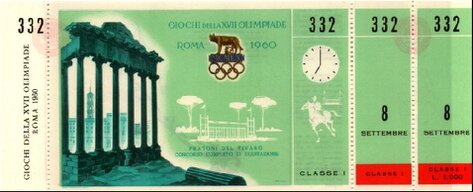
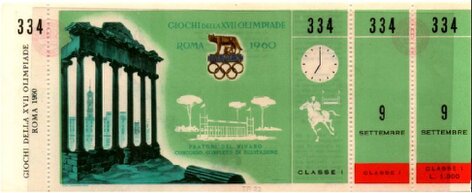
Le gare di Equitazione si svolsero dal 5 all'11 settembre nei tre impianti olimpici di Piazza di Siena, dei Pratoni del Vivaro e dello Stadio Olimpico.

The equestrian competitions took place from 5 to 11 September at the three Olympic facilities in Piazza di Siena, Pratoni del Vivaro and the Stadio Olimpico.
DRESSAGE


La prima delle medaglie d'oro in palio nell'Equitazione, il Dressage, partì, nel rettangolo appositamente disegnato dalla Federazione Internazionale a Piazza di Siena, il 5 settembre. Dei diciassette concorrenti partecipanti, arrivarono alla finale del 6 settembre cinque cavalieri: lo svedese Henry St.Cyr, lo svizzero Gustav Fischer, il tedesco Josef Neckerman e due sovietici, Sergey Filatov e Ivan Kalita.
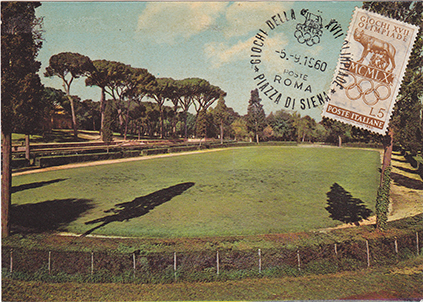
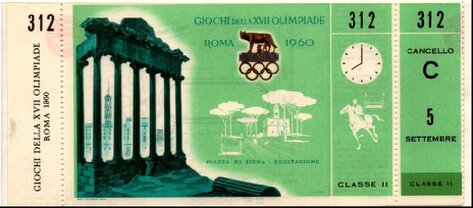
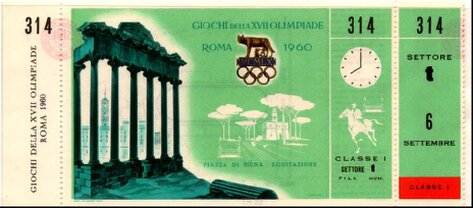
The first of the gold medals up for grabs in equestrianism, the Dressage, started, in the rectangle specially designed by the International Federation in Piazza di Siena, on September 5. Of the seventeen participating competitors, five riders arrived at the final on September 6: the Swede Henry St.Cyr, the Swiss Gustav Fischer, the German Josef Neckerman and two Soviets, Sergey Filatov and Ivan Kalita.

I cinque prescelti si sfidarono il 6 mattina, per decidere chi sarebbe stato il nuovo campione olimpico. I primo a scendere in campo fu lo svedese St.Cyr, campione ad Helsinki ed a Stoccolma nel 1956. Subito dopo di lui il capitano Fischer che parve avere le ali, eseguendo magnificamente il suo esercizio, lo svizzero fu eguagliato in maestria da Filatov, terzo ad esibirsi. La prova del quarto concorrente, Neckermann parve inferiore e fuori dal giro delle medaglie mentre l'altro cavaliere sovietico, Kalita, fu applauditissimo e, ai più, parve il migliore. La giuria non fu in grado di assegnare la vittoria e si diede 48 ore di tempo per decidere dopo aver visionato i filmati di tutte e cinque le esibizioni. Il giorno dopo decretò la vittoria di Filotov con 2144 punti, secondo e terzo Fischer e Neckermann.

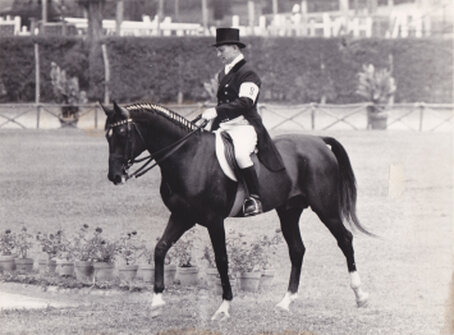

The five chosen competed on the 6th morning, to decide who would be the new Olympic champion. The first to take to the field was the Swede St.Cyr, champion in Helsinki and Stockholm in 1956. Immediately after him, Captain Fischer, who appeared to have wings, performing his exercise magnificently, the Swiss was matched in mastery by Filatov, the third to perform. The performance of the fourth competitor, Neckermann, seemed inferior and out of the medal circle while the other Soviet rider, Kalita, was highly applauded and, to most, seemed the best. The jury was unable to award the victory and gave themselves 48 hours to decide after viewing footage from all five performances. The next day he decreed Filotov's victory with 2144 points, Fischer and Neckermann second and third.
Sergei Filatov
CONCORSO COMPLETO INDIVIDUALE E A SQUADRE - INDIVIDUAL AND TEAM EVENTING


Il 6 mattino, ai Pratoni del Vivaro, ebbe inizio anche la prova di Concorso completo a squadre con la partecipazione di 18 team e quello individuale con 73 partecipanti. Per la vittoria finale, i bookmaker londinesi davano favoriti i tre svedesi (Johansson, Gustavsson e Barkander) poi inglesi e tedeschi. Nella prima prova (divisa in cinque sezioni: dressage, endurance, steeple-chase, cross-country corsa), ciascuna nazione presentò quattro concorrenti, i migliori tre dei quali ammessi alla prova di salto. Dopo la prima prova, i migliori punteggi furono realizzati dal francese Lefrant, dal danese Bjorke e dallo svedese Barkander. Nella classifica a squadre andarono bene sovietici, svizzeri, tedeschi, svedesi e britannici, ma nella seconda parte erano emersi nettamente in testa a tutti gli australiani (Morgan, Crago e Lewis).
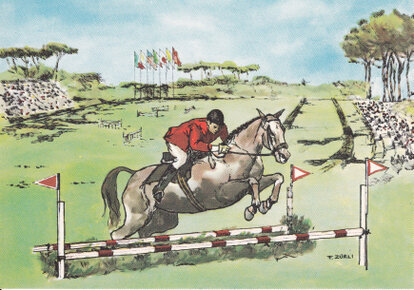
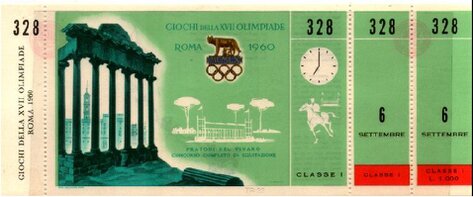
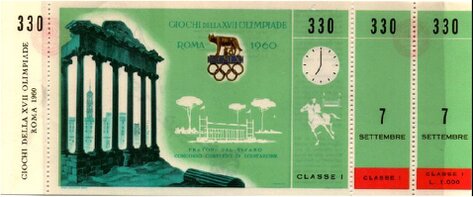
On the morning of September 6th, at Pratoni del Vivaro, the complete team competition began with the participation of 18 teams and the individual competition with 73 participants. For the final victory, London bookmakers favored the three Swedes (Johansson, Gustavsson and Barkander), then English and Germans. In the first event (divided into five sections: dressage, endurance, steeple-chase, cross-country running), each nation presented four competitors, the best three of whom were admitted to the jumping event. After the first test, the best scores were scored by Frenchman Lefrant, Danish Bjorke and Swedish Barkander. The Soviets, Swiss, Germans, Swedes and British did well in the team standings, but in the second half they had clearly emerged at the top of all the Australians (Morgan, Crago and Lewis).
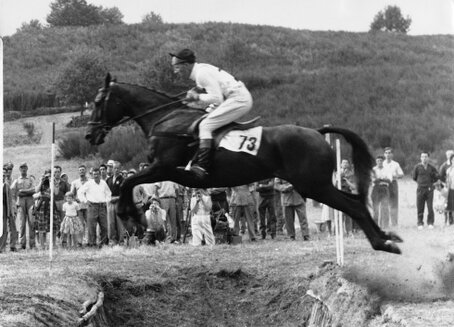
l'inglese Frank Weldon in azione ai Pratoni del Vivaro
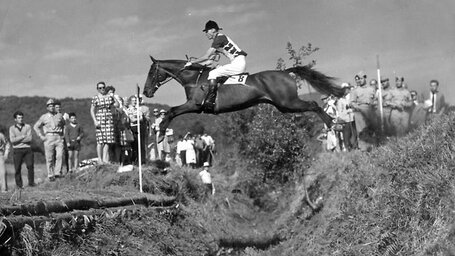
William Roycroft in azione ai Pratoni del Vivaro

Il 10 settembre la gara si spostò a Piazza di Siena per la prova sui dodici ostacoli, dove si presentarono la metà dei concorrenti che si erano iscritti a questa gara, gli altri avevano subito il massacrante percorso delle prime prove ed avevano dovuto rinunciare a proseguire. Questa volta i cavalieri non erano più i cow boy dei giorni precedenti ma degli eleganti signori, in divisa o in frack rosso. Il primo cavaliere in gara fu l'australiano Roycroft con un percorso netto e dato che anche i suoi due compagni Morgan e Lavis fecero molto bene (solo un errore), la squadra australiana si aggiudicò, con grande margine, l'oro davanti a svizzeri e francesi. Lawrence Robert Morgan (nonostante il suo errore sul muro) vinse l'oro individuale, alle sue spalle il compagno Lavis e lo svizzero Buhler.
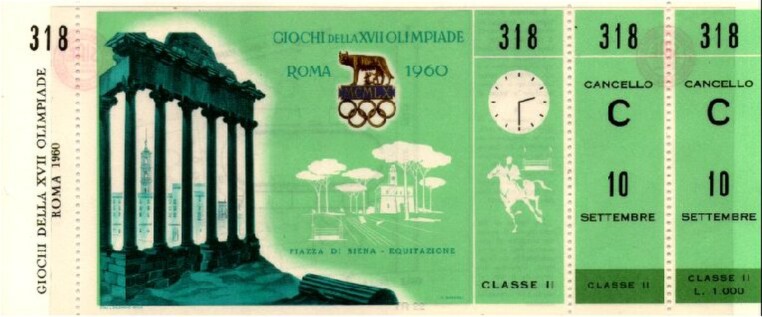

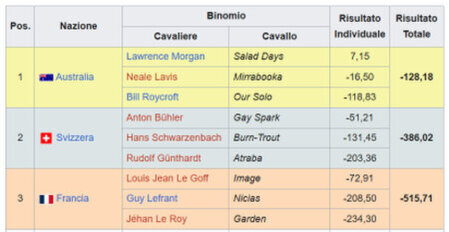
On September 10th the race moved to Piazza di Siena for the twelve hurdles test, where half of the competitors who had registered for this race showed up, the others had undergone the grueling course of the first tests and had to give up continuing. This time the knights were no longer the cowboys of the previous days but elegant gentlemen, in uniform or red frack. The first rider in the race was Australian Roycroft with a clear course and since his two teammates Morgan and Lavis also did very well (just one mistake), the Australian team won gold by a large margin ahead of the Swiss and French. Lawrence Robert Morgan (despite his mistake on the wall) won the individual gold, behind him teammate Lavis and Swiss Buhler.
SALTO AD OSTACOLI - JUMPING

A Piazza di Siena, per la gara di salto ad ostacoli, fu tracciato un percorso di 840 metri con un labirinto di pali, siepi, fossati e muri. C'erano 14 ostacoli con 17 salti alti fino a metri 1,60 ed una tripla combinazione di muri e steccati. 60 i partecipanti in rappresentanza di 21 paesi. Tra i favoriti gli italiani Raimondo e Piero D'Inzeo, lo spagnolo Francisco Goyoaga, i francesi Pierre D'Oriola e J. Bernard De Fombelle, l'americano William Steinkraus, i tedeschi Fritz Thiedemann e  Hans Winkler Hans e l'amazzone inglese Pat Smythe.
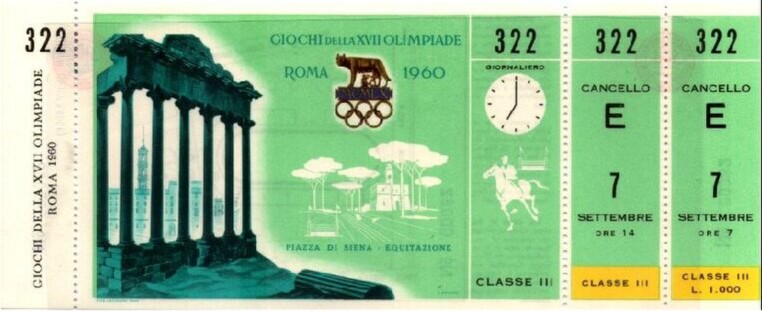

In Piazza di Siena, for the show jumping competition, an 840-meter course was created with a labyrinth of poles, hedges, ditches and walls. There were 14 obstacles with 17 jumps up to 1.60 meters high and a triple combination of walls and fences. Sixty participants represented 21 countries. Among the favorites are Italians Raimondo and Piero D'Inzeo, Spaniard Francisco Goyoaga, Frenchmen Pierre D'Oriola and J. Bernard De Fombelle, American William Steinkraus, Germans Fritz Thiedemann and Hans Winkler Hans, and English Amazon Pat Smythe.

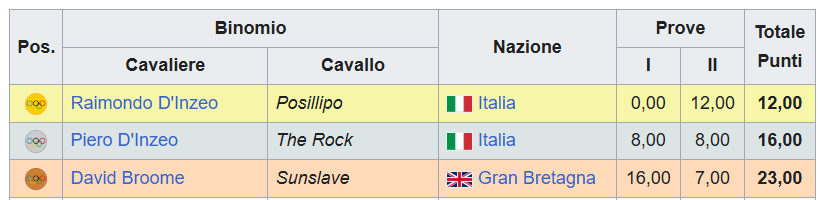
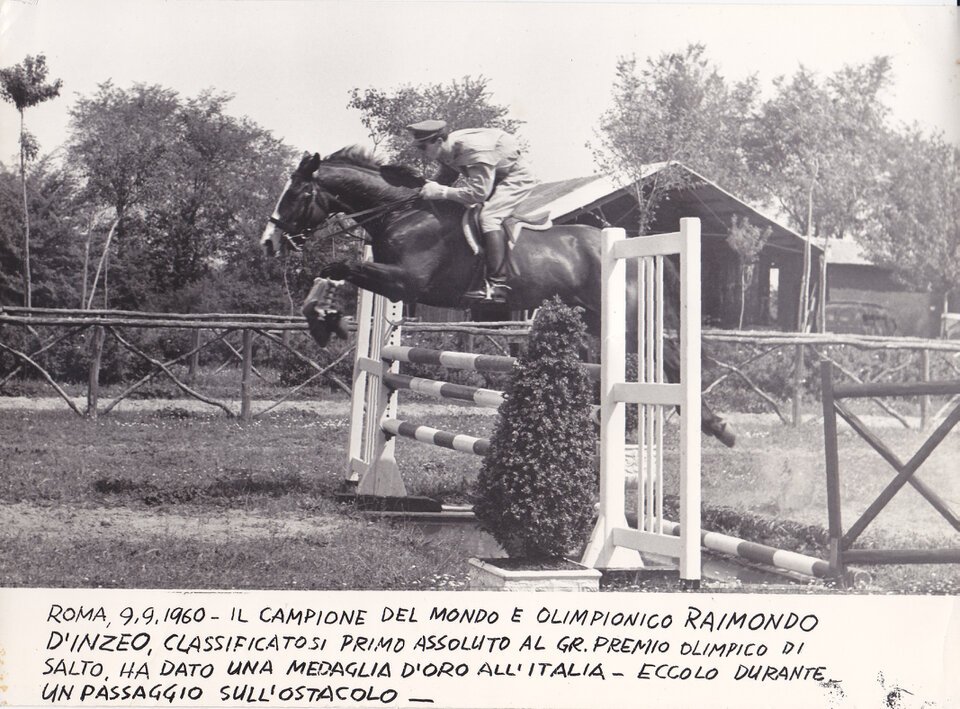
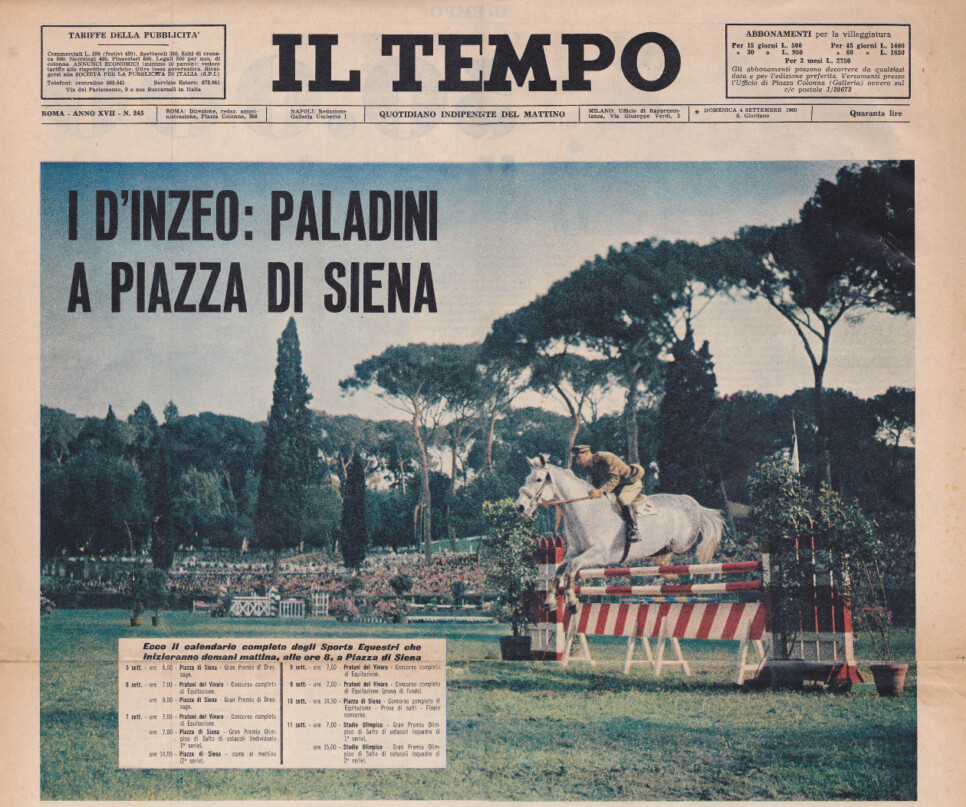
Alle 7 antimeridiane del 7 settembre il primo concorrente, il brasiliano Rabelo Leite Nero, entra nell'arena di Piazza di Siena, poi, dopo alcuni altri concorrenti, toccava a Raimondo D'Inzeo ed al suo "Posillipo". Il silenzio calò tra il pubblico e D'Inzeo iniziò il suo percorso, un percorso netto e che qualcuno giudicò magistrale. La maniera con il quale l'italiano guidava il suo cavallo di salto in salto era magnifica e non di meno ammirabile era l'intelligenza con la quale il cavallo rispondeva alla  minima sollecitazione del suo cavaliere. Dopo D'Inzeo fu il turno di D'Oriola (4 errori e 16 punti di penalità), di Winkler (17 punti di penalità), De Fombelle (12 punti), Pat Smythe (20 punti), Thiedemann (13 punti), Piero D'Inzeo (8 penalità) e terzo posto nella classifica provvisoria, al secondo posto la sorpresa dell'argentino Naldo Dasso, quindi nessun altro percorso netto oltre a quello di Raimondo D'Inzeo. La seconda manche inizia nel primo pomeriggio, la classifica è chiara. Alle 15e40 e la volta del capoclassifica, nel caso esegua un altro percorso netto è medaglia d'oro, altrimenti torna tutto in discussione. Nella prima parte fila tutto liscio per il cavaliere italiano poi un errore prima della complicatissima tripla (che viene superata magnificamente) ed altri 2 nella parte finale: totale 12 punti di penalità. Buon risultato, ma bisognava aspettare le altre esibizioni, soprattutto quella della sorpresa Dasso e del fratello Piero. Dasso alla sua seconda apparizione colleziona 24 punti di penalità e Piero D'Inzeo 8. Raimondo D'Inzeo è medaglia d'oro, Piero d'argento. L'inglese David Broome, con un buon secondo percorso, si aggiudica la medaglia di bronzo.
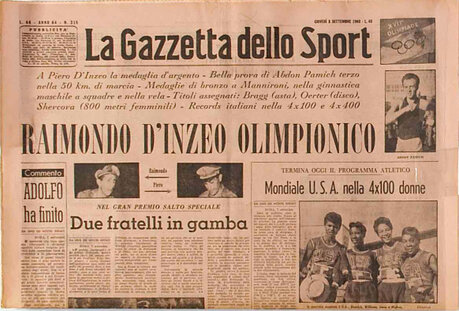
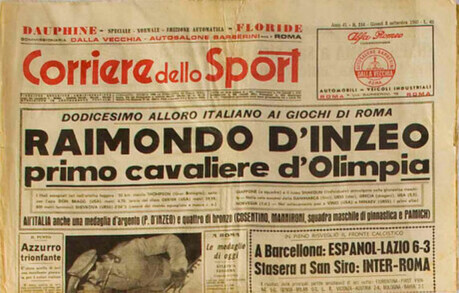
At 7am on September 7th, the first contestant, Brazilian Rabelo Leite Nero, entered the arena in Piazza di Siena, then, after a few other contestants, it was Raimondo D'Inzeo and his "Posillipo"'s turn. Silence fell among the audience and D'Inzeo began his journey, a clear one that some considered masterful. The manner in which the Italian guided his jumping horse was magnificent and no less admirable was the intelligence with which the horse responded to the slightest solicitation of his rider. After D'Inzeo it was the turn of D'Oriola (4 errors and 16 penalty points), Winkler (17 penalty points), De Fombelle (12 points), Pat Smythe (20 points), Thiedemann (13 points), Piero D'Inzeo (8 penalties) and third place in the provisional standings, in second place the surprise of the Argentine Naldo Dasso, so no other clear path besides that of Raimondo D'Inzeo. The second run starts in the early afternoon, the standings are clear. At 3:40 PM and the time of the leader of the standings, if he runs another clear course he will win the gold medal, otherwise everything will be up for discussion again. In the first part, everything went smoothly for the Italian rider, then a mistake before the very complicated triple (which was overcome magnificently) and another 2 in the final part: a total of 12 penalty points. Good result, but we had to wait for the other performances, especially that of the surprise Dasso and his brother Piero. In his second appearance, Dasso collected 24 penalty points and Piero D'Inzeo 8. Raimondo D'Inzeo is the gold medalist, Piero the silver. England's David Broome, with a good second course, won the bronze medal.
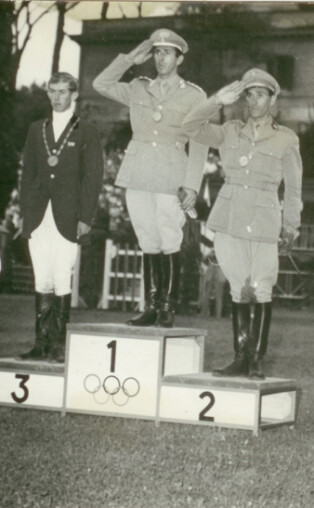
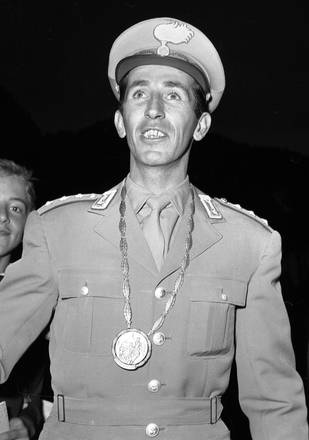
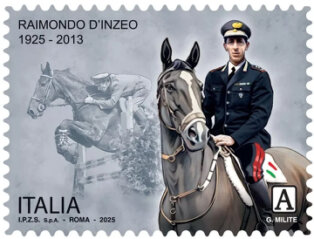
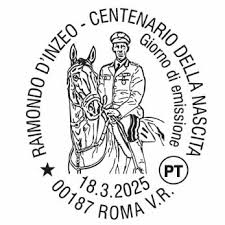
L'italiano Raimondo d'Inzeo era destinato a una lunga carriera olimpica – ma Roma 1960 doveva essere il momento clou. Era già una specie di veterano dello sport, avendo partecipato alle sue prime Olimpiadi più di un decennio prima, a Londra nel 1948. Nel 1956 aveva vinto l'argento individuale e a squadre a Stoccolma e ora, all'età di 35 anni, desiderava aggiungere un oro alla sua collezione. Come ufficiale in servizio nell'Arma dei Carabinieri, indossava sempre la sua uniforme durante le gare, il che lo rendeva una figura impressionante nell'arena. Il suo stile era meno incentrato sul dominio del cavallo e più sul lavoro di coppia tra uomo e animale. E a Roma la sua collaborazione con Posillipo era quanto di più vicino possibile alla perfezione. Dovette affrontare alcune sfide impegnative, una delle quali da parte di un avversario molto familiare. L'altro concorrente italiano era suo fratello Piero, che aveva due anni più di lui e aveva partecipato a tutte le edizioni dei Giochi dal 1948. Entrambi erano arrivati ai Giochi di Roma in ottima forma. Raimondo aveva vinto il titolo mondiale nel 1960, mentre Piero era stato campione europeo l'anno precedente. Raimondo fu stato perfetto nel la prima manche, unico cavaliere a fare un percorso netto mentre Piero con due errori, era  terzo. Nella seconda manche sia Piero che Raimondo commisero 2 errori, ma nonostante la prestazione non proprio impeccabile, grazie al vantaggio del primo percorso, Raimondo conquistò l'oro olimpico con Piero al secondo posto. Era la prima volta nella storia delle Olimpiadi che dei fratelli conquistavano oro e argento.
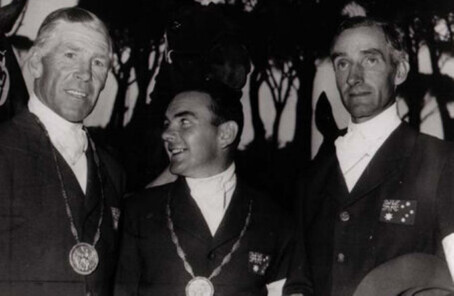
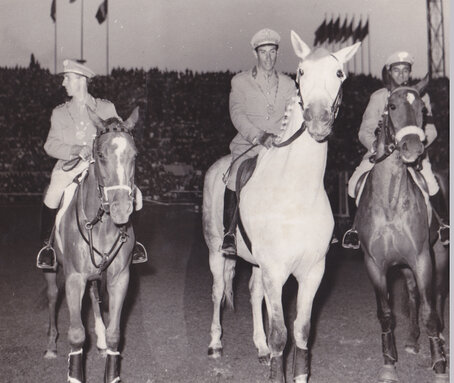
Il Podio del Salto ad ostacoli
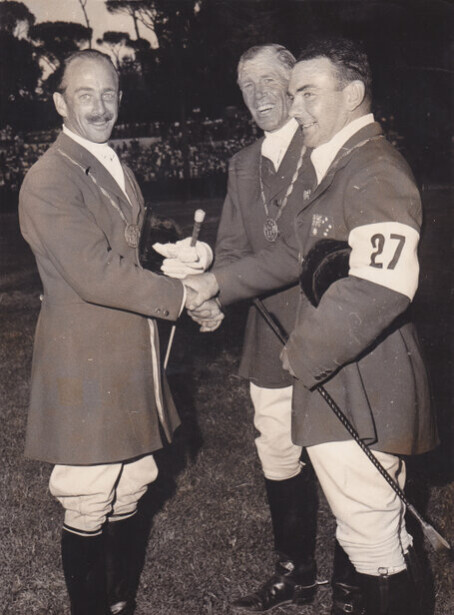
I fratelli D'Inzeo
Italian Raimondo d'Inzeo was destined for a long Olympic career, but Rome 1960 was to be the highlight. He was already something of a sports veteran, having participated in his first Olympics more than a decade earlier, in London in 1948. In 1956 he had won individual and team silver in Stockholm and now, at the age of 35, he wanted to add a gold to his collection. As an officer serving in the Carabinieri, he always wore his uniform during competitions, which made him an impressive figure in the arena. His style was less focused on horse dominance and more on human-animal pair work. And in Rome his collaboration with Posillipo was as close to perfection as possible. He faced some tough challenges, one of them from a very familiar opponent. The other Italian competitor was his brother Piero, who was two years older than him and had participated in every edition of the Games since 1948. Both had arrived at the Rome Games in excellent form.
Raimondo had won the world title in 1960, while Piero had been European champion the previous year. Raimondo was perfect in the first run, the only rider to make a clear course while Piero, with two errors, was third. In the second run, both Piero and Raimondo made two mistakes, but despite their less than impeccable performance, thanks to the advantage of the first course, Raimondo won Olympic gold with Piero in second place. It was the first time in Olympic history that brothers had won gold and silver.

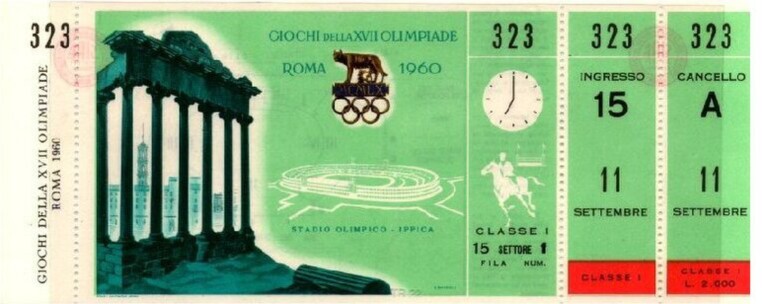
Il mattino dell'11 settembre, sgomberato il campo dai segnali e dagli attrezzi per l'atletica leggera, lo Stadio olimpico accolse il Gran Premio delle Nazioni (Gran premio di salto ad ostacoli - prova a squadre), valido per l'ultimo podio da assegnare, l'ultimo dell'intera Olimpiade. La prova a squadre di disputò in due manche ed ogni squadra poteva concorrere con tre cavalieri. Alla vigilia si parlò di vittoria per gli Stati Uniti o per l'Italia o anche per Germania, Francia e Gran Bretagna, le potenze che dominavano nella Coppa delle Nazioni. La prima manche ebbe inizio alle 7 del mattino ed il primo concorrente fu il turco Nail Gonenli. I tedeschi, campioni olimpici uscenti, capitanati da Hans Winkler, realizzarono l'impresa di bissare la vittoria di quattro anni prima a Stoccolma. Al secondo posto e medaglia d'argento per il team degli Stati Uniti e terzi gli italiani con i fratelli D'Inzeo e Antonio Oppes.
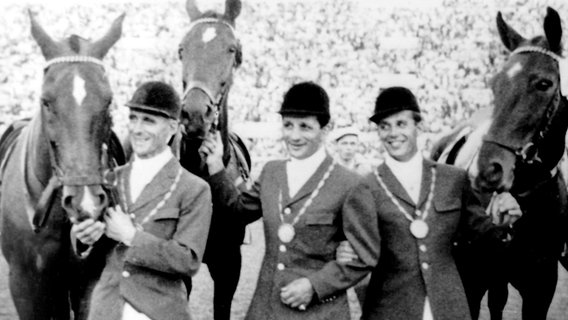
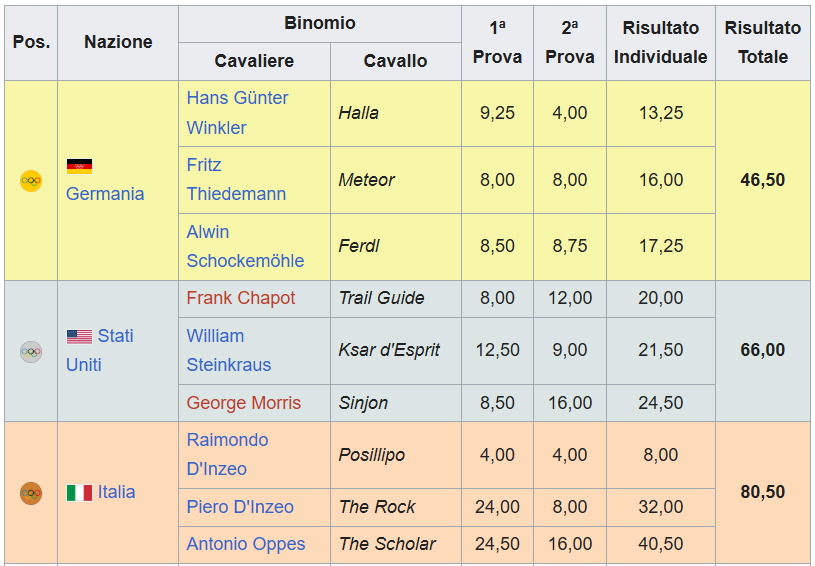
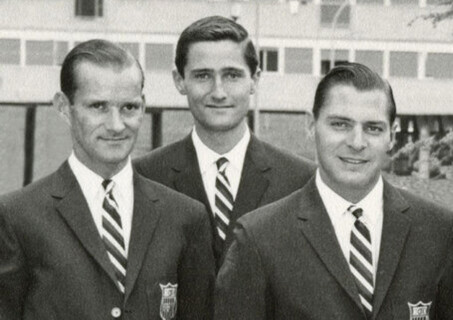
On the morning of September 11, having cleared the field of signals and athletics equipment, the Olympic Stadium hosted the Grand Prix of Nations (Grand Prix of Show Jumping - Team Event), valid for the last podium to be awarded, the last of the entire Olympics. The team event was contested in two heats and each team could compete with three riders. On the eve, there was talk of victory for the United States or Italy or even for Germany, France and Great Britain, the powers that dominated the Nations Cup. The first heat started at 7am and the first competitor was the Turk Nail Gonenli. The Germans, the defending Olympic champions, captained by Hans Winkler, achieved the feat of repeating their victory from four years earlier in Stockholm. In second place and silver medal for the United States team and third for the Italians with the D'Inzeo brothers and Antonio Oppes.
Germania prima e medaglia d'oro
Stati Uniti secondi e medaglia d'argento
Italia terza e medaglia di bronzo
Torna ai contenuti