Vai ai contenuti

Rudolph - Rafer - Le Olimpiadi d'Italia

Salta menù
LE OLIMPIADI D'ITALIA
Salta menù

Rudolph - Rafer

Wilma Rudolph

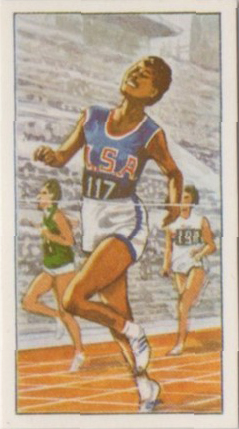
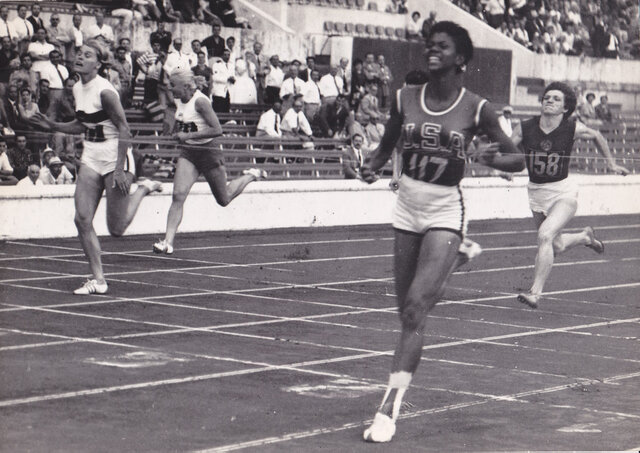
Era il momento dei 100 metri femminile ed era di scena Wilma Rudolph, la migliore delle velociste americane. Aveva la pettorina 117 ed era l'unica americana delle sei finaliste. Assieme a lei la sovietica Maria Itkina, l'italiana Giusy Leone, la francese Catherine Capdeville e le due inglesi Dorothy Hyman e Jennifer Smart. "Ai vostri posti", "pronti", poi la pistola. La Rudolph partì lenta ma già a metà percorso si stava distendendo con la sua falcata lunga e la sua velocità esplosiva. Nessuna correva come lei, con la sua testa alta; sciolta, leggera, con un passo bellissimo. Tagliò il filo di lana tre falcate e tre decimi di secondo prima della Hyman, seconda d'un soffio sulla Leone. Il tempo era 11 secondi netti, il più veloce di sempre, che demoliva gli 11"4 della Cuthbert a Melbourne e i suoi 11"3 della semifinale. Sarebbe stato record olimpico e record del mondo, ma c'era troppo tempo per omologarlo.
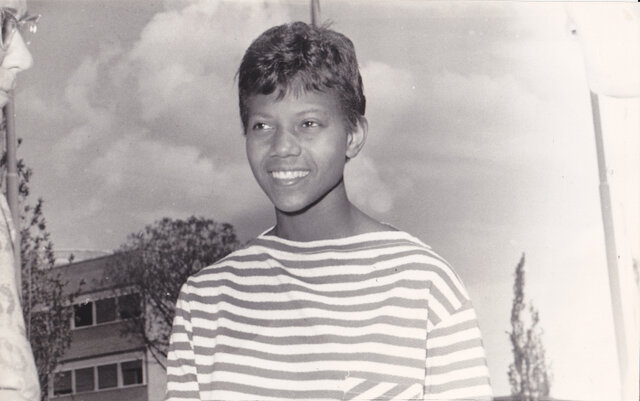
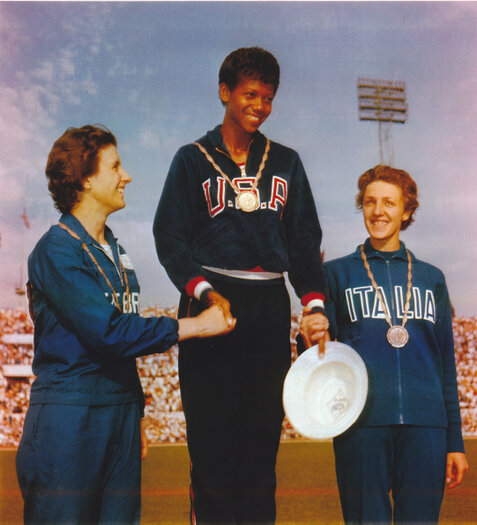
It was time for the women's 100 meters and Wilma Rudolph, the best of the American sprinters, was on stage. She had the 117 bib and was the only American of the six finalists. Together with her are the Soviet Maria Itkina, the Italian Giusy Leone, the French Catherine Capdeville and the two Englishwomen Dorothy Hyman and Jennifer Smart. "In your seats", "ready", then the gun. The Rudolph started slowly but was already halfway down with her long stride and explosive speed. No one ran like her, her head held high; loose, light, with a beautiful step. He cut the woolen thread three strides and three tenths of a second before the Hyman, second by a breath on the Lion. The time was 11 seconds flat, the fastest ever, demolishing Cuthbert's 11.4 in Melbourne and her 11.3 in the semi-final. It would have been an Olympic record and a world record, but there was too much time to match it.
Oro SUA Wilma Rudolph
Argento GBR D. Himan
Bronzo ITA Giuseppina Leone
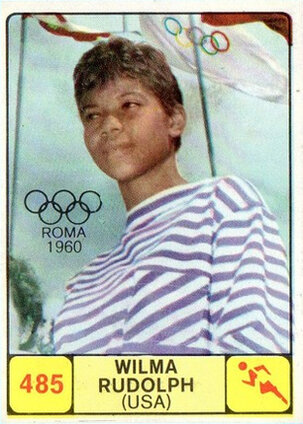
Ed ecco i 200 metri. Prima della gara il tecnico della Rudolph, Ed Temple, aveva un buon presentimento: "Dopo che aveva vinto i 100, ho sentito che aveva ottime probabilità di vincere i 200, perché come duecentista era anche più forte" disse ai giornalisti. "Riusciva a correre davvero bene in curva, e poi, quando entrava nel rettilineo, poteva stendere le sue gambe lunghe e la sua falcata fluida e....diventava impressionante." Nella finale le venne assegnata la corsia interna, dove la curva è più stretta. Allo sparo dello starter, fu lenta a staccarsi dai blocchi, ma riemerse all'inizio della curva. Quindi si staccò dal gruppo e accrebbe il suo vantaggio a ogni falcata che la portava in dirittura finale. Il tempo non era niente di speciale, 24 secondi, ma la vittoria era storica.
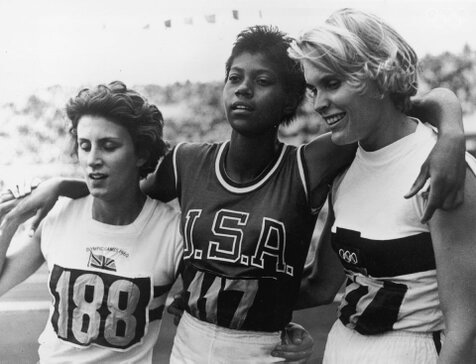

And here are the 200 meters. Before the race, Rudolph coach Ed Temple had a good feeling: "After he won the 100m, I felt he had a very good chance of winning the 200m, because as a 200m runner he was also stronger," he told reporters. "He could run really well in corners, and then, when he got into the straight, he could lay down his long legs and his smooth stride and...it became impressive." In the final, she was assigned the inside lane, where the curve is narrowest. When the starter fired, it was slow to break away from the blocks, but resurfaced at the start of the turn. She then broke away from the pack and increased her lead with each stride that took her to the final straight. The time was nothing special, 24 seconds, but the victory was historic.
Oro USA Wilma Rudolph
Argento GER Jutta Heine
Bronzo GBR Dorothy Hyman
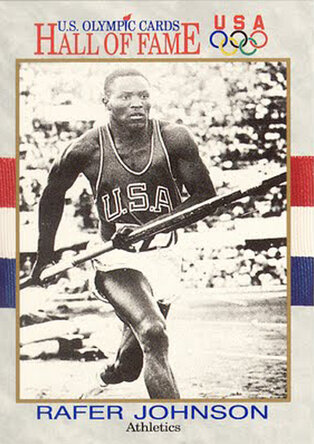
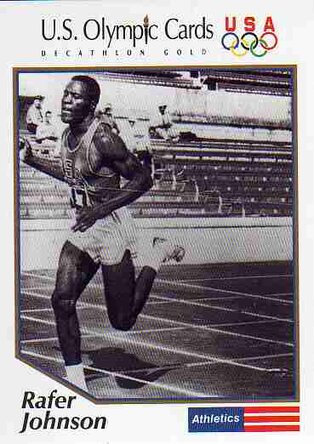
Rafer Johnson

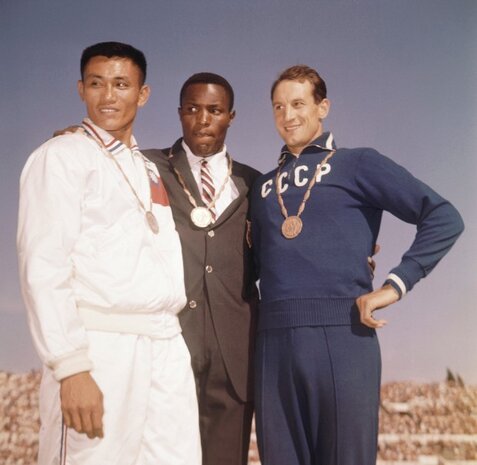
A Roma, la grande sfida per la conquista dell'oro del Decathlon era tra i due migliori atleti del momento: il formosano Yang Chuan-Kwang ed il capitano e portabandiera della squadra statunitense Rafer Johnson, faceva da terzo incomodo il sovietico Kuznetov, gli altri 27 concorrenti avrebbero fatto da contorno a quella sfida. Il Decathlon è una prova di resistenza, ma che inizia, il 5 settembre, con uno sprint. La prima gara infatti, sono i 100 metri piani, vinta da Yang, che tagliò il filo di lana in 10"7 e conquistò i suoi primi 1034 punti, 86 in più di Johnson.
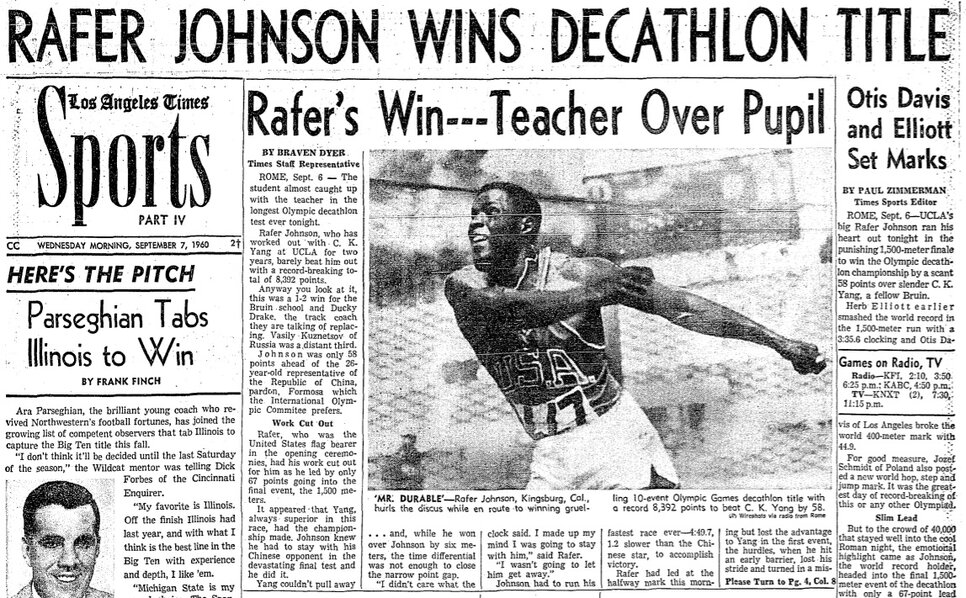
In Rome, the big challenge for the Decathlon gold medal was between the two best athletes of the moment: Formosan Yang Chuan-Kwang and the captain and flag bearer of the American team Rafer Johnson. Soviet Kuznetov acted as third wheel, while the other 27 competitors would support that challenge. The Decathlon is an endurance event, but it begins on September 5th with a sprint. The first race, in fact, was the 100 meters, won by Yang, who cut the wool in 10.7 seconds and scored his first 1,034 points, 86 more than Johnson.
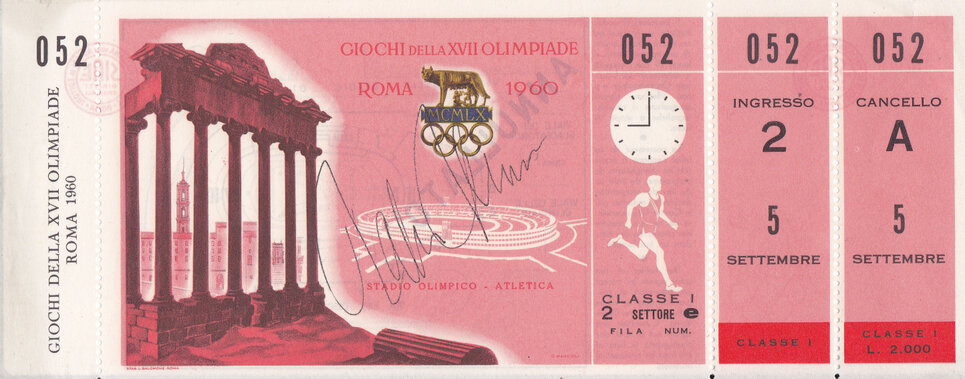
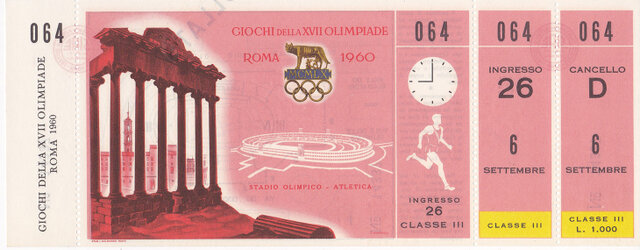
Biglietto del 5 settembre con l'autografo di Rafer Johnson
Salto in lungo
Lancio del peso
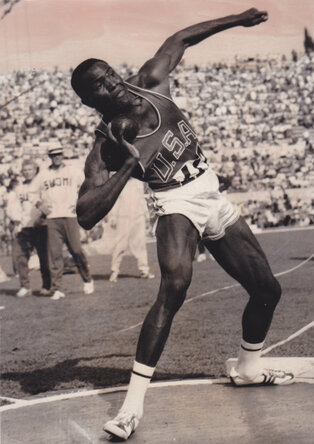
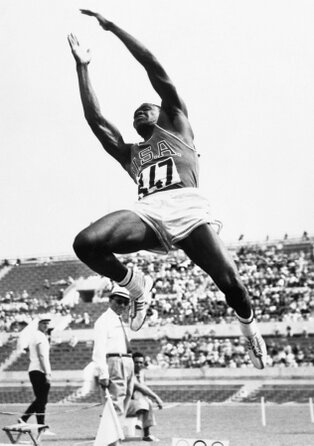
Anche nella prova di salto in lungo Yang si piazzò davanti all'americano, saltando 7,46 metri contro i 7,35 di Johnson e portando il vantaggio a 130 punti. Erano quasi le tre del 5 settembre, quando Rafer Johnson si ripresentò sul campo determinato a recuperare il terreno perduto. Era il momento della gara del getto del peso, una delle sue specialità, ed infatti il suo lancio oltre i 16 metri fu il migliore e grazie a quel lancio si portò al comando con 143 punti di vantaggio su Yang che aveva lanciato a 14 metri.

In the long jump, Yang also placed ahead of the American, jumping 7.46 meters to Johnson's 7.35 and extending the lead to 130 points. It was nearly three o'clock on September 5, when Rafer Johnson returned to the field determined to make up for lost ground. It was time for the shot put competition, one of his specialties, and in fact his throw over 16 meters was the best and thanks to that throw he took the lead with a 143-point advantage over Yang who had thrown 14 meters.
400 metri

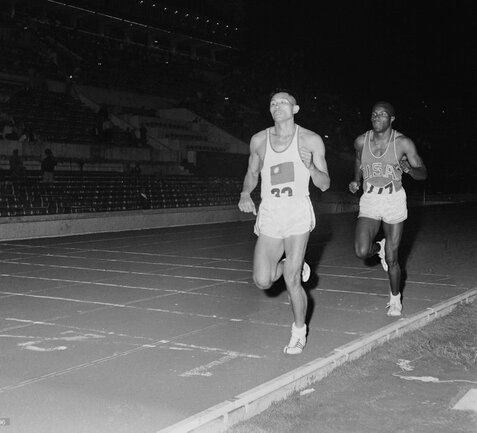
Alle 18.00 i decatleti erano pronti per la quarta prova della giornata: salto in alto. Ma una tempesta si abbatté su Roma, facendo rimandare di oltre un'ora la gara, che alla fine vide Yang saltare il metro e novanta mentre Johnson superava a fatica l'1,85. Ora tra i due il distacco era minimo e bisognava correre i 400 metri, una gara che l'americano non amava e considerava la più dura. A sera ormai inoltrata, su una pista pesante, logori, infreddoliti e sfiniti corsero insieme nella stessa batteria. Johnson partì veloce, Yang lo superò in curva e iniziò a staccarsi, poi Rafer si lanciò in un furioso recupero e nel finale riuscì quasi a riprenderlo. Altri 1005 punti per Yang, ma un buon 950 per Johnson, che conduceva ancora, ma di soli 53 punti.


At 6:00 PM the decathletes were ready for the fourth test of the day: high jump. But a storm hit Rome, delaying the race by more than an hour, which ultimately saw Yang jump 6 feet while Johnson struggled past 6 feet. Now the gap between the two was minimal and it was necessary to run the 400 meters, a race that the American did not like and considered the toughest. Late in the evening, on a heavy track, worn, cold and exhausted ran together in the same heat. Johnson started fast, Yang overtook him in the corner and began to break away, then Rafer launched into a furious recovery and almost caught him in the final minutes. Another 1005 points for Yang, but a good 950 for Johnson, who was still leading, but by only 53 points.

La mattina del 6 settembre si cominciò con la prova dei 110 ostacoli, dove Yang fu molto più veloce di Johnson, tanto da guadagnare punti sufficienti a portarlo al comando della gara con 128 punti di margine. Ma questo vantaggio durò poco, infatti nella settima prova, il lancio del disco, l'americano lanciò l'attrezzo a 47,85 metri mentre Yang non riuscì a superare i 40 metri. Ora era Johnson in vantaggio e di 144 punti ed aveva davanti a sè, dopo la pausa pranzo, le ultime tre prove: Asta, Giavellotto e 1500.
The morning of September 6 began with the 110m hurdles event, where Yang was much faster than Johnson, earning enough points to lead the race by 128 points. But this advantage was short-lived, in fact in the seventh test, the discus throw, the American threw the apparatus at 47.85 meters while Yang was unable to get past 40 meters. Johnson was now ahead by 144 points and had ahead of him, after the lunch break, the last three tests: Auction, Javelin and 1500m.

Nel pomeriggio, nella gara del salto in alto, prevalse ancora Yang, che saltò i 4,30 metri mentre Johnson si era fermato a 4,10, ora il distacco era di soli 24 punti. A causa del ritardo di altre gare, la gara del Giavellotto di disputò molto tardi. Era quella la gara dove Johnson poteva dare a Johnson guadagnare tanti punti e prevenire qualsiasi ribaltamento nei 1500 di chiusura, ma si fermò sotto i settanta metri, quasi due metri meglio di Yang, ma non abbastanza da rimanere tranquillo.
In the afternoon, in the high jump competition, Yang prevailed again, jumping 4.30 meters while Johnson had stopped at 4.10, now the gap was only 24 points. Due to the delay of other races, the Javelin race was held very late. That was the race where Johnson could give Johnson a lot of points and prevent any overturning in the closing 1500, but he stopped under seventy meters, almost two meters better than Yang, but not enough to remain calm.
1500 metri

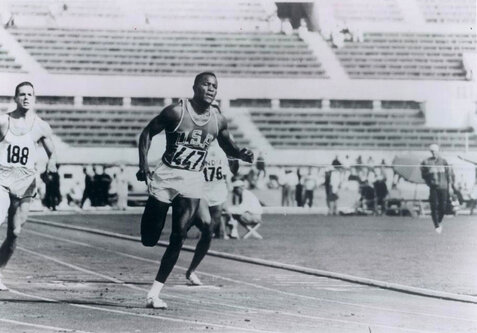
L'ultima gara era quella dei 1500; Johnson aveva 67 punti di vantaggio su Yang. Il destino aveva voluto che fossero stati assegnati alla stessa batteria. Yang per conquistare l'oro doveva distaccare Johnson di almeno 10", ma quest'ultimo disputò la sua migliore gara di sempre su questa distanza, riuscendo ad arrivare alle spalle del suo rivale con un distacco di solo 1",2.  Dopo uno scontro spalla a spalla di quattordici ore al giorno, dieci prove, un'umidità sfiancante, i brividi del freddo della sera, i ritardi imposti dalla pioggia, una tensione insopportabile e l'accumulo di 8392 punti (nel conteggio in uso nel 1960), che stabilivano il nuovo record olimpico, Rafer Johnson si aggiudicò la medaglia d'oro del Decathlon, battendo l'atleta della Repubblica di Cina C.K. Yang, suo grande amico ed il sovietico Kuznetsov.
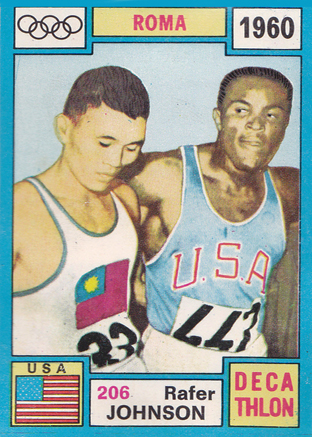
The final race was the 1500; Johnson was 67 points ahead of Yang. Fate had it that they were assigned to the same battery. To win gold, Yang had to distance Johnson by at least 10", but Johnson had his best race ever over this distance, managing to finish behind his rival by just 1",2.  After a fourteen-hour shoulder-to-shoulder clash a day, ten trials, exhausting humidity, the shivers of the evening cold, the delays imposed by the rain, unbearable tension and the accumulation of 8392 points (in the count in use in 1960), which set a new Olympic record, Rafer Johnson won the gold medal of the Decathlon, beating the Republic of China athlete CK. Yang, his great friend and the Soviet Kuznetsov.
Torna ai contenuti