Pentathlon Moderno
PENTATHLON MODERNO - MODERN PENTATHLON
Nel Pentathlon Moderno, trattandosi di uno sport prettamente militare, i favoriti erano i team delle squadre dell'est europeo, con in testa sovietici ed ungheresi.
In modern pentathlon, a sport with purely military origins, the favorites were the teams from Eastern Europe, led by the Soviets and the Hungarians.
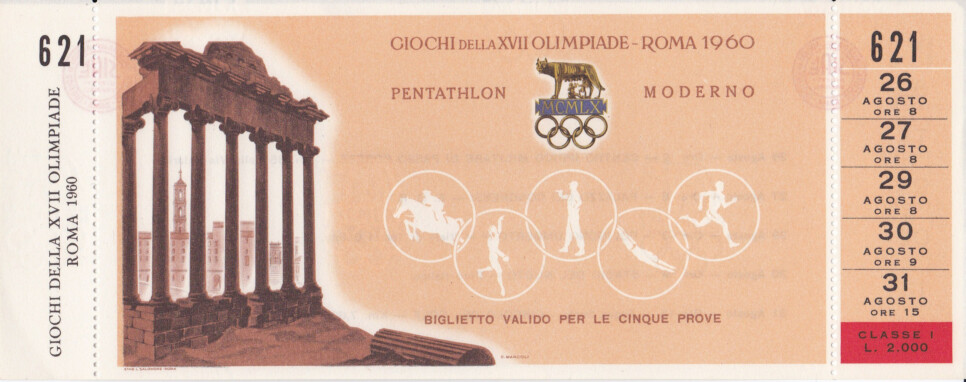
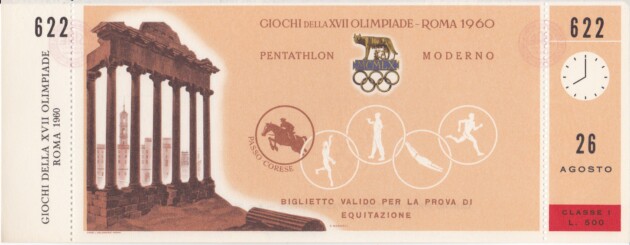
La corsa al titolo olimpico partì il mattino del 26 agosto, con la prova di equitazione a Passo Corese, una corsa veloce di 4,7 chilometri con 25 ostacoli. In questa prova, calcolati tempi e penalità, si impose il messicano Sergio Escobedo in sella ad Aletta. Il Messico e l'Argentina si piazzarono al comando della classifica provvisoria a squadre.
The race for the Olympic title began on the morning of August 26 with the equestrian event in Passo Corese, a 4.7-kilometer speed course featuring 25 obstacles. In this event, after factoring in times and penalties, Mexico’s Sergio Escobedo, riding Aletta, emerged victorious. Mexico and Argentina took the lead in the provisional team standings.
Il giorno dopo, al Palazzo dei Congressi, si disputò la prova di "scherma". Era questa una disciplina molto favorevole agli ungheresi ed infatti conquistarono la prima, la seconda e la sesta posizione con Nagy, Nemeth e Balczo. Nella classifica generale si portò in testa il messicano Antonio Almada in virtù di un quinto posto, ma alle sue spalle incalzavano già i magiari.
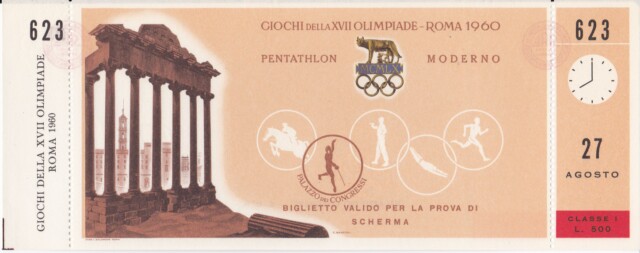
The next day, at the Palazzo dei Congressi, the “fencing” event took place. This was a discipline in which the Hungarians excelled, and in fact they took first, second, and sixth place with Nagy, Nemeth, and Balczo. In the overall standings, Mexico’s Antonio Almada took the lead thanks to a fifth-place finish, but the Hungarians were already hot on his heels.
Per la terza prova, il tiro, gli atleti si trasferirono al Poligono Umberto I. Si dovevano sparare venti colpi in quattro serie ad un bersaglio posto a 25 metri di distanza. Al primo posto si piazzò il messicano Escobedo seguito dal polacco Mazur e dall'americano Beck. Nella prova a squadre i migliori furono i polacchi, poi americani e finlandesi. A quel punto la classifica per nazioni vedeva in testa l'Ungheria, seguita da americani e messicani. Nella classifica individuale si portò al comando il messicano Escobedo, grazie alle sue vittorie nell'equitazione e nel tiro.
For the third event, shooting, the athletes moved to the Umberto I Shooting Range. They had to fire twenty shots in four series at a target placed 25 meters away. First place went to Escobedo of Mexico, followed by Mazur of Poland and Beck of the United States. In the team event, the Poles finished first, followed by the Americans and the Finns. At that point, Hungary led the team standings, followed by the United States and Mexico. In the individual standings, Escobedo of Mexico took the lead thanks to his victories in equestrian and shooting.
Il 30 agosto, lo Stadio del Nuoto ospitò la quarta prova: 300 metri stile libero da farsi in un tempo di quattro minuti, che assegnava 1000 punti con un aumento o diminuzione di 5 punti per ogni secondo in più o in meno. Vinse l'ungherese Balczo con 1075 punti davanti al sovietico Novikov ed agli american Jack Daniels e Robert Beck (ora primo nella classifica generale provvisoria), quinto Riera e sesto Nemeth. Escobedo fini quarantanovesimo e scomparì dalla classifica.
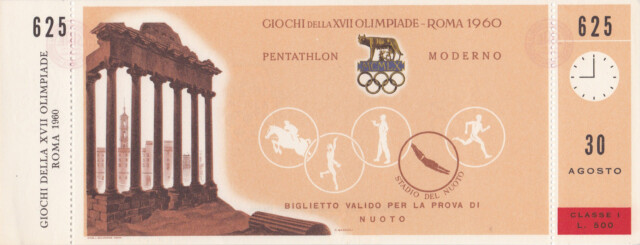
On August 30, the Stadio del Nuoto hosted the fourth event: a 300-meter freestyle race to be completed in four minutes, which awarded 1,000 points with a 5-point increase or decrease for every second over or under the time limit. The Hungarian Balczo won with 1,075 points, ahead of the Soviet Novikov and the Americans Jack Daniels and Robert Beck (now first in the provisional overall standings), with Riera in fifth and Nemeth in sixth. Escobedo finished 49th and dropped out of the standings.
Con i tre ungheresi da battere, il 31 agosto i pentatleti partirono ad intervalli di un minuto per l'ultima prova, la più massacrante, i quattro km. di corsa tracciati sul campo in saliscendi dell'elegante circolo del Golf dell'Acqua Santa. Allora non era come oggi, ed il punti, ottenuti attraverso il tempo che si impiegava a fare il percorso, andava a sommarsi ai punti precedenti. La regola prevedeva 1000 punti per un tempo di 15 minuti e 3 punti in più o in meno per ogni secondo di scarto.
With the three Hungarians to beat, on August 31 the pentathletes set off at one-minute intervals for the final event, the most grueling one, a 4-kilometer run along the undulating course of the elegant Acqua Santa Golf Club. Back then, it wasn’t like it is today, and the points,earned based on the time it took to complete the course, were added to the previous points. The rule awarded 1,000 points for a time of 15 minutes, plus or minus 3 points for every second of deviation.
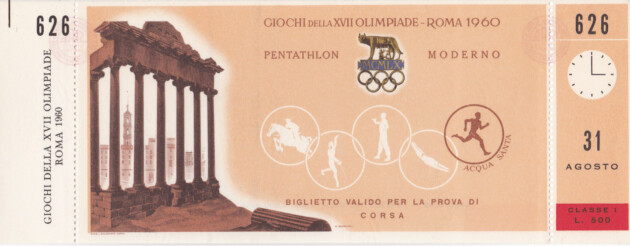
Almada (secondo fino a quel momento), fornì una brutta prova. Vinse la gara il sovietico Novikov con dieci secondi sul magiaro Balzco, poi il polacco Przybilsky, il giapponese Uchino ed a seguire Selg e Tatarinov che completarono l'ottimo risultato di squadra sovietico. Agli ungheresi Nemeth e Nagy fu sufficiente piazzarsi settimo ed ottavo per vincere le medaglie d'oro e d'argento. Beck riuscì per un soffio a difendere il bronzo. Nella classifica a squadre, naturalmente, vinsero gli ungheresi davanti a sovietici ed americani.
Almada (who had been in second place up to that point) had a poor performance. The Soviet skater Novikov won the race, finishing ten seconds ahead of the Hungarian Balzco, followed by the Pole Przybilsky, the Japanese skater Uchino, and then Selg and Tatarinov, who rounded out the Soviet team’s excellent result. For the Hungarians Nemeth and Nagy, finishing seventh and eighth was enough to win the gold and silver medals. Beck managed to defend his bronze medal by a hair. In the team standings, of course, the Hungarians won, ahead of the Soviets and the Americans.
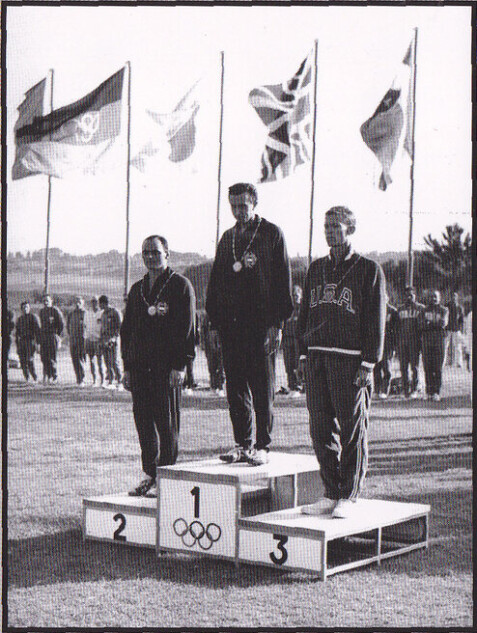
Il podio olimpico del Pentathlon Moderno singolo
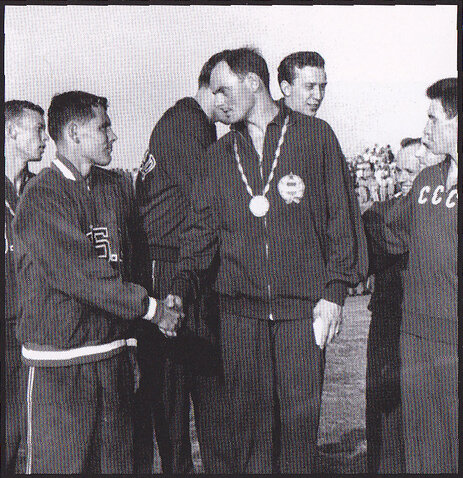
Il podio olimpico del Pentathlon Moderno a squadre
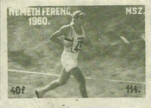
Ferenc Nemeth
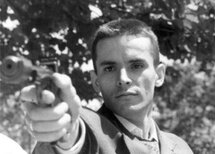
Andras Balczo

