NUOTO 4
La serata del 2 settembre presentava 2 finali, quella dei 200 farfalla uomini e la prima delle due staffette femminili, la 4x100 mista. L'americano Michael Troy (già oro nella 4x200 s.l. e detentore del record mondiale col tempo di 2'12"2), era il favorito nella finale dello stile a delfino. I giapponesi scommettevano sul loro Haruo Yoshimuto, un ventenne in grande crescita, mentre gli australiani puntavano su Neville Hayes, un sedicenne di Sydney.
The evening of September 2 featured two finals: the 200-meter butterfly man and the first of the two women’s relays, the 4x100-meter medley. American Michael Troy (already a gold medalist in the 4x200-meter freestyle and world record holder with a time of 2'12"2) was the favorite in the butterfly final. The Japanese were banking on their own Haruo Yoshimuto, a 20-year-old on the rise, while the Australians were counting on Neville Hayes, a 16-year-old from Sydney.
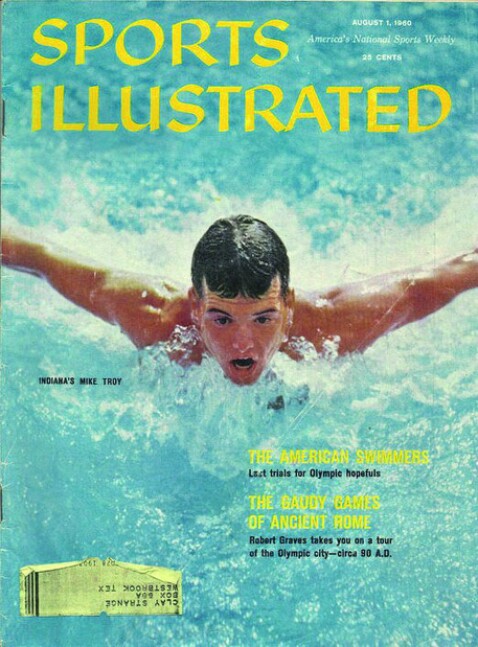
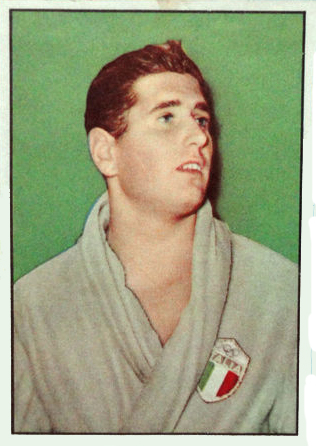
Michael Troy nella copertina di Sports Illustrated ed in una figurina
In gara anche l'italiano Federico Dennerlein. La gara fu velocissima, Troy partì in testa e finì davanti, abbassando di mezzo secondo il suo record mondiale e di oltre sei quello olimpico (2'12"8). L'argento andò all'australiano ed il bronzo all'altro americano Gillanders che nel rush finale aveva preceduto l'italiano Dennerlein.
Italian Federico Dennerlein also competed. The race was extremely fast; Troy took the lead from the start and finished first, shaving half a second off his world record and more than six seconds off the Olympic record (2'12"8). The silver went to the Australian, and the bronze to the other American, Gillanders, who had edged out the Italian Dennerlein in the final sprint.
Alle 21 lo starter diede il via alla staffetta mista 4x100 mista donne, una novità assoluta tra le gare natatorie olimpiche. Il tempo migliore nelle batterie l'avevano ottenuto le britanniche, guidate dalla Lonsbrugh, già oro nei 200 s.l., per cui si erano candidate all'oro. Che le cose in quella finale sarebbero andate diversamente lo si vide subito alla prima frazione a dorso quando la Burke, che toccò il bordo con il nuovo record del mondo (1'09" netti), con tre secondi di vantaggio proprio sulla prima frazionista britannica (Sylvia Lewis). Le britanniche non recuperarono e vennero sopravanzate dalle australiane e dalle tedesche e con la squadra americana, ora in acqua con Patty Kempner, a tenere ottimamente il vantaggio. Vantaggio che aumentò quando fu la volta della Schuler e acquisì dimensioni definitive con la Von Saltza che fermò il cronometro a 4'41"1 (nuovo record del mondo) e nonostante l'orgoglioso recupero della Fraser, che valse alle australiane la medaglia d'argento. Il bronzo andò alle tedesche.
At 9:00 p.m., the starter signaled the start of the women’s 4x100 mixed relay, a brand-new event in Olympic swimming. The British team, led by Lonsbrugh, who had already won gold in the 200 freestyle, had posted the fastest time in the heats, making them strong contenders for gold. It became clear right away in the first backstroke leg that things would turn out differently in that final when Burke touched the wall with a new world record (1:09.00), three seconds ahead of the British anchor (Sylvia Lewis). The British team was unable to make up the deficit and was overtaken by the Australians and the Germans, while the American team, now in the water with Patty Kempner, maintained its lead superbly. That lead grew when it was Schuler’s turn and became definitive when Von Saltza stopped the clock at 4'41"1 (a new world record), despite a valiant comeback by Fraser, which earned the Australians the silver medal. The bronze went to the Germans.
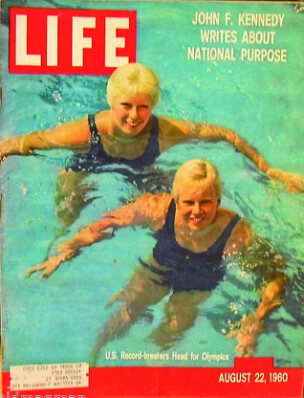
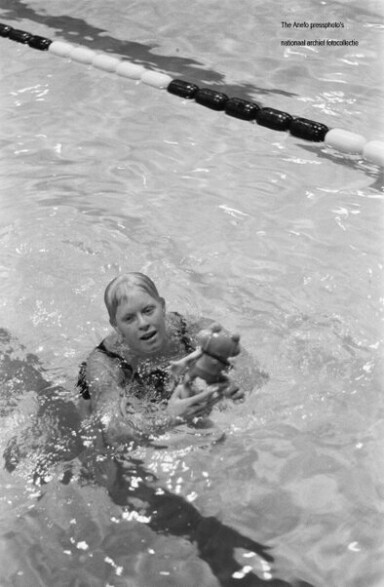
Chris Von Saltza nella copertina di Life e in vasca a Roma
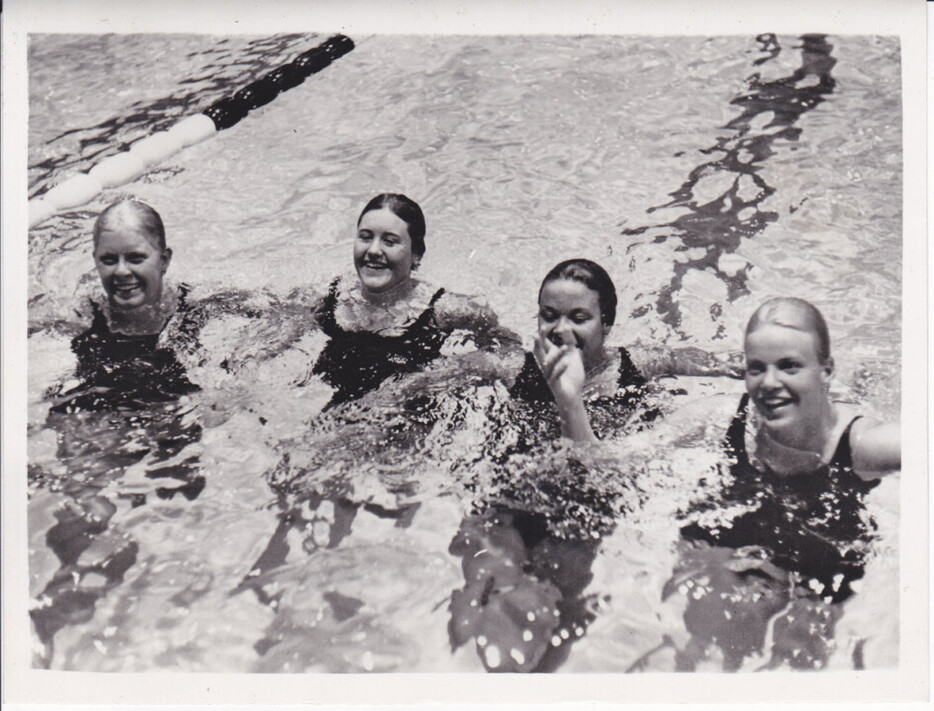
Le ragazze della staffetta 4x100 stile libero subito dopo l'arrivo e la conquista della medaglia d'oro

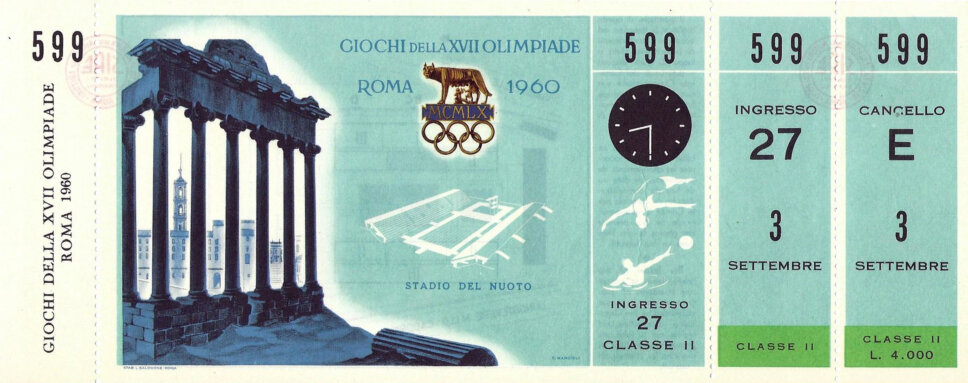
Nella giornata conclusiva, il 3 settembre, si svolsero tre gare, tutte finali e tutte di sera. La prima fu quella dei 100 metri dorso femminile, che confermò i pronostici che davano favoritissima l'americana Lynn Burke, che durante le batterie aveva avvicinato il suo stesso record mondiale. In finale la newyorkese si migliorò ancora di un decimo, toccando 1'09"3. Alle sue spalle la sudafricana di passaporto britannico Natalie Steward e terza la giapponese Kazuhiro Tanaka.
On the final day, September 3, three races took place, all finals and all held in the evening. The first was the 100-meter backstroke women, which confirmed the predictions that had named American Lynn Burke the overwhelming favorite; during the heats, she had come close to her own world record. In the final, the New Yorker improved her time by another tenth of a second, finishing in 1:09.3. Behind her was Natalie Steward of South Africa (holding a British passport), with Japan’s Kazuhiro Tanaka in third place.
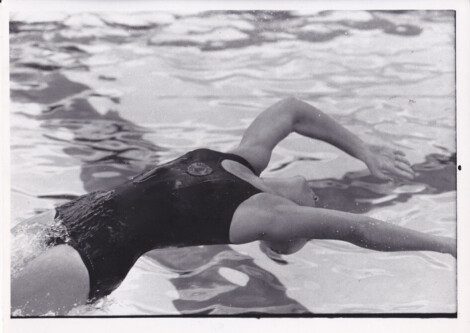
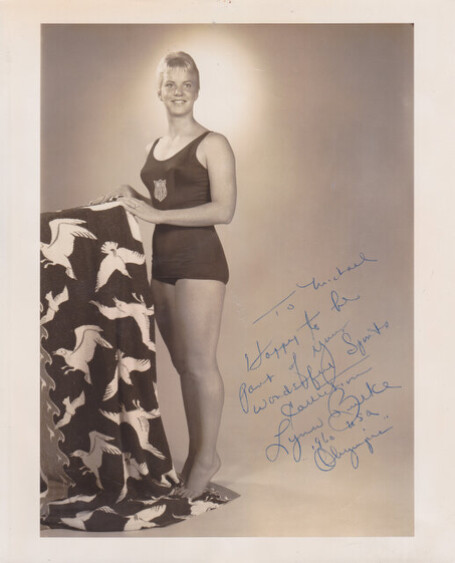
Lynn Burke
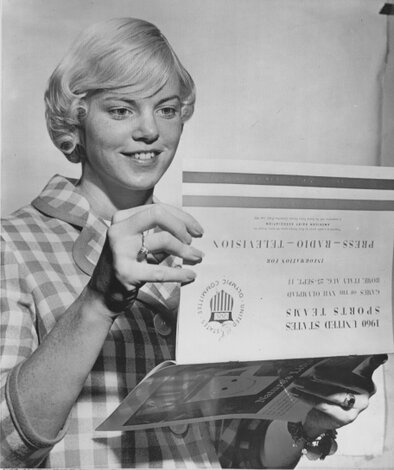
Lynn Burke prima della partenza per Roma e in una foto autografata per un suo fan
Molto combattuta fu la gara dei 1500 metri stile libero uomini, con il duello in famiglia tra John Konrads e Murray Rose. Fu Konrads a spuntarla, col tempo di 17'19"6 contro il 17'21"7 di Rose. Il bronzo andò all'americano George Breen che negli ultimi metri di gara ebbe la meglio sul giapponese Yamanaka. L'attimo cruciale di questa gara arrivò ai mille metri, quando Konrads superò Rose e poi Breen, con i tifosi americani che facevano un baccano tale che neppure lo speaker riuscì a farsi sentire, poi l'americano alzò bandiera bianca e i due australiani lottarono da soli per le restanti vasche, l'uno contro l'altro.
The men’s 1,500-meter freestyle race was fiercely contested, featuring a family showdown between John Konrads and Murray Rose. Konrads came out on top with a time of 17:19.6, compared to Rose’s 17:21.7. The bronze medal went to American George Breen, who edged out Japan’s Yamanaka in the final meters of the race. The pivotal moment of the race came at the 1,000-meter mark, when Konrads overtook Rose and then Breen, with the American fans making such a racket that even the announcer couldn’t be heard. Then the American threw in the towel, and the two Australians battled it out alone for the remaining laps, head-to-head.
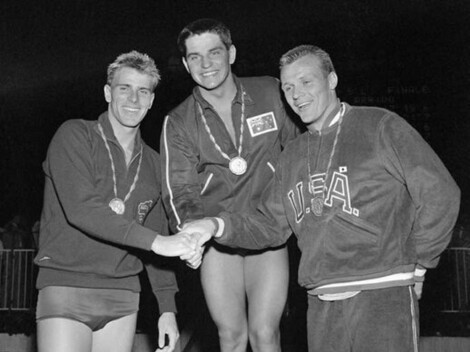
Il podio della gara dei 1500 metri stile libero
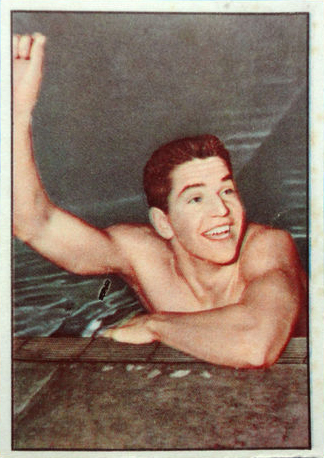
John Konrads in una figurina
L'ultima finale partì alle 21,30 con la staffetta della 4 x 100 stile libero donne. Straordinarie furono le prestazioni della Fraser e della Von Saltza, ma la differenza a fawore delle ragazze USA la fece Carolyn Wood, che con una vasca percorsa in 1'02" netti surclassò la Lorraine Crapp di 2 secondi e 7 decimi; letteralmente la inquadrò nel mirino, la affiancò e la.... salutò. Gli Stati Uniti, con Joan Spillane, Shirley Stobs, Chris Von Saltza e Carolyn Wood vinsero stabilendo il nuovo record mondiale (4'08"9), davanti all'Australia (Fraser, Konrads, Crapp e Colquhoun) che fece registrare il tempo di 4'11"3 e poi le tedesche (Brunner, Weiss, Pechstein e Steffin) distanziati addirittura di 11 secondi.
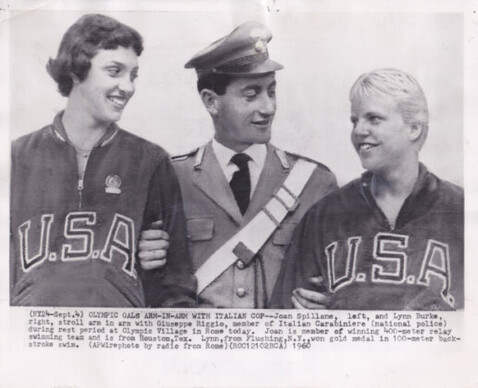
Joan Spillane e Lynn Burke scortati da un carabiniere al Villaggio Olimpico
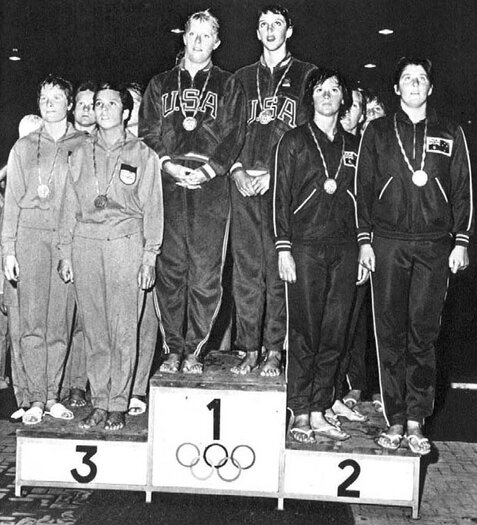
Il podio della staffetta 4x100 stile libero femminile
The final event began at 9:30 p.m. with the women’s 4 x 100 freestyle relay. Fraser and Von Saltza delivered extraordinary performances, but it was Carolyn Wood who made the difference in favor of the U.S. team. With a lap time of exactly 1:02.00, she outpaced Lorraine Crapp by 2.7 seconds; she literally locked onto her, pulled alongside her, and... left her in the dust. The United States, with Joan Spillane, Shirley Stobs, Chris Von Saltza, and Carolyn Wood, won while setting a new world record (4:08.9), ahead of Australia (Fraser, Konrads, Crapp, and Colquhoun), who clocked 4:11.3, and then the German team (Brunner, Weiss, Pechstein, and Steffin), who trailed by a full 11 seconds.

