Hockey su Prato
HOCKEY SU PRATO - FIELD HOCKEY
Il torneo di hockey su prato della XVII Olimpiade si tenne a Roma tra il 26 agosto e il 10 settembre 1960 e vide la partecipazione di 16 squadre nazionali (le quattro semifinaliste di Melbourne - India, Pakistan, Gran Bretagna e Germania, l'Italia quale paese organizzatore, più altre undici nazioni scelte in base alla classifica acquisita nel quadriennio olimpico: OLA, SPA, KEN, AUS, NZEL, BEL, SVI, POL, FRA, GIA, DAN). I pronostici della vigilia furono unanimi in tutto il mondo (meno che in Pakistan) nell'Indicare l'India come la favorita del torneo.
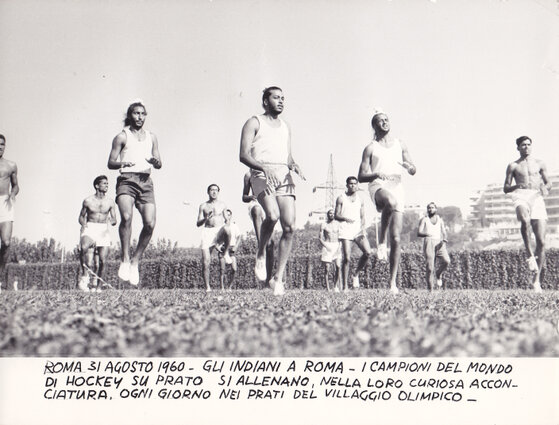
The field hockey tournament of the XVII Olympic Games was held in Rome from August 26 to September 10, 1960, and featured 16 national teams (the four semifinalists from Melbourne - India, Pakistan, Great Britain, and Germany; Italy as the host country; plus eleven other nations selected based on their rankings during the Olympic quadrennium: OLA, SPA, KEN, AUS, NZEL, BEL, SVI, POL, FRA, GIA, DAN). Pre-tournament predictions were unanimous worldwide (except in Pakistan) in naming India as the tournament favorite.
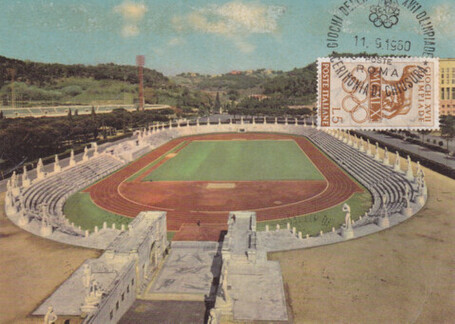
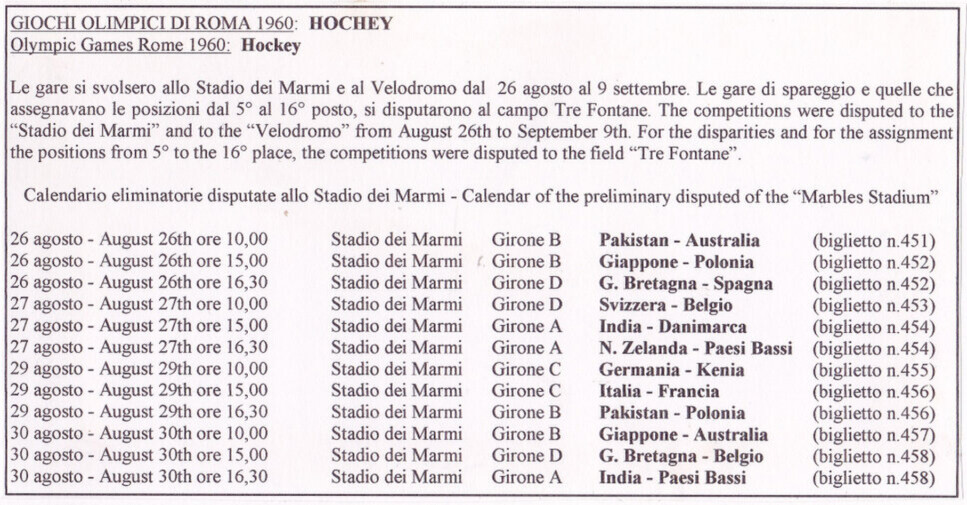
Il torneo fu organizzato sulla base di 4 gruppi, ognuno composto da 4 squadre: le prime due classificate accedettero ai quarti di finale, le terze disputarono il girone di qualificazione dal 9º al 12º posto e alle ultime classificate di ogni gruppo fu riservato un girone per la classificazione dal 13º al 16º posto. Le prime partite si giocarono tra il 26 ed il30 agosto allo Stadio dei Marmi.
The tournament was organized into four groups, each consisting of four teams: the top two teams in each group advanced to the quarterfinals, the third-place teams competed in a qualifying round for 9th through 12th place, and the last-place teams in each group competed in a round to determine 13th through 16th place. The first matches were played between August 26 and 30 at the Stadio dei Marmi.
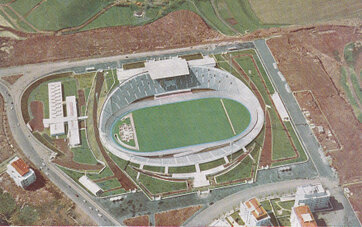
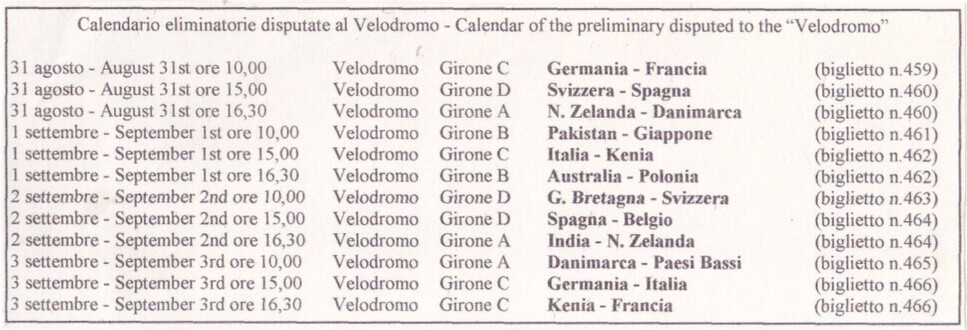
Dal 31 agosto, terminate le gare di ciclismo, le partite furono giocate al Velodromo Olimpico dell'EUR. Ai quarti di finale si qualificarono 8 nazionali: Pakistan, Australia, Spagna, Gran Bretagna, India, Kenya, Nuova Zelanda e Francia che eliminò l'Italia. Anche se non ebbe successo di pubblico (forse anche per l'immediata eliminazione della squadra di casa), sotto il profilo tecnico il torneo fu davvero un successo, specialmente dai quarti in poi quando le gare diventavano ad eliminazione diretta.
tarting on August 31, after the cycling events had concluded, the matches were played at the Olympic Velodrome in the EUR district. Eight national teams qualified for the quarterfinals: Pakistan, Australia, Spain, Great Britain, India, Kenya, New Zealand, and France, which eliminated Italy. Although it was not a crowd-pleaser (perhaps due in part to the home team’s early elimination), from a technical standpoint the tournament was a true success, especially from the quarterfinals onward when the matches became single-elimination.
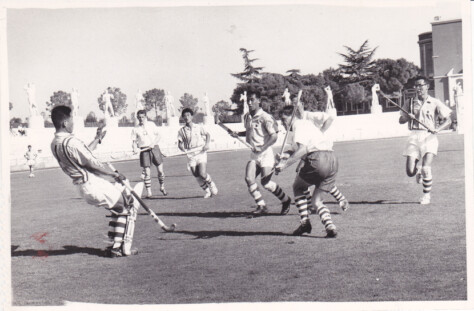
26 agosto: Giappone-Polonia
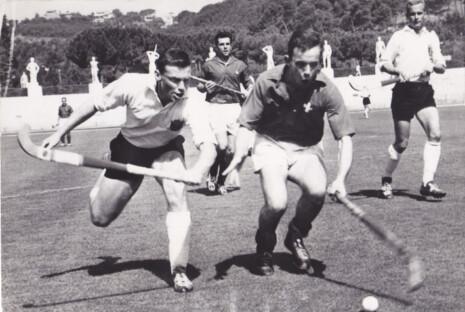
27 agosto: Svizzera-Belgio
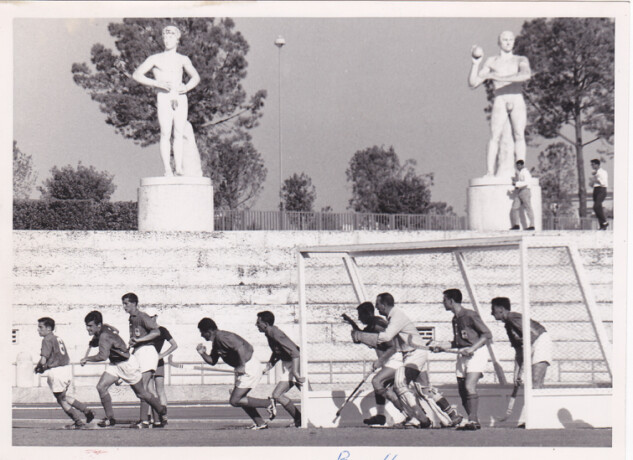
29 agosto: Italia - Francia
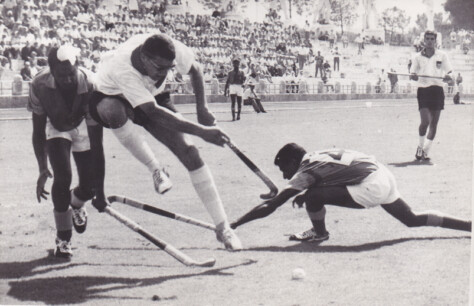
29 agosto: Germania-Kenia
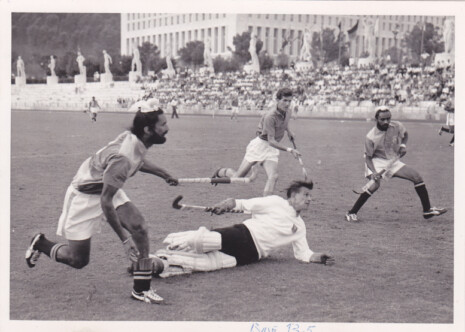
30 agosto: India-Olanda
I quarti di finale del 5 settembre si rivelarono equilibratissimi. L'India vinse con l'Australia per 1 a 0 e la Gran Bretagna eliminò il Kenya. Il Pakistan superò 2-1 la Germania con un gol realizzato su rigore nei minuti conclusivi. Infine la Spagna sconfisse la Nuova Zelanda, sempre per 1 a 0.
The quarterfinals on September 5 turned out to be extremely close. India beat Australia 1–0, and Great Britain eliminated Kenya. Pakistan defeated Germany 2–1 with a penalty kick in the final minutes. Finally, Spain defeated New Zealand, also 1–0.
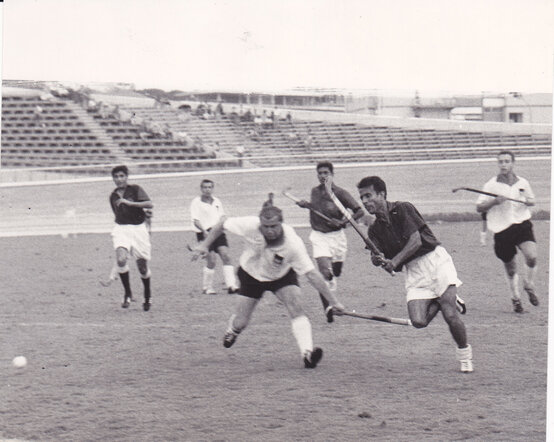
5 settembre : Pakistan - Germania
Gli accoppiamenti delle semifinali proposero una sfida Asia-Europa, con i britannici opposti agli indiani ed i pakistani agli spagnoli. Entrambe le partite terminarono 1 a 0 a favore delle due nazionali asiatiche.
The semifinal matchups featured an Asia-Europe showdown, with the British facing the Indians and the Pakistanis taking on the Spaniards. Both matches ended 1–0 in favor of the two Asian national teams.
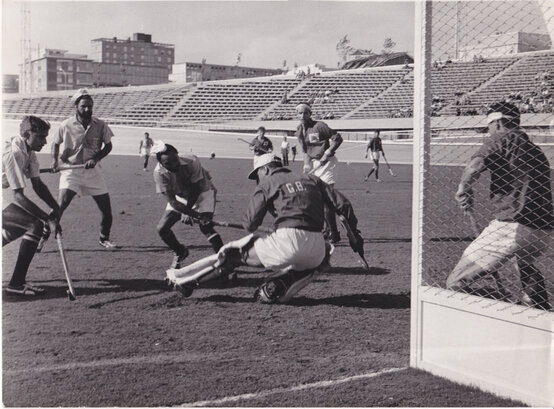
7 settembre : India - Gran Bretagna
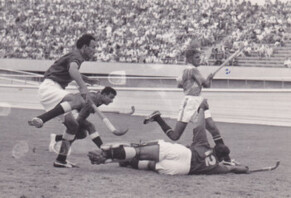
Venerdì 9 settembre, al mattino, la Spagna conquistò il bronzo con un 2 a 1 inferto alla Gran Bretagna. Nel pomeriggio le tribune del Velodromo, per un totale di cinquemila posti, era cpmpletamente esaurito e gli spettatori erano per la maggioranza cittadini delle due nazioni che si sarebbero affrontate per l'oro olimpico: India e Pakistan. Si trattava di una piccola guerra tra cugini di medesima razza e opposta fede, disputata cpn ventidue bastoni e una palla, in un luogo parecchio esotico e sotto l'insegna di pace dei cinque cerchi olimpici. Alle 15,30 la sfida ebbe inizio, sotto un cielo azzurro e limpido. Gli indiani con la maglia a quarti giallo-azzurri, i pakistani con la camiciola verde, la stessa utilizzata a Melbourne quattro anni prima, quando persero 1 a 0 la finale olimpica, sempre con i loro avversari della finale romana. I giocatori in campo si conoscevano perfettamente, ognuno sapeva tutto di tutti gli altri e per questo il match rimase bloccato per tutta la prima parte del primo tempo. Sarebbe andata avanti così per un bel pezzo se un gran tiro secco in diagonale di Ahmad Naseer non avesse sorpreso il portiere indiano, portando i pakistani in vantaggio. Gli indiani tentarono una reazione, ma i pakistani furono bravi a bloccare tutte le offensive degli indiani. L'alto ritmo della gara, sul volgere della gara, trovò le due squadre parecchio provate, ed il Pakistan riuscì a portare fino alla conclusione il vantaggio ponendo termine al lungo regno olimpico dell'India.
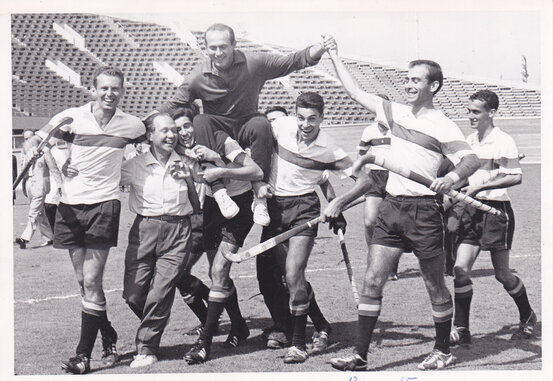
Gli spagnoli festeggiano la medaglia di bronzo
On the morning of Friday, September 9, Spain won the bronze medal with a 2–1 victory over Great Britain. In the afternoon, the stands at the Velodrome—with a total capacity of 5,000—were completely sold out, and the spectators were mostly citizens of the two nations that would be competing for the Olympic gold: India and Pakistan. It was a small war between cousins of the same race but opposing faiths, fought with twenty-two sticks and a ball, in a rather exotic setting and under the banner of peace represented by the five Olympic rings. At 3:30 p.m., the match began under a clear, blue sky. The Indians wore yellow-and-blue checkered jerseys, while the Pakistanis wore green jerseys—the same ones they’d worn in Melbourne four years earlier, when they lost the Olympic final 1–0 to the very same opponents they were facing in the Rome final. The players on the field knew each other inside and out; everyone knew everything about everyone else, which is why the match remained deadlocked throughout the first half. It would have continued that way for quite a while had it not been for a powerful, sharp diagonal shot by Ahmad Naseer that caught the Indian goalkeeper off guard, giving the Pakistanis the lead. The Indians tried to mount a comeback, but the Pakistanis did a good job of thwarting all of their attacks. As the match wore on, the fast pace took its toll on both teams, and Pakistan managed to hold on to its lead until the final whistle, bringing an end to India’s long Olympic reign.
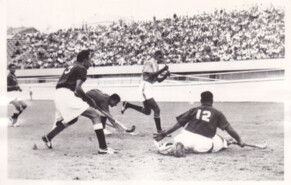
Alcune fasi della finale tra Pakistan e India
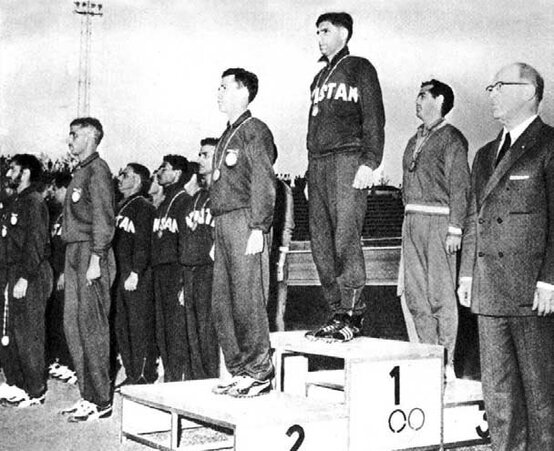
Il podio olimpico

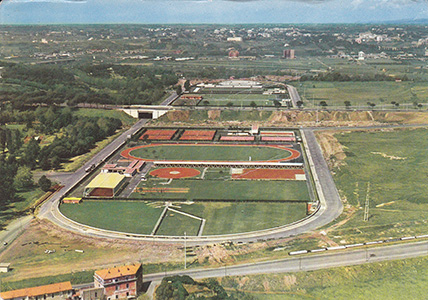
Gli incontri delle finaline per assegnare le posizioni dal 5° all'8° posto, quello dal 9° al 12° e dal 13° al 16° posto furono disputati quasi tutti allo Stadio delle Tre fontane.
The consolation matches to determine the rankings from 5th to 8th place, from 9th to 12th place, and from 13th to 16th place were almost all played at the “Tre Fontane” Stadium.

