PALLANUOTO
PALLANUOTO - WATERPOLO
Sedici le squadre in lizza, suddivise in quattro distinti gironi da quattro squadre ciascuno, le cui testa di serie erano Italia, Unione Sovietica, Jugoslavia ed Ungheria. Le prime due classificate di ogni girone accedevano alla fase successiva. Le otto squadre vennero poi divise ancora in due gironi da quattro nei quali ognuna si portava dietro il risultato della prima fase. Anche in questo caso, le prime due squadre andavano al girone finale a quattro ed anche in questo caso partendo dall’esito dello scontro diretto già disputato.
Sixteen teams were competing, divided into four distinct groups of four teams each, the top seeds of which were Italy, the Soviet Union, Yugoslavia and Hungary. The top two teams in each group advanced to the next stage. The eight teams were then further divided into two groups of four, each of which carried the result of the first phase. Again, the top two teams advanced to the final four-way round, again starting from the outcome of the direct clash already played.
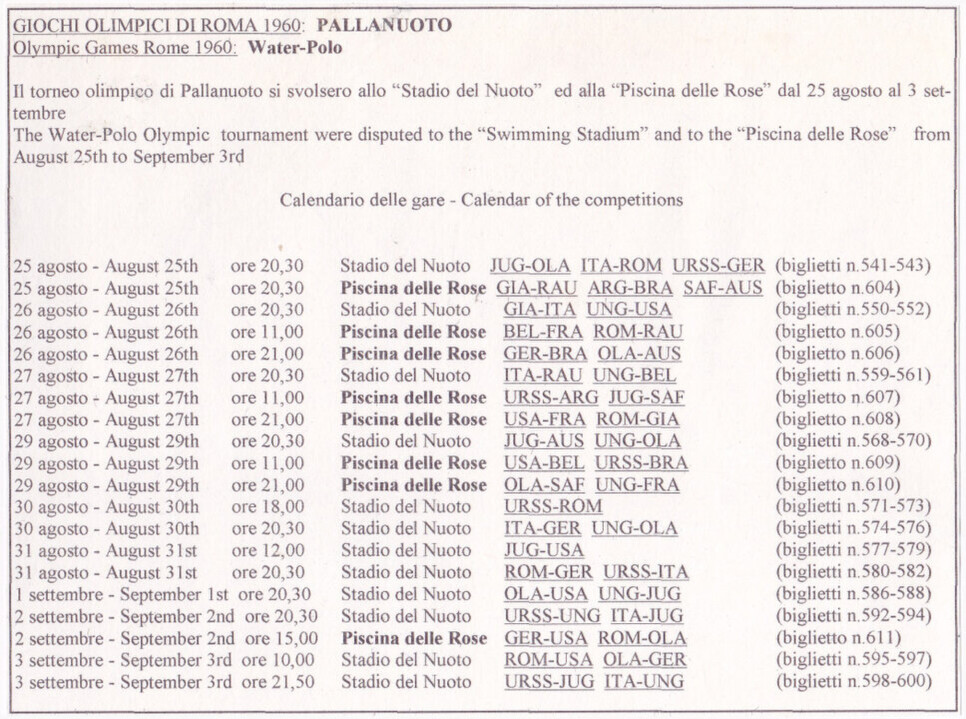
Calendario delle gare
Favorita principale era la squadra ungherese, che aveva conquistato quattro ori e due argenti nelle ultime sei edizioni olimpiche, da Amsterdam 1928 sino a Melbourne ’56. E proprio ad un esperto ungherese, Andrés Zolyomy, era stata affidata la guida della squadra italiana che aveva già guidato alla conquista della medaglia d'oro ai Campionati Europei di Montecarlo del 1947 ed al quarto posto ai precedenti Giochi di Melbourne.
The main favorite was the Hungarian team, which had won four golds and two silvers in the last six Olympic editions, from Amsterdam 1928 to Melbourne ’56. And it was precisely a Hungarian expert, Andrés Zolyomy, who had been entrusted with the leadership of the Italian team he had already led to the gold medal at the 1947 European Championships in Monte Carlo and to fourth place at the previous Games in Melbourne.
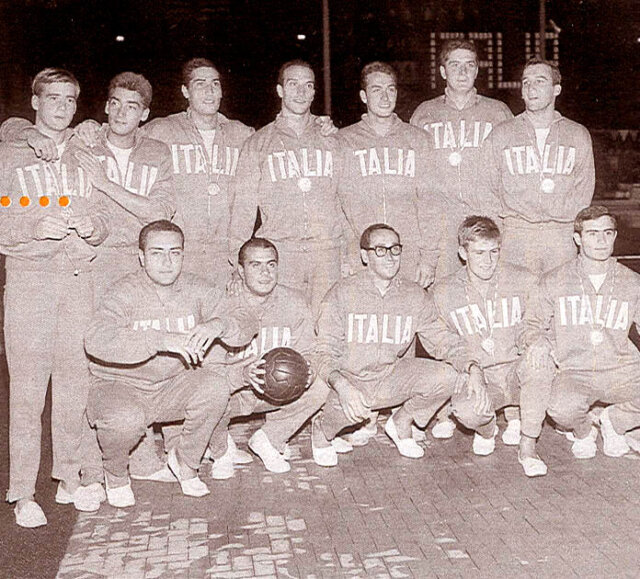
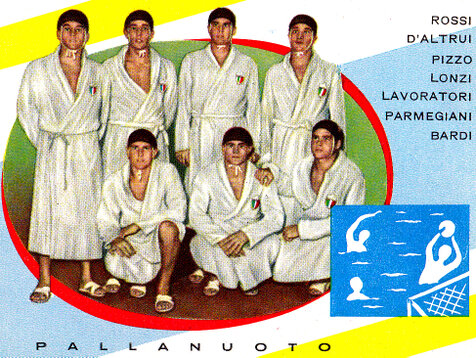
Zolyomy, al termine di uno stage svolto ad inizio agosto, sceglie 12 giocatori per il torneo olimpico: Amedeo Ambron, Danio Bardi, Giuseppe D’Altrui, Brunello Spinelli , Salvatore Gionta, Giancarlo Guerrini, Franco Lavoratori, Eraldo Pizzo, Gianni Lonzi, Luigi Mannelli, Rosario Parmegiani e Dante Rossi. Un team di età media poco superiore ai 20 anni.
Zolyomy, at the end of a training camp held in early August, chose 12 players for the Olympic tournament: Amedeo Ambron, Danio Bardi, Giuseppe D'Altrui, Brunello Spinelli, Salvatore Gionta, Giancarlo Guerrini, Franco Lavoratori, Eraldo Pizzo, Gianni Lonzi, Luigi Mannelli, Rosario Parmegiani and Dante Rossi. A team with an average age of just over 20.
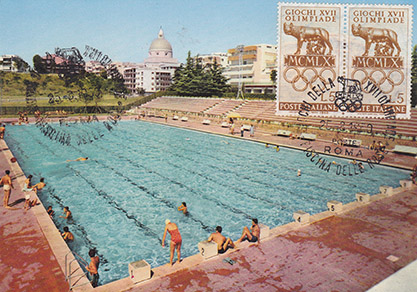
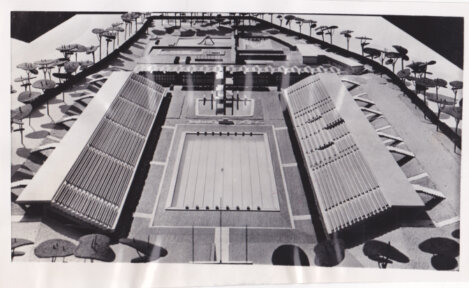
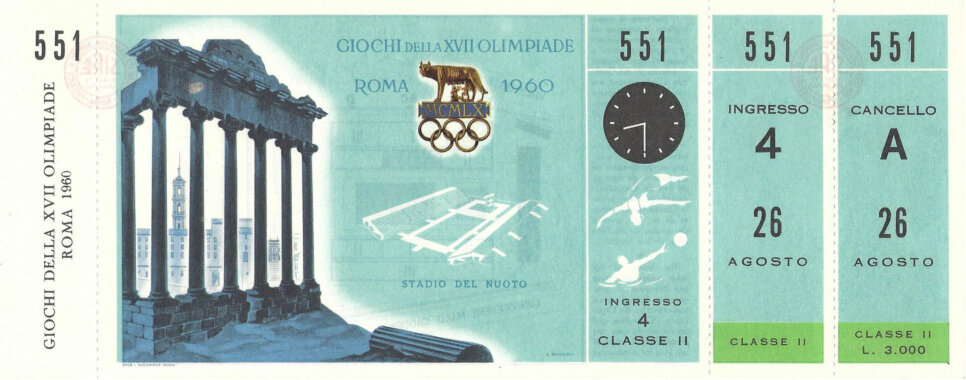
I riflettori si accesero già la sera del 25 agosto, in contemporanea allo Stadio del Nuoto ed alla Piscina delle Rose. I due impianti ospitarono i match della prima fase, con la differenza che al Foro Italico si giocò sempre di sera, dopo le gare di nuoto, mentre all'EUR qualche partita di minore caratura si svolse al mattino. Gli incontri di semifinale e di finale furono tutte disputati allo Stadio del Nuoto. Nel primo girone, disputatosi tra il 25 e il 27 agosto, l'Italia, con tre vittorie, conquistò il primo posto seguita dalla Romania.
The spotlight came on as early as the evening of August 25th, simultaneously at the Swimming Stadium and the Rose Pool. The two facilities hosted the matches of the first phase, with the difference that at the Foro Italico they were always played in the evening, after the swimming competitions, while at the EUR some lower-level matches took place in the morning. The semi-final and final matches were all played at the Swimming Stadium. In the first group, played between 25 and 27 August, Italy, with three victories, took first place, followed by Romania.
Nel secondo girone, a qualificarsi sono l'Unione Sovietica, con tre vittorie, e la Germania Unificata, Subito escluse le due squadre sudamericane partecipanti, Brasile ed Argentina, mentre nel terzo girone ad avere la meglio è la Jugoslavia sui Paesi Bassi, esclusi Australia e Sud Africa. Infine l'ultimo girone, come da previsione, fu dominato dallo squadrone ungherese che precedette gli Stati Uniti ma eliminando le squadre di Francia e Belgio, Tutte queste gare si disputarono tra il 27 e il 29 agosto.
In the second group, the Soviet Union qualified, with three victories, and Unified Germany, immediately excluding the two participating South American teams, Brazil and Argentina, while in the third group, Yugoslavia prevailed over the Netherlands, excluding Australia and South Africa. Finally, the last group, as expected, was dominated by the Hungarian squad that preceded the United States but eliminated the teams from France and Belgium. All these matches were played between 27 and 29 August.
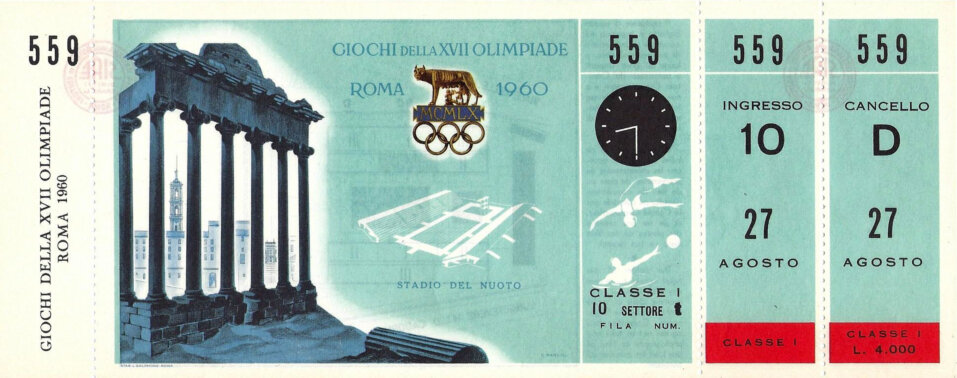
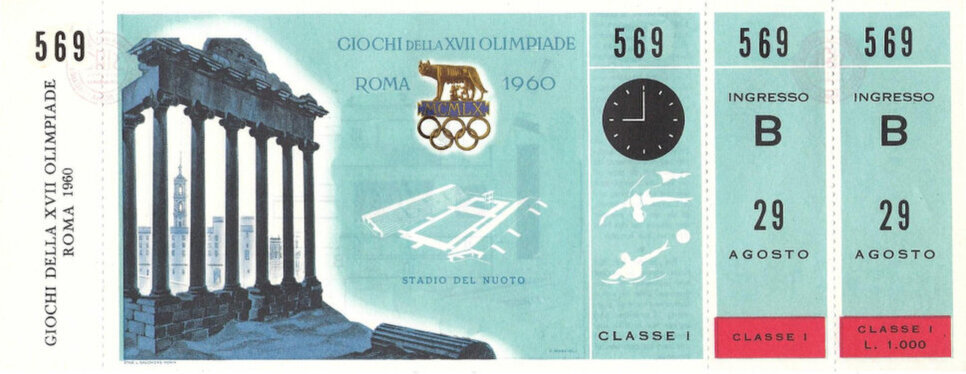
Gli azzurri andarono quindi a comporre il girone di semifinale assieme alla Romania, partendo da 2 punti (che aveva battuto nel girone), al pari dell’Urss, in virtù del successo sovietico per 5-4 sulla Germania, mentre l’altro raggruppamento era composto da Jugoslavia e Olanda (2-1 per gli slavi) e da Ungheria e Stati Uniti (7-2 per i magiari nel confronto diretto), così che i pronostici della vigilia risultano ampiamente rispettati. Gli azzurri scesero in acqua alle 22:30 del 30 agosto per affrontare la Germania dopo che, quattro ore prima, l’Urss aveva battuto per 3-2 i rumeni, ragion per cui, in caso di vittoria, all'Italia sarebbe già garantito l’accesso alla poule finale a quattro. Il Settebello fece suo l’incontro grazie ad una super difesa ed alle reti di Parmegiani e di Pizzo (doppietta per lui). Questo 3-0 che mandò l’Italia alla sfida contro l’Unione Sovietica, fondamentale in chiave medaglia d’oro, poiché, ancora una volta, il risultato concorreva a formare la classifica finale del girone.
La decisiva partita tra Italia e URSS ebbe inizio solo alla mezzanotte del 31 agosto. Gli azzurri disputarono quella che poi sarà definita "la partita perfetta". Dopo aver colpito un palo con Bardi, si portano in vantaggio con Pizzo all'8° minuto del primo tempo (all’epoca gli incontri erano suddivisi in due sole frazioni da 10′ ciascuno), per poi toccare a Giuseppe D'Altrui mettere il sigillo allo stesso minuto della ripresa, anche se l’eroe di giornata fu il portiere Dante Rossi, capace di opporsi ad ogni tentativo avversario, ergendosi a vero protagonista della serata.
The Italian team then went on to make up the semi-final group together with Romania, starting from 2 points (which they had beaten in the group), like the USSR, by virtue of the Soviet 5-4 victory over Germany, while the other group was made up of Yugoslavia and the Netherlands (2-1 for the Slavs) and Hungary and the United States (7-2 for the Magyars in the direct confrontation), so that the pre-match predictions were largely respected. The Azzurri took to the water at 10:30 PM on August 30 to face Germany after the USSR had beaten the Romanians 3-2 four hours earlier, which is why, in the event of a victory, Italy would already be guaranteed access to the final four-man pool. The Settebello won the match thanks to a super defense and goals from Parmegiani and Pizzo (two goals for him). This 3-0 victory sent Italy to a match against the Soviet Union, a crucial gold medal match, as, once again, the result helped form the final group standings. The decisive match between Italy and the USSR did not begin until midnight on August 31. The Italians played what would later be called "the perfect match". After hitting the post with Bardi, they took the lead through Pizzo in the 8° minute of the first half (at the time the matches were divided into just two 10' halves), before it was Giuseppe D'Altrui's turn to put the seal on the same minute of the second half, even if the hero of the day was goalkeeper Dante Rossi, capable of opposing every opponent's attempt, establishing himself as the true protagonist of the evening.
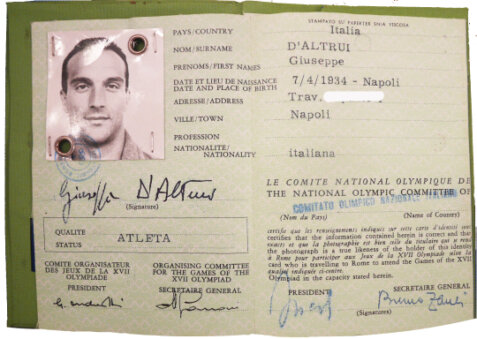
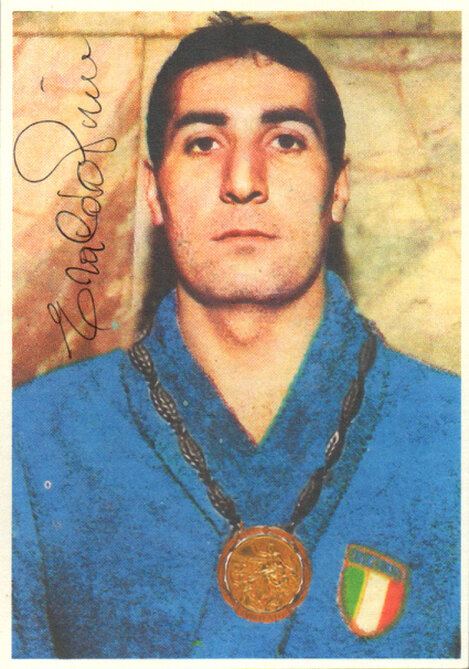
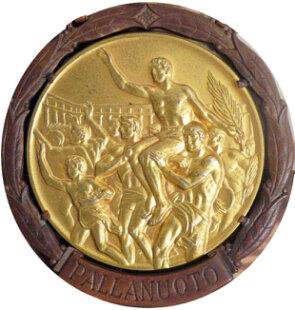
Eraldo Pizzo con la medaglia d'oro al collo,
a sinistra la tessera olimpica di Giuseppe D'Altrui
a sinistra la tessera olimpica di Giuseppe D'Altrui
Il 1 settembre, nell'altro girone, si svolse lo scontro tra Jugoslavia e Ungheria che, con grande sorpresa, vide i magiari soccombere per 1-2, cosicché la classifica di partenza del girone che assegnava le medaglie vide Italia (2-0) e la Jugoslavia (2-1) a 2 punti, Ungheria ed Urss a 0 punti.
On 1 September, in the other group, the clash between Yugoslavia and Hungary took place which, to great surprise, saw the Magyars lose 1-2, so that the starting standings of the group that awarded the medals saw Italy (2-0) and Yugoslavia (2-1) with 2 points, Hungary and the USSR with 0 points.
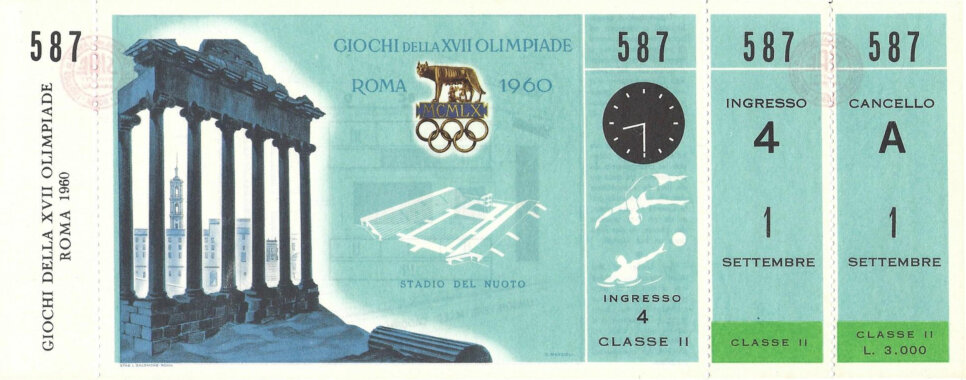
Il fatto di giocare in casa faceva sì che l’Italia scendesse in acqua sempre per seconda, vantaggio non indifferente, soprattutto quel 2 settembre quando nella prima gara, Unione Sovietica ed Ungheria si divisero la posta in palio (3 a 3). Questo significava che battere la Jugoslavia avrebbe potuto significare essere ad un passo dalla medaglia d'oro. La Jugoslavia non era un'avversaria malleabile, nella quale emergevano talenti come il portiere Milan Muskatirovic, alto 193 cm., Hrvoje Kadic, Zlatko Simenc e Zdravko Jezic, gloria balcanica e portabandiera per il proprio paese ai Giochi di Helsinki 1952, ma Zolyomy sapeva come motivare i propri giocatori.
The fact of playing at home meant that Italy always took to the water second, a significant advantage, especially on September 2nd when in the first match, the Soviet Union and Hungary shared the stakes (3 to 3). This meant that beating Yugoslavia could mean being one step away from the gold medal. Yugoslavia was not a malleable opponent, emerging with talents such as 193 cm tall goalkeeper Milan Muskatirovic, Hrvoje Kadic, Zlatko Simenc and Zdravko Jezic, Balkan glory and flag bearer for their country at the 1952 Helsinki Games, but Zolyomy knew how to motivate his players.
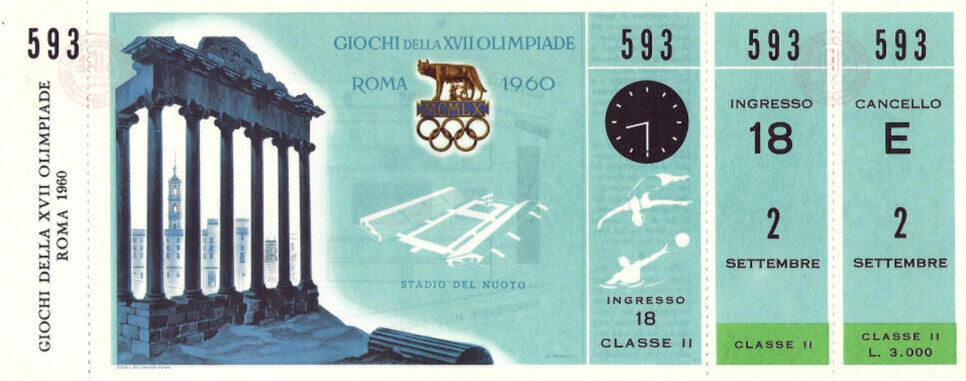
Con la medaglia d’oro ad un passo, l’Italia entra in campo determinata e già al primo minuto, con il 23enne napoletano Rosario Parmegiani, passa in vantaggio. La Jugoslavia pareggia all'ottavo minuto del primo tempo, con un rigore che Žužej realizza. I ragazzi di Zolyomy riconquistano il vantaggio, ancora con Parmegiani, a pochi secondi dal termine per poi mantenere i nervi saldi nelle ultime fasi di gioco e portare a casa una preziosissima vittoria. Quando manca solo l’ultimo turno, con le sfide Urss-Jugoslavia ed Italia-Ungheria, la classifica vede ora gli azzurri ad un passo dal titolo con 4 punti, seguiti da Jugoslavia 2 punti, Ungheria ed Unione Sovietica 1 punto.
With the gold medal just a step away, Italy entered the field determined and took the lead in the first minute, with 23-year-old Neapolitan Rosario Parmegiani. Yugoslavia equalised in the eighth minute of the first half, with a penalty that Žužej converted. Zolyomy's boys regained the lead, again through Parmegiani, with just seconds left before holding their nerve in the final stages of the game and taking home a precious victory. With only the final round remaining, with the USSR-Yugoslavia and Italy-Hungary matches, the standings now see Italy one step away from the title with 4 points, followed by Yugoslavia 2 points, Hungary and the Soviet Union 1 point.
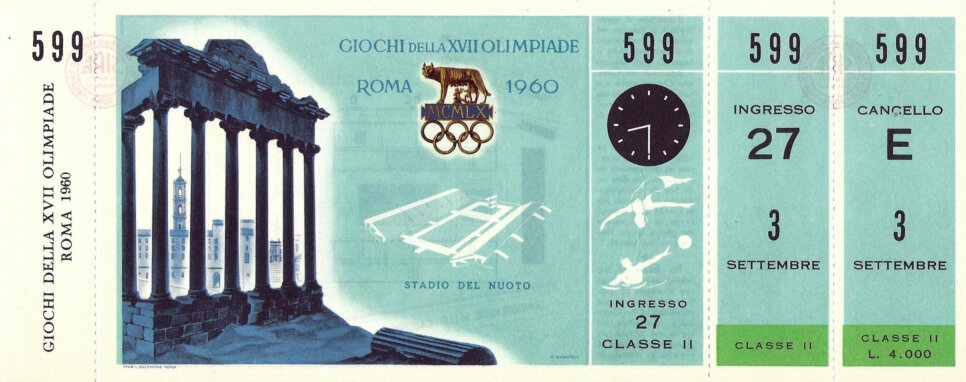
Il 3 settembre erano previste le ultime due sfide, l’Italia era chiamata a giocare la sua gara contro l'Ungheria, ma dopo la conclusione della sfida tra Unione Sovietica e Jugoslavia, che se fosse finita in parità o con la sconfitta della Jugoslavia avrebbe già potuto mettere al collo la medaglia d’oro ancor prima di scendere in acqua, cosa che, in effetti, accade, visto che ad affermarsi fu l’Unione Sovietica per 4-3, scavalcando in classifica gli avversari e regalando al Settebello il trionfo olimpico. La sfida con l'Ungheria aveva adesso meno importanza per gli azzurri, che però volevano chiudere il torneo da imbattuti, avendo vinto tutte e sei le gare precedenti, ma quella partita era fondamentale per i magiari che dovevano provare a conquistare la medaglia d'argento. Fu una gara aspra, terminata con un pareggio, 3 a 3 che regalò all'Ungheria la medaglia di bronzo.
The last two matches were scheduled for September 3rd, Italy was called to play its match against Hungary, but after the conclusion of the match between the Soviet Union and Yugoslavia, which if it had ended in a draw or with the defeat of Yugoslavia could have already put the gold medal around its neck even before going into the water, which, in fact, happens, as the Soviet Union won 4-3, overtaking their opponents in the standings and giving the Settebello an Olympic triumph. The match against Hungary was now less important for the Azzurri, who however wanted to finish the tournament undefeated, having won all six of their previous matches, but that match was crucial for the Magyars who had to try to win the silver medal. It was a tough match, ending in a 3-3 draw that gave Hungary the bronze medal.
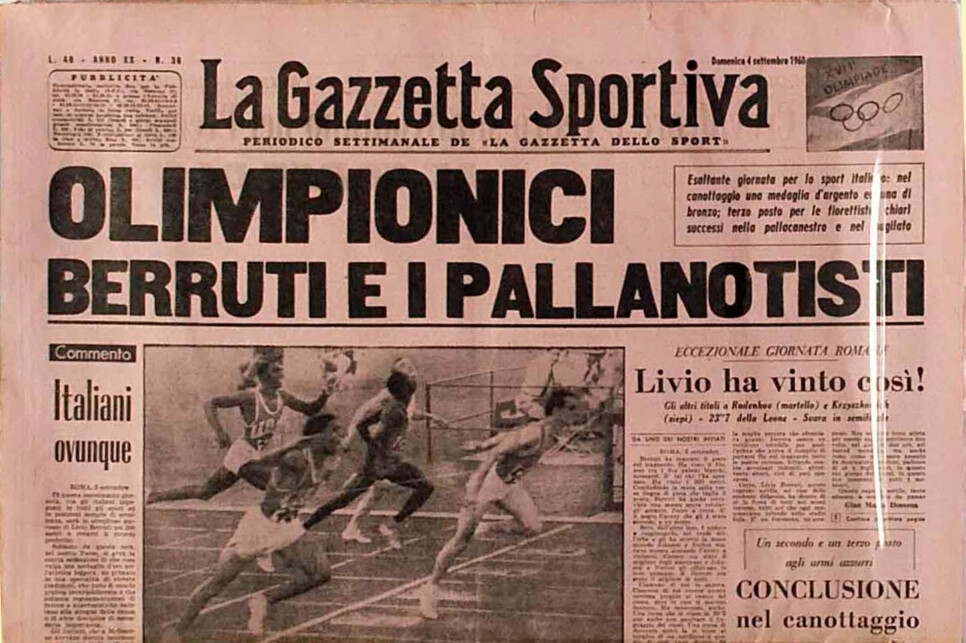
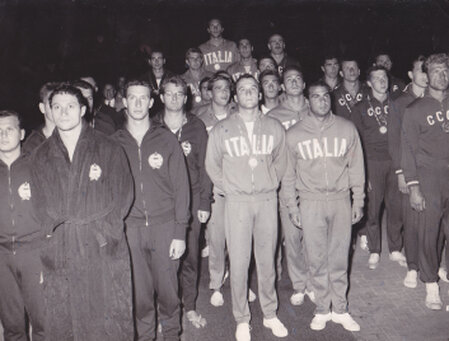
Il podio olimpico di Roma '60
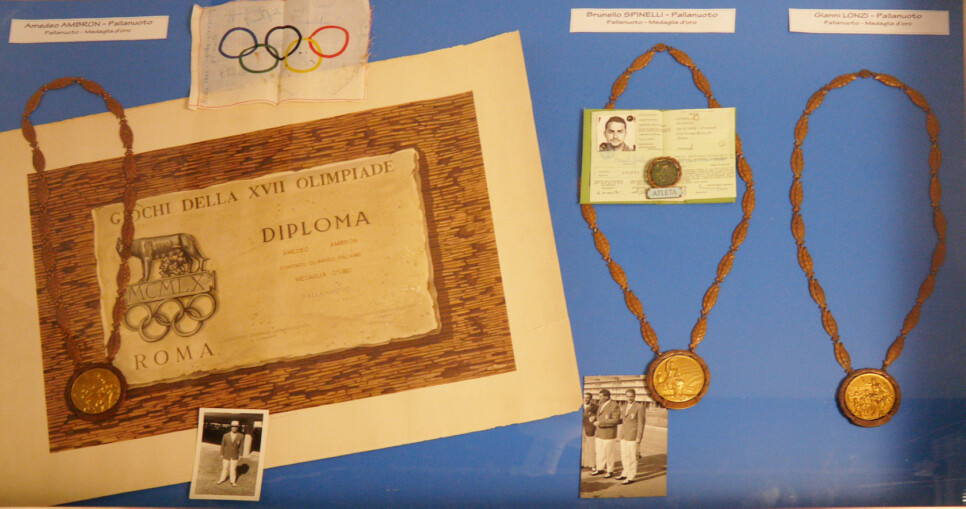
le medagli d'oro di Ambron, Spinelli e Lonzi, il diploma di Ambron ed il badge con la carta d'identità olimpica di Spinelli, esposti all'esposizione del 2010 per i 50 anni dei Giochi Olimpici di Roma
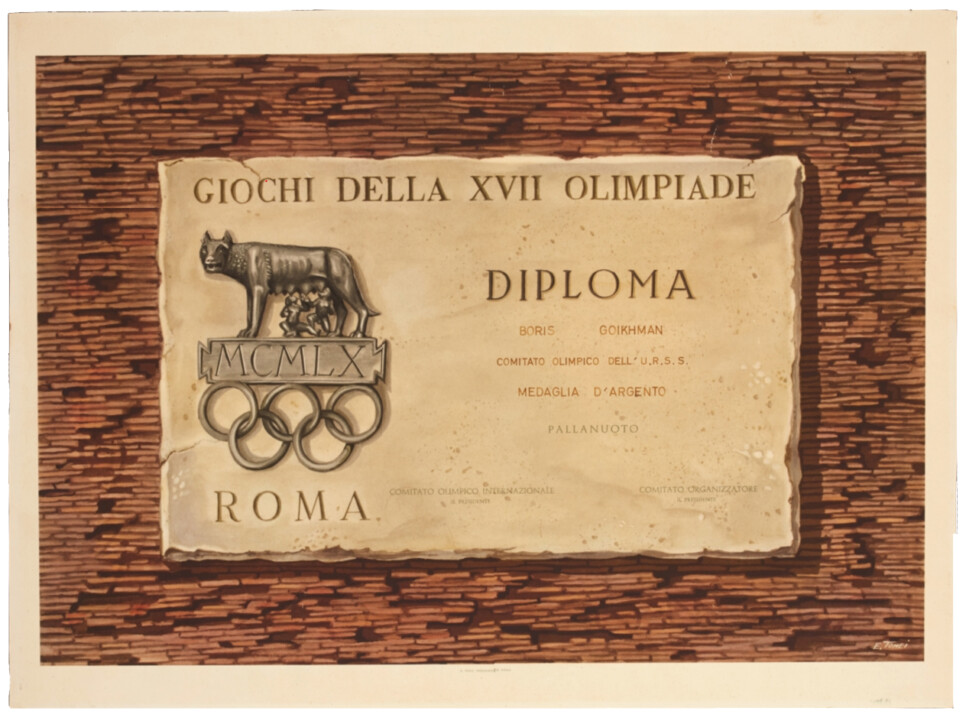
Diploma di medaglia d'argento per il pallanuotista sovietico Boris Goikhman

