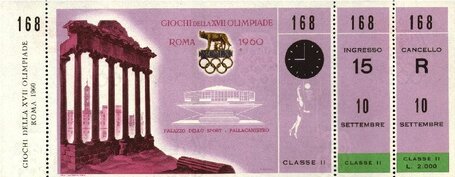
Pallacanestro
PALLACANESTRO - BASKETBALL
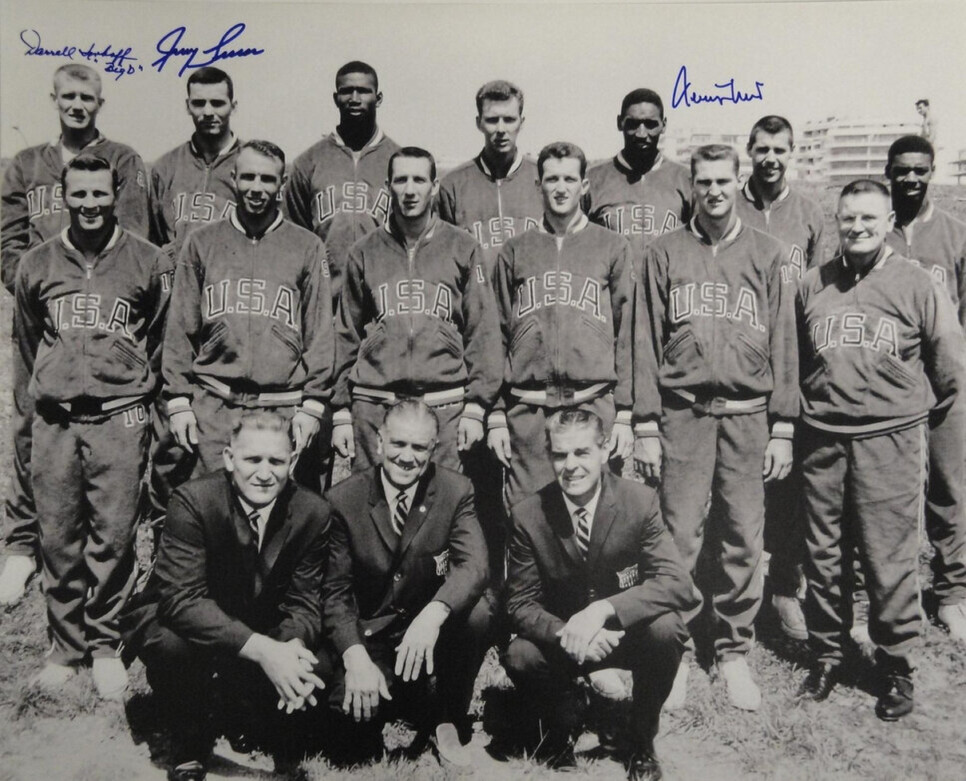
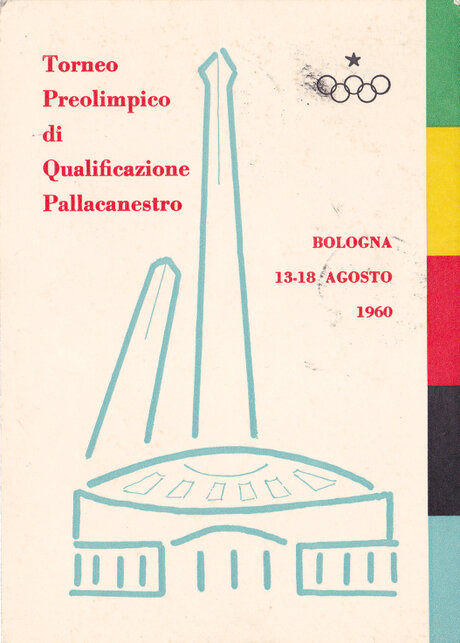
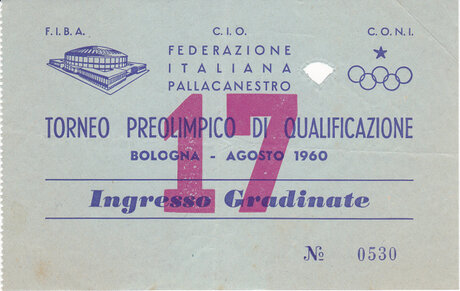
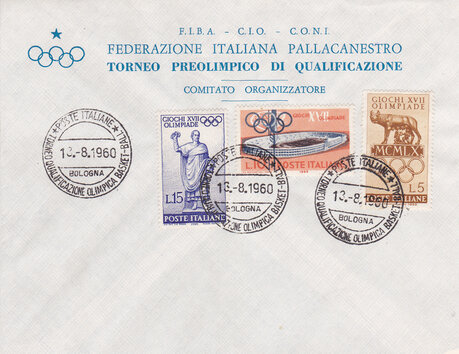
Con quasi cento nazioni affiliate alla Federation International de Basketball Amateur, la kermesse romana fu anticipata da qualificazioni che ebbero il loro grado finale in un torneo a Bologna, giocato nel modernissimo Palasport, dove si stabilirono le ultime cinque squadre che avrebbero partecipato al torneo olimpico romano (Cecoslovacchia, Spagna, Ungheria, Jugoslavia e Polonia). Anche per questa edizione dei Giochi come nelle quattro edizioni precedenti, la grande favorita era la nazionale statunitense che disponeva di dodici elementi uno più talentuoso dell'altro (Darrall Imhoff, Adrian Smith, Burdette Haldorson, Oscar Robertson, Terry Dischinger, Jerry Lucas, Robert Boozer, Lester Lane, Walter Bellamy, Allen Kelley, Jerry West, Jay Arnette), gli unici a coltivare speranze di battere gli americani erano i sovietici.
With nearly one hundred nations affiliated with the International Amateur Basketball Federation, the Rome Games were preceded by qualifying rounds that culminated in a tournament in Bologna, held in the ultra-modern Palasport, where the final five teams to participate in the Rome Olympic tournament were determined (Czechoslovakia, Spain, Hungary, Yugoslavia, and Poland). As in the four previous editions, the heavy favorite for this edition of the Games was the U.S. national team, which boasted twelve players, each more talented than the next (Darrall Imhoff, Adrian Smith, Burdette Haldorson, Oscar Robertson, Terry Dischinger, Jerry Lucas, Robert Boozer, Lester Lane, Walter Bellamy, Allen Kelley, Jerry West, Jay Arnette). The only team that could realistically hope to beat the Americans was the Soviet team.
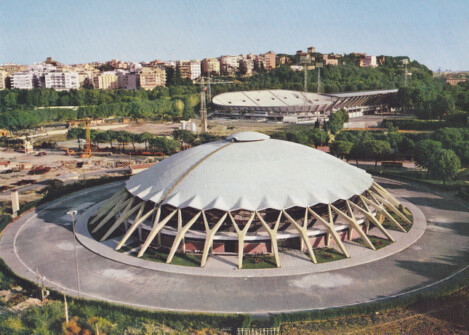
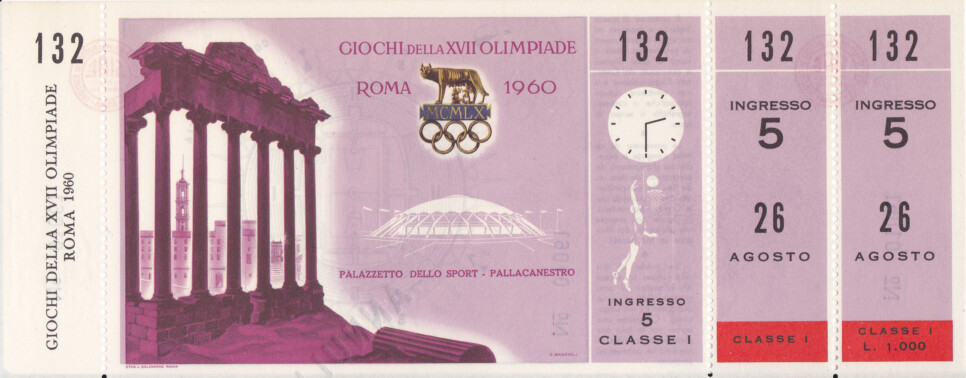
Il torneo partì il 26 agosto con incontri in tutti e quattro i gironi. La prima e la seconda fase del torneo si svolse al Palazzetto dello Sport, la terza al Palazzo dello Sport, una volta liberato dal torneo di pugilato.
The tournament began on August 26 with matches in all four groups. The first and second phases of the tournament were held at the Palazzetto dello Sport, and the third phase at the Palazzo dello Sport, once it had been vacated by the boxing tournament.
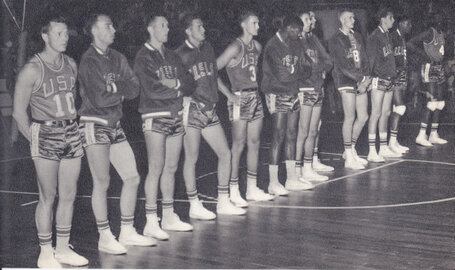
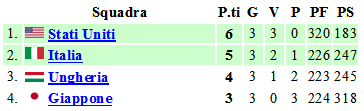
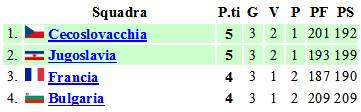
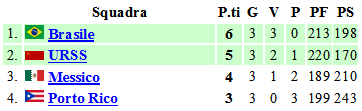
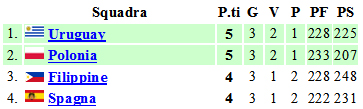
Nel gruppo "A" gli USA non ebbero difficoltà a mettere sotto Italia, Ungheria e Giappone, realizzando uno scarto di oltre 40 punti di media a partita; nel girone "B", il più equilibrato, Cecoslovacchia e Jugoslavia la spuntarono su Francia e Bulgaria; nel girone "C" il Brasile ebbe ragione dell'URSS a scapito di Messico e Portorico; nel girone "D", nettamente il più debole, vide passare Polonia e Uruguay ai danni delle Filippine e della Spagna.
In Group “A,” the U.S. had no trouble defeating Italy, Hungary, and Japan, posting an average margin of victory of over 40 points per game; In Group “B,” the most evenly matched, Czechoslovakia and Yugoslavia prevailed over France and Bulgaria; in Group “C,” Brazil defeated the USSR at the expense of Mexico and Puerto Rico; in Group “D,” by far the weakest, Poland and Uruguay advanced at the expense of the Philippines and Spain.
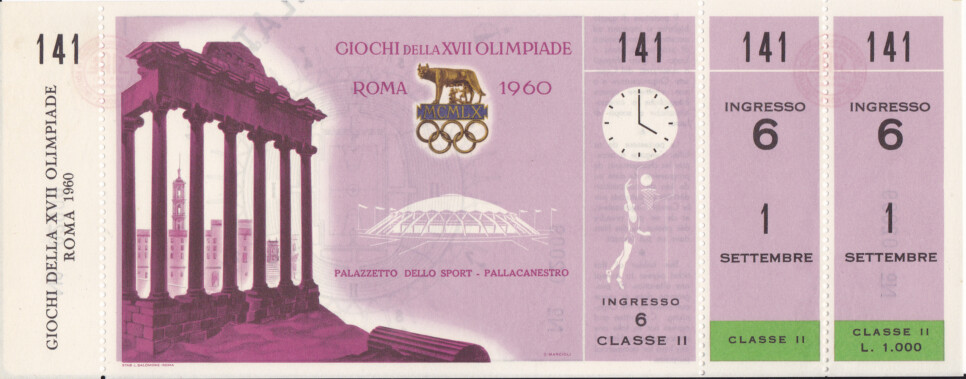
I due gironi di semifinale per assegnare i posti dal primo all'ottavo posto partirono il 1 settembre. Nel girone "A" furono inseriti Brasile , Cecoslovacchia, Italia e Polonia, nel girone "B" gli USA, l'URSS, la Jugoslavia e l'Uruguay.
The two semifinal groups, which would determine the rankings from first to eighth place, began on September 1. Group “A” consisted of Brazil, Czechoslovakia, Italy, and Poland, while Group “B” consisted of the United States, the USSR, Yugoslavia, and Uruguay.
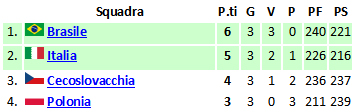
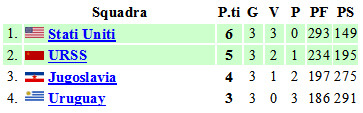
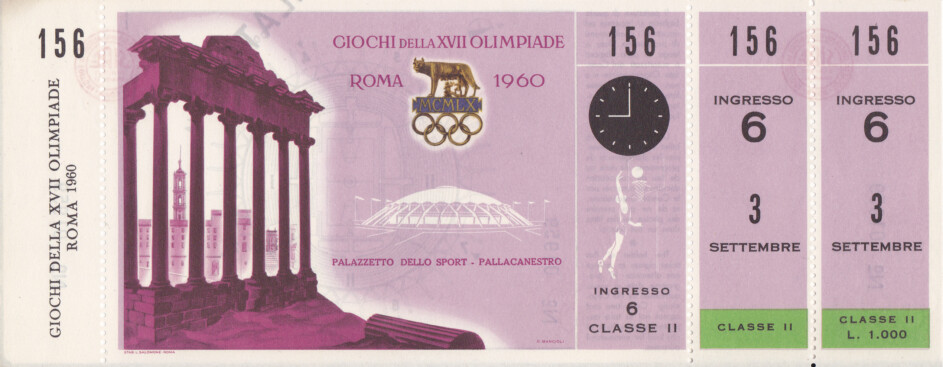
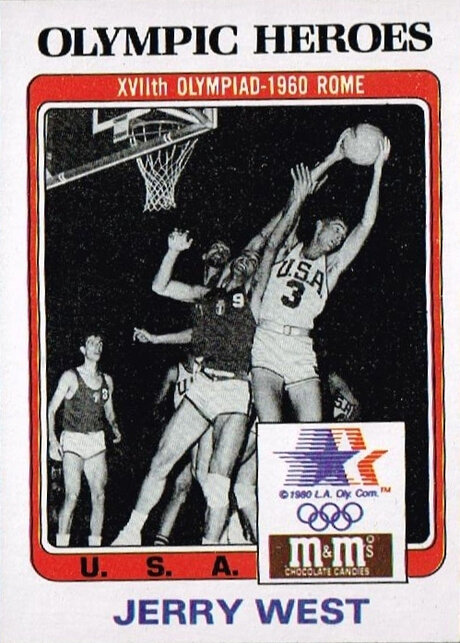
Nel primo girone, la grande sorpresa venne dalla squadra di casa. Gli italiani, battendo la Cecoslovacchia, raggiunsero il gironcino di finale assieme al Brasile. L'altro girone, come ci si aspetteva, fu dominato dagli americani che nelle tre partite segnarono la bellezza di 293 punti. Ma il momento di maggior interesse di questo girone, fu quando si sfidarono USA ed URSS. Il match cadde la sera del 3 settembre. Il Palazzo dello Sport era strapieno, i bagarini fecero affari d'oro e i prezzi dei biglietti, difficili da trovare, salirono alle stelle. Come da programma, alle 23 in punto, i due team scesero sul parquet. I sovietici avevano preparato la loro partita avendo come obiettivo principale quello di bloccare il fenomeno americano Oscar Robertson. Ma Robertson (16 punti) oltre che da tiratore quale era, si trasformò in un eccezionale assist-men, agevolando quegli altri due fenomeni di West (21 punti) e Lucas (12 punti) che, grazie ai suoi movimenti ed ai suoi passaggi, divennero dei veri e propri cecchini e la partita si chiuse con un netto 81 a 57 per gli americani.
In the first round, the big surprise came from the home team. The Italians, by defeating Czechoslovakia, advanced to the final round along with Brazil. The other group, as expected, was dominated by the Americans, who scored a whopping 293 points in their three games. But the most exciting moment of this round came when the U.S. and the USSR faced off. The game took place on the evening of September 3. The Palazzo dello Sport was packed to the brim; scalpers made a fortune, and ticket prices, for tickets that were hard to come by, skyrocketed. As scheduled, at 11:00 p.m. sharp, the two teams took the court. The Soviets had prepared for the game with the primary goal of shutting down the American phenom Oscar Robertson. But Robertson (16 points), in addition to being the shooter he was, transformed himself into an exceptional playmaker, setting up the other two stars, West (21 points) and Lucas (12 points), who, thanks to his movements and passes, became true sharpshooters, and the game ended with a decisive 81–57 victory for the Americans.
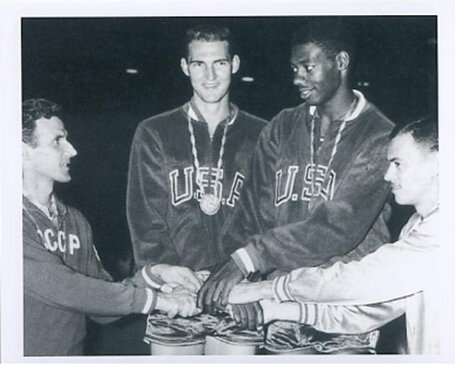
Jerry West e Oscar Robertson, a destra Jerry Lucas
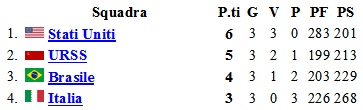
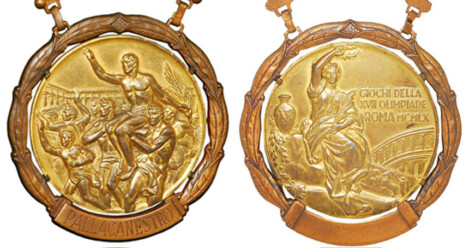
Nel final round, comprendente USA, URSS, Brasile e Italia, non ci furono sorprese. L'8 settembre l'URSS piegò il Brasile in quella che fu forse la più bella ed emozionante partita del torneo, vinta dai sovietici per 64 a 62 grazie ad un tiro libero negli ultimi secondi di gara. Gli USA superarono facilmente l'Italia per 112 a 81, dando spazio alle riserve. Sabato 10 i sovietici rintuzzarono il tentativo degli italiani di strappare loro il bronzo e gli americani, giocando come un gatto con il topo con i brasiliani, si aggiudicarono la partita (90-63) e l'oro olimpico.
In the final round, featuring the U.S., the USSR, Brazil, and Italy, there were no surprises. On September 8, the USSR defeated Brazil in what was perhaps the most beautiful and exciting game of the tournament, with the Soviets winning 64–62 thanks to a free throw in the final seconds of the game. The U.S. easily beat Italy 112–81, giving playing time to the reserves. On Saturday, the 10th, the Soviets thwarted the Italians’ attempt to snatch the bronze medal from them, and the Americans, toying with the Brazilians like a cat with a mouse, won the game (90–63) and the Olympic gold medal.