Vai ai contenuti

Pattinaggio di figura - Le Olimpiadi d'Italia

Salta menù
LE OLIMPIADI D'ITALIA
Salta menù

Pattinaggio di figura
TORINO 2006 > LE GARE > Pattinaggio
PATTINAGGIO DI FIGURA - FIGURE SKATING


Le gare di pattinaggio di figura ai XX Giochi olimpici invernali si sono svolte dall'11 al 24 febbraio al Palavela di Torino.

The figure skating competitions at the XX Olympic Winter Games took place from 11 to 24 February at the Palavela in Turin.
PATTINAGGIO DI FIGURA: L'IMPERATORE SIBERIANO
FIGURE SKATING: THE SIBERIAN EMPEROR

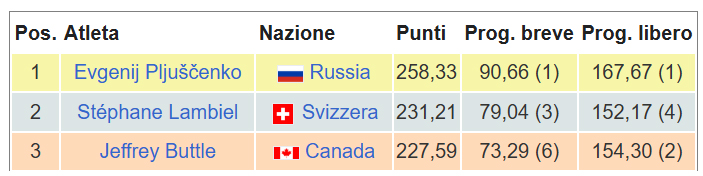
Dicono sia diventato più aperto, più estroverso: forse è merito delle tante vittorie che, pur giovanissimo, ha già collezionato. Evgeni Plushenko, 23 anni siberiano, sui pattini da quando ne aveva 4, si è preso a Torino ciò che tutti sapevano fosse stato coniato per lui, l'oro nell'artistico uomini. Dopo tre Mondiali, cinque Europei e l'argento di Salt Lake 2002, ha messo in fila, con un punteggio da primato, lo svizzero Lambiel, iridato 2005 e il sorprendente canadese Buttle. E ha saputo svelare, sulla pista del Palavela, la seducente incarnazione del pattinatore di figura, metà atleta, metà artista (dal Rapporto Ufficiale del C.O.).
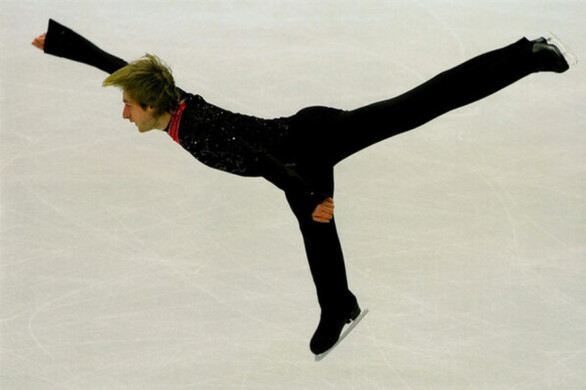
Poesia in movimento: il russo Evgeni Plushenko durante il programma libero del pattinaggio di figura maschile, il 16 febbraio. L'oro sarà suo (dal Rapporto Ufficiale)
Poetry in motion: Evgeni Plushenko in the men's free skate on 16 February in which he later took gold

They say he has become more open, more extroverted: perhaps it is thanks to the many victories that, despite being very young, he has already collected. Evgeni Plushenko, a 23-year-old Siberian who has been skating since he was 4, took in Turin what everyone knew had been minted for him: gold in men's art. After three World Championships, five European Championships and the silver medal in Salt Lake 2002, he lined up, with a record score, the Swiss Lambiel, world champion in 2005 and the surprising Canadian Buttle. And he was able to reveal, on the Palavela track, the seductive incarnation of the figure skater, half athlete, half artist (from the Official Report of the O.C.).
PATTINAGGIO DI FIGURA: LA SORPRESA ARAKAWA
FIGURE SKATING: ARAKAWA SURPRISE
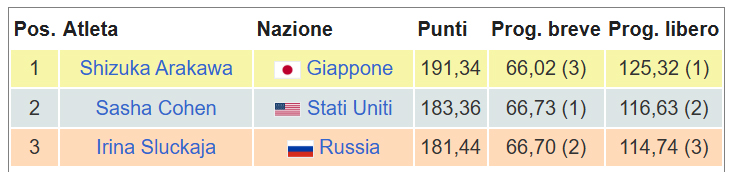
Si chiama Arakawa Shizuka e passerà alla storia per essere la prima giapponese ad aver vinto il titolo Olimpico nel pattinaggio femminile. È la punta di diamante di un movimento che sta lavorando molto per raccogliere oro dal ghiaccio e che ha nuove stelle che si preparano a sorgere. Campione del Mondo 2004, innamoratasi del pattinaggio da bambina per la bellezza dei costumi indossati in pista, la ventiquattrenne di Miyagi ha incantato sulle note, premonitrici, del "Vincerò" dal Nessun dorma di Giacomo Puccini, precedendo la statunitense Cohen e la russa Slutskaya, principale favorita.
Her name is Arakawa Shizuka and she will go down in history as the first Japanese woman to win the Olympic title in women's skating. It is the spearhead of a movement that is working hard to collect gold from the ice and that has new stars preparing to rise. A 2004 World Champion, who fell in love with skating as a child for the beauty of the costumes she wore on the track, the 24-year-old from Miyagi enchanted to the premonitory tune of "Vincerò" from Giacomo Puccini's Nessun dorma, ahead of American Cohen and Russian Slutskaya, the main favorite.
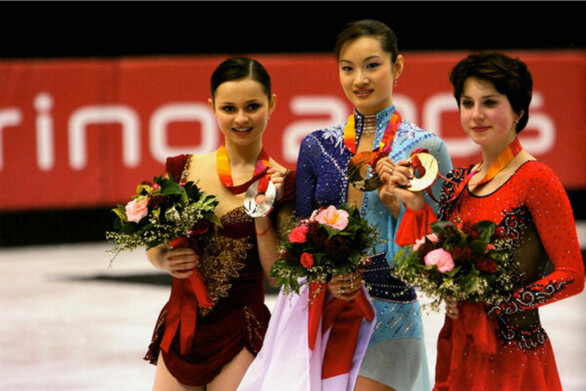
Tre sorrisi sul podio del pattinaggio di figura femminile: la statunitense Cohen, argento, la giapponese Arakawa, oro e la russa Slutskaya, bronzo (dal Rapporto Ufficiale)

Three smiling faces on the women's figure skating podium: Cohen of the Usa (silver), Arakawa of Japan (gold) and Slutskaya of Russia (bronze)
PATTINAGGIO DI FIGURA: DODICI SIGILLI
FIGURE SKATING: TWELVE SEALS

Il dodicesimo sigillo: è quello impresso dalla coppia russa Tatiana Totmianina, ventiquattrenne avviata bambina al pattinaggio dalla madre istruttrice e Maxim Marinin, 28 anni, passato all'artistico a coppie dopo la delusione di una sconfitta individuale contro Plushenko, più giovane di lui di cinque anni. Dodicesimo sigillo perché è da dodici Olimpiadi che l'oro di questa specialità finisce regolarmente a sovietici e russi. Ultimi a spezzare l'incantesimo furono infatti i canadesi Wagner e Paul nell'edizione di Squaw Valley datata 1960 (dal Rapporto Ufficiale del C.O.).

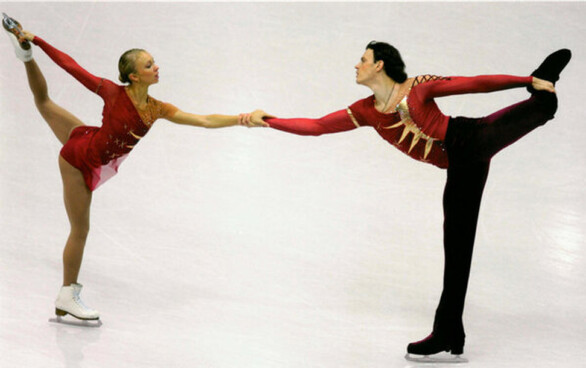
i russi Tatiana Totmianina e Maxim Marinin durante il programma libero della danza su ghiaccio, che li condurrà all'oro (dal Rapporto Ufficiale)

Tatiana Totmianina and Maxim Marinin of Russia during the free dance, in which they won gold
The twelfth seal: it is the one stamped by the Russian couple Tatiana Totmianina, a twenty-four-year-old introduced to skating as a child by her mother, an instructor, and Maxim Marinin, 28, who switched to pairs skating after the disappointment of an individual defeat against Plushenko, five years his junior. Twelfth seal because the gold in this specialty has regularly gone to the Soviets and Russians for twelve Olympics. The last to break the spell were in fact Canadians Wagner and Paul in the 1960 edition of Squaw Valley (from the Official Report of the O.C.).
PATTINAGGIO DI FIGURA: L'IMPERO RUSSO
FIGURE SKATING: THE RUSSIAN EMPIRE

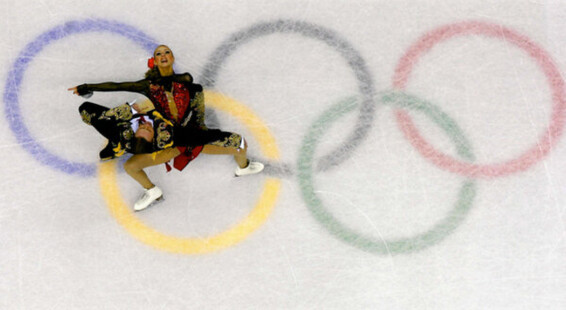
La leadership russa nel pattinaggio artistico è confermata anche dal successo nella danza su ghiaccio della coppia formata da Tatiana Navka e Roman Kostomarov, Campioni del Mondo 2004 e 2005. Ma nella memoria degli appassionati resterà lo sguardo interminabile - carico di rabbia, frustrazione, incredulità - fra i veterani azzurri Barbara Fusar Poli e Maurizio Margaglio dopo la caduta che li ha traditi a pochi secondi dalla fine del programma originale. Un errore pagato con il brusco risveglio dai sogni di medaglia (dal Rapporto Ufficiale del C.O.).

Russia's leadership in figure skating is also confirmed by the ice dancing success of the pair of Tatiana Navka and Roman Kostomarov, World Champions 2004 and 2005. But fans will remember the interminable gaze-laden with anger, frustration, and disbelief-between Italian veterans Barbara Fusar Poli and Maurizio Margaglio after the fall that betrayed them just seconds before the end of the original program. A mistake paid for by the abrupt awakening from medal dreams.
L'oro della danza su ghiaccio andrà a loro, i russi Tatiana Navka e Roman Kostomarov, qui immortalati dall'alto durante il programma libero del 20 febbraio (dal Rapporto Ufficiale)

These two are about to win the ice dancing gold: Tatiana Navka and Roman Kostomarov of Russia, immortalised here during the free skate on 20 February
BIATHLON
BIATHLON
PATTINAGGIO DI VELOCITA' UOMINI
SPEED SKATING MEN
Torna ai contenuti