Cassius Clay
CASSIUS CLAY
"E' alto, ha una struttura fisica magnifica, si muove con leggerezza ed ha un senso eccellente della distanza", così c'era scritto in una relazione dei tecnici sovietici in vista del match del 1° settembre tra Cassius Clay ed il loro miglior pugile: Gennady Shaktov, un veterano delle Olimpiadi, che aveva vinto a Melbourne l'Oro nei medi, ma ora era passato nella categoria superiore. Clay aveva già vinto un incontro, il 30 agosto, eliminando un belga possente che si chiamava Yvon Becaus con un gancio sinistro ed un destro incrociato a metà della seconda ripresa. Shaktov, come Clay, preferiva battersi a distanza, servendosi di jab improvvisi e potenti ed un gioco veloce di gambe, ma il fatto di essere molto più basso di Clay lo frustrava. Tenendo Shaktor a distanza, Clay riusciva a raggiungerlo con colpi singoli mentre Shaktov non riusciva nemmeno a toccarlo. Alla fine del match il sovietico ebbe a dire "Sono un medio che ha perso con un eccellente massimo leggero, non è una vergogna perdere da un pugile così"
"He is tall, has a magnificent physical structure, moves lightly and has an excellent sense of distance," was written in a report by Soviet technicians ahead of the September 1° match between Cassius Clay and their best boxer: Gennady Shaktov, an Olympic veteran who had won gold in the middleweight division in Melbourne but had now moved up to the higher division. Clay had already won a match, on August 30, eliminating a powerful Belgian named Yvon Becaus with a left hook and a crossed right midway through the second round. Shaktov, like Clay, preferred to fight from a distance, using sudden, powerful jabs and fast footwork, but being much shorter than Clay frustrated him. Holding Shaktor at a distance, Clay could reach him with single shots while Shaktov couldn't even touch him. At the end of the match the Soviet had to say "I'm a middleweight who lost with an excellent light maximum, it's not a shame to lose from a boxer like that"
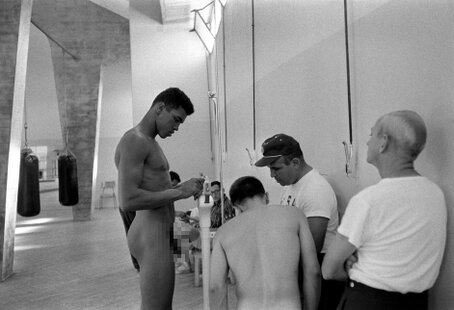
Cassius Clay al Palazzo dello Sport durante le operazione del peso

Cassius Clay durante una fase dell'incontro di semi-finale contro Madigan
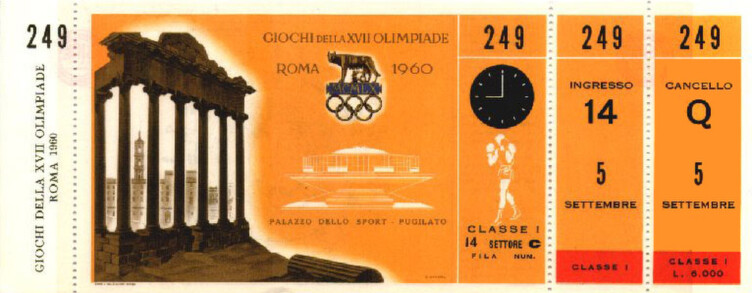
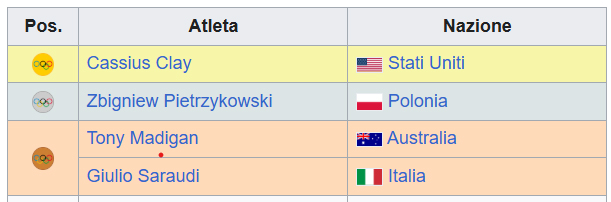
5 settembre 1960, ora in finale, il diciottenne di Louisville doveva vedersela con l'esperto mancino polacco Pietrzykowski, che era stato tre volte campione d'Europa ed aveva preso il bronzo a Melbourne. Tutti sapevano che Clay era il miglior pugile di quella categoria di peso ma anche che quella categoria aveva i talenti più fulgidi. Nell'incontro precedente di semifinale (3 settembre), Clay si era battuto con Tony Madigan, australiano ma che si allenava negli USA, un pugile freddo ed esperto, esattamente come ll polacco che aveva ora di fronte, tanto che chi aveva assistito a quell'incontro pensava che Madigan avrebbe potuto battere Clay.
On September 5, 1960, now in the final, the 18-year-old from Louisville had to face the experienced Polish left-hander Pietrzykowski, who had been a three-time European champion and taken bronze in Melbourne. Everyone knew that Clay was the best boxer in that weight class but also that that class had the brightest talents. In the previous semi-final bout (September 3), Clay had fought Tony Madigan, an Australian but training in the USA, a cold and experienced boxer, just like the Polish ll he was now facing, so much so that those who had witnessed that fight thought Madigan could beat Clay.
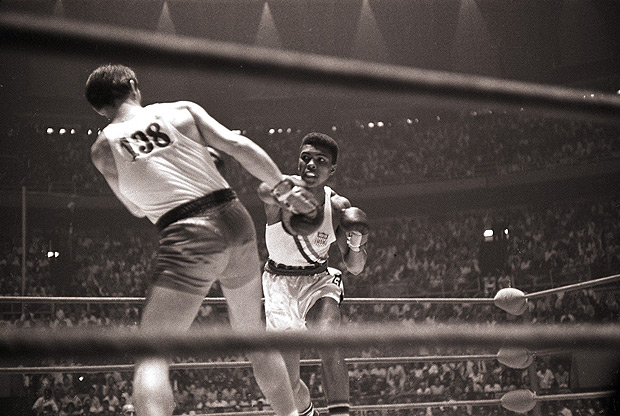
Finale pesi massimi leggeri: Cassius clay contro il polacco Pietrzykowski
Pietrzykowski presentava l'ulteriore inconveniente di essere alto e mancino e nella giovane carriera di Clay una delle sconfitte più nette l'aveva subita da un pugile alto e mancino durante i trial panamericani. Nei primi due round della finale non accadde quasi nulla. Pietrzykowski si teneva indietro aspettando un'apertura della guardia dell'avversario e Clay che con la sua velocità riusciva ad evitare il sinistro del polacco, anche tenendo i guantoni bassi. Esibiva il suo gioco di gambe danzando sulla sinistra, saltando sulla destra, poi dentro per un colpo improvviso. Le due riprese furono quasi pari. Nella terza ripresa Clay si scatenò, cominciando a piazzare i suoi colpi a grappoli, ha tempestato Pietrzykowski di pugni seguendolo per tutto il ring, il sangue ha preso a scorrere dal naso e dalla bocca del polacco, e solo il suo grande coraggio gli ha permesso di continuare e restare in piedi.
Pietrzykowski had the added drawback of being tall and left-handed, and in Clay's young career one of his most notable defeats had come against a tall, left-handed boxer during Pan American trials. In the first two rounds of the final, almost nothing happened. Pietrzykowski held back waiting for an opening from his opponent's guard and Clay who with his speed managed to avoid the Pole's left, even keeping his gloves down. He showed off his footwork by dancing on the left, jumping on the right, then in for a sudden blow. The two takes were almost even. In the third round, Clay let loose, starting to land his shots in clusters, he bombarded Pietrzykowski with punches following him throughout the ring, blood began to flow from the Pole's nose and mouth, and only his great courage allowed him to continue and stay on his feet.