ROMA 1924-1936-1940
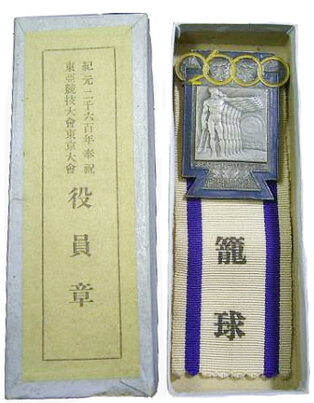
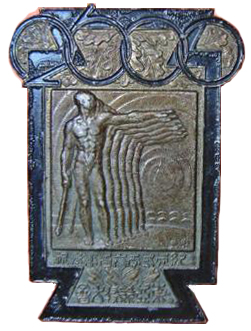
I distintivi fatti coniare dal Giappone per i 2600 anni dell'Impero.
Badges minted by Japan for the 2600th anniversary of the Empire.
Badges minted by Japan for the 2600th anniversary of the Empire.
Roma ritornò a chiedere i Giochi Olimpici del 1924, sfidando la concorrenza di Amsterdam, Barcellona, Los Angeles, Praga e Parigi. Ma a causa di quello che era accaduto venti anni prima, i Membri del CIO non si fidarono della candidatura della capitale d'Italia, e scelsero Parigi.
Il terzo tentativo romano riguarda i Giochi del 1936, che Berlino si aggiudicò, superando Roma ed altre dieci città candidate.
E così, mentre la seconda guerra mondiale era ormai alle porte, il regime decise di candidare la città di Roma per le Olimpiadi del 1940, che avrebbero dovuto affiancarsi all’Esposizione Universale (pensata come grande celebrazione dei fasti e dei successi del fascismo), prevista per il 1941. Jigoro Kano, Presidente del Comitato Organizzatore per la candidatura di Tokyo 1940, durante una riunione del suo Comitato, sostenne che “Mussolini é un grande uomo ed ha una cordiale comprensione per il nostro paese e i suoi interessi” e “Se Mussolini fosse avvicinato nella giusta maniera, porterebbe la propria influenza in favore del Giappone rinunciando alla candidatura italiana”. Al di là della valutazione su Mussolini, Jigoro Kano vede giusto e infatti nel 1935 la previsione si avvera. La scusa ufficiale é che nel 1940 ricorre il 2600° anno dell’impero giapponese, di fatto sono le nuove alleanze sull’asse Roma-Berlino e la necessità di assicurarsi l’appoggio Giapponese per contenere la Russia, che fanno il miracolo. In cambio l’Italia ottiene dal Giappone la cessazione della vendita di armi all’Etiopia, paese che l’Italia si apprestava ad invadere.
Rome returned to demand the 1924 Olympic Games, challenging competition from Amsterdam, Barcelona, Los Angeles, Prague and Paris. But because of what had happened twenty years earlier, the IOC Members did not trust the candidacy of the capital of Italy, and chose Paris.
The third Roman attempt was at the 1936 Games, which Berlin won, beating Rome and ten other candidate cities.
And so, while the Second World War was now upon us, the regime decided to nominate the city of Rome for the 1940 Olympics, which were to be held alongside the Universal Exhibition (intended as a great celebration of the glories and successes of fascism), scheduled for 1941. Jigoro Kano, Chairman of the Organizing Committee for the candidacy of Tokyo 1940, during a meeting of his Committee, argued that “Mussolini is a great man and has a cordial understanding for our country and its interests” and “If Mussolini were approached in the right way, he would bring his influence in favor of Japan by renouncing the Italian candidacy”. Beyond the assessment of Mussolini, Jigoro Kano sees fit and in fact in 1935 the prediction comes true. The official excuse is that 1940 marks 2600° the year of the Japanese Empire. In fact, it is the new alliances on the Rome-Berlin axis and the need to secure Japanese support to contain Russia that perform the miracle. In exchange, Italy obtains from Japan the cessation of arms sales to Ethiopia, a country that Italy was preparing to invade.
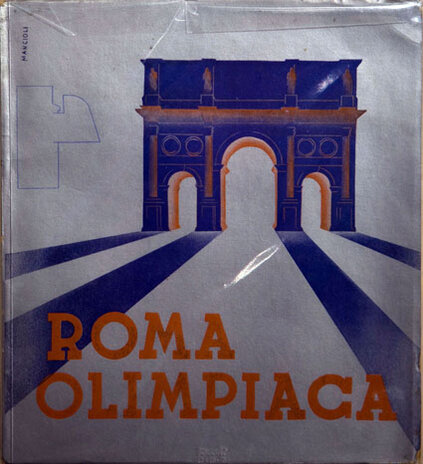
Libro realizzato per la presentazione della candidatura di Roma ai Giochi Olimpici del 1940.
Book produced for the presentation of Rome's candidature for the 1940 Olympic Games.
Book produced for the presentation of Rome's candidature for the 1940 Olympic Games.
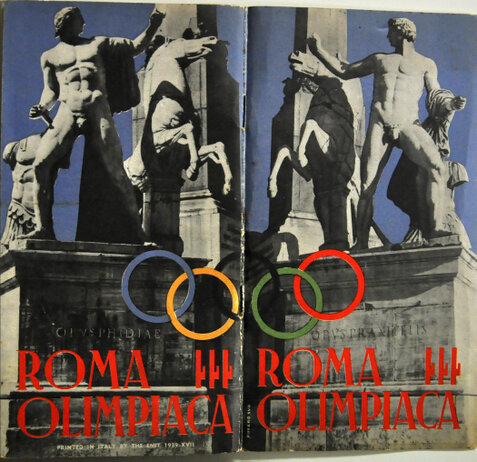
Libro realizzato per la presentazione della candidatura di Roma ai Giochi Olimpici del 1940.
Book produced for the presentation of Rome's candidature for the 1940 Olympic Games.
Book produced for the presentation of Rome's candidature for the 1940 Olympic Games.

ROMA 1908
ROME 1908
CORTINA 1944-1952
CORTINA 1944-1952
