Vai ai contenuti

Tiro a Bersaglio - Le Olimpiadi d'Italia

Salta menù
LE OLIMPIADI D'ITALIA
Salta menù

Tiro a Bersaglio

TIRO AL BERSAGLIO - TARGET SHOOTING


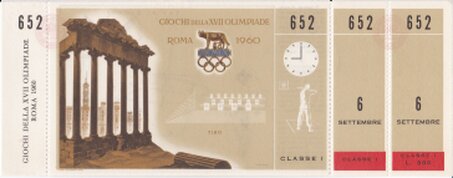
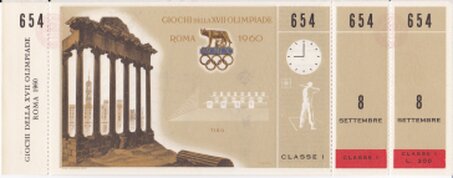
Nelle gare di Tiro a segno delle Olimpiadi romane, i grandi favoriti erano i sovietici, cui si potevano opporre in tutte le specialità gli statunitensi. Le gare si svolsero dal 3 al 10 settembre nei poligoni "Umberto I" e "Cesano": Cinque specialità in programma, di cui tre di carabina e due di pistola. Per semplicità logistica, le cinque gare furono programmate una dopo l'altra: 3 e 5 settembre l'arma libera, il 5 e 6 la pistola libera, il 7 e 8 la carabina piccolo calibro tre posizioni, l'8 e il 9 il tiro celere con la pistola, il 9 e 10 la carabina libera posizione a terra.
In the shooting events of the Roman Olympics, the big favorites were the Soviets, who could be opposed in all events by the Americans. The competitions took place from 3 to 10 September at the "Umberto I" and "Cesano" ranges: Five specialties were on the programme, three of which were rifle and two pistol. For logistical simplicity, the five races were scheduled one after the other: September 3rd and 5th the free weapon, September 5th and 6th the free pistol, September 7th and 8th the three-position small caliber rifle, September 8th and 9th the fast pistol shot, and September 9th and 10th the free rifle ground position.
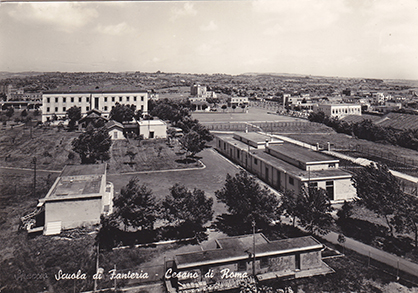
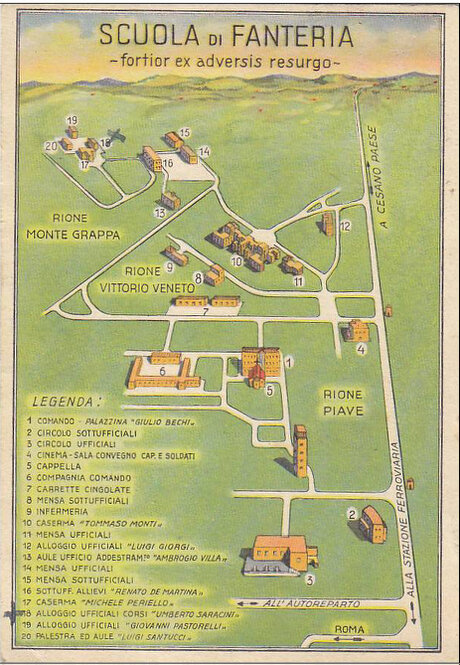
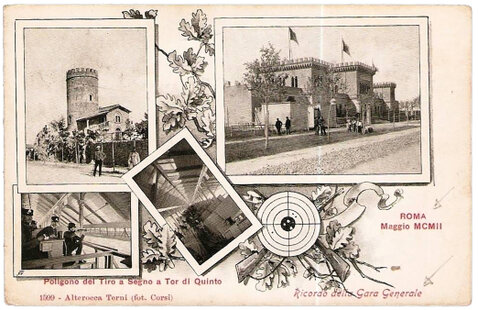
La scuola militare dove si trova il poligono di Tiro utilizzato nel 1960

La prima specialità a svolgersi, tra sabato 3 e lunedì 5 settembre al Poligono di Cesano, fu quella dell'arma libera a terra da 300 metri. Era la gara più attesa in quanto tutti si aspettavano la sfida tra il sovietico Bogdanov (primatista mondiale) e lo statunitense Puckel recente campione con record dei Giochi Panamericani. Poi, a causa di problemi fisici, il sovietico non poté partecipare e fu sostituito da Moysey Iktis, ma l'URSS poteva contare anche sul campione olimpico di Melbourne Vasilyi Borisov.

The first specialty to take place, between Saturday 3rd and Monday 5th September at the Cesano range, was the 300-meter free throw on the ground. It was the most anticipated race as everyone expected the challenge between the Soviet Bogdanov (world record holder) and the American Puckel, recent champion with a Pan American Games record. Then, due to physical problems, the Soviet was unable to participate and was replaced by Moysey Iktis, but the USSR could also count on Melbourne Olympic champion Vasilyi Borisov.

La finale si disputò nella giornata peggiore di tutta l'Olimpiade, pioggia e vento disturbarono molto i tiratori. Dopo la prima serie conduceva lo svizzero Spilmann davanti all'austriaco Hammerer ed il sovietico Borisov. Nelle altre due posizioni Borisov recuperò lo svantaggio ma non completamente, l'oro andò as Hubert Hammerer seguito da Spilmann e da Borisov.
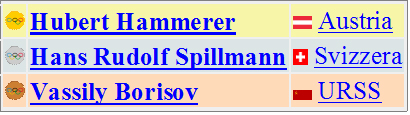
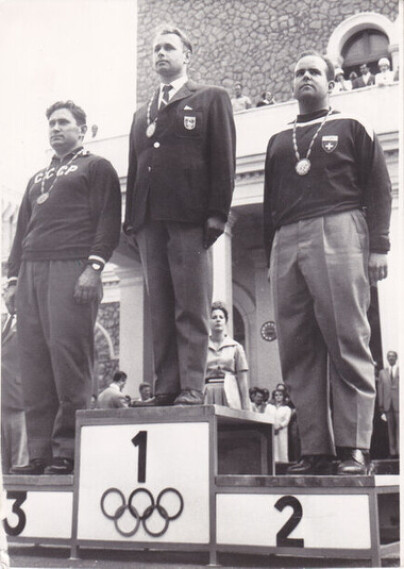

The final was played on the worst day of the entire Olympics, rain and wind greatly disturbed the shooters. After the first series he led the Swiss Spilmann ahead of the Austrian Hammerer and the Soviet Borisov. In the other two positions Borisov recovered the deficit but not completely, the gold went to Hubert Hammerer followed by Spilmann and Borisov.
Il podio dell'arma libera a terra da 300 metri

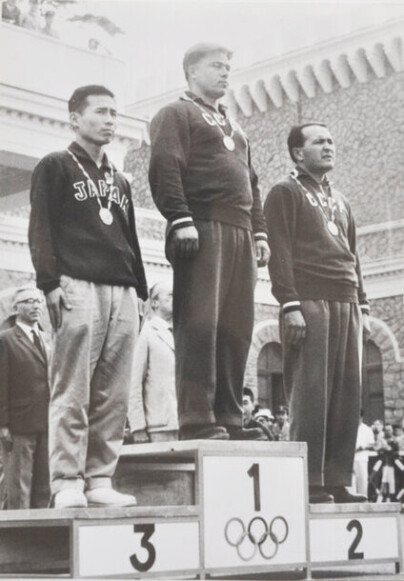
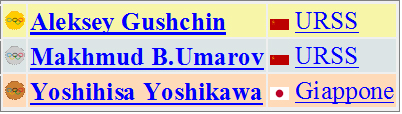
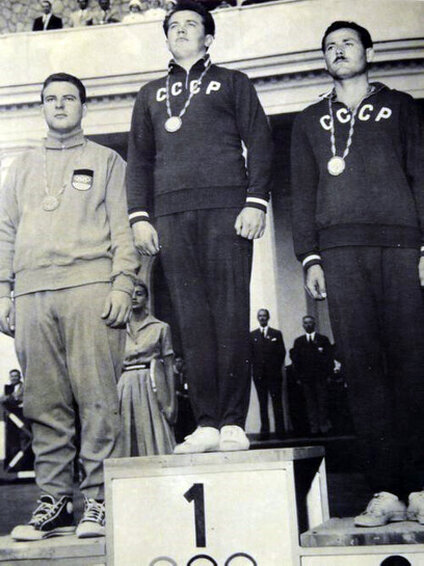
Sempre il 5 settembre, ma al Poligono Umberto I, cominciarono le eliminatorie per la gara di pistola libera: 40 colpi da una distanza di 50 metri. La finale, con 54 tiratori, si svolse la mattina del 6 settembre. Nelle 6 serie di 10 colpi ciascuna emerse la classe del sovietico Alexei Gustchin, grazie alla quale conquistò l'oro battendo il record dello svedese Ullman che resisteva da Berlino 1936. Secondo si piazzò il suo connazionale Umarov e terzo il giapponese Yoshikawa.
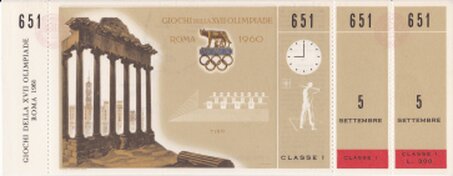
Also on September 5, but at the Poligono Umberto I, the preliminary rounds for the free pistol competition began: 40 shots from a distance of 50 meters. The final, with 54 shooters, took place on the morning of September 6. In the 6 series of 10 shots each, the class of Soviet Alexei Gustchin emerged, thanks to which he won gold, beating the record of Swede Ullman who had held out since Berlin 1936. His compatriot Umarov placed second and Japanese Yoshikawa third.
Il podio della gara della Pistola 50 metri
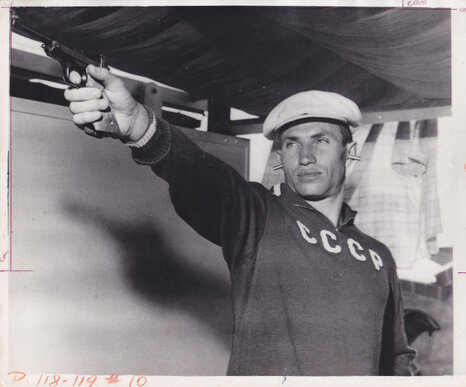
Alexey Gustchin (URSS)

La carabina piccolo calibro tre posizioni si svolse ancora al Poligono romano il 7 e l'8 settembre e non registrò sorprese di sorta: i due sovietici Viktor Shamburkin e Marat Nijasov erano i netti favoriti e furono loro ad aggiudicarsi l'oro e l'argento, terzo giunse il tedesco Klaus Zahringer.

The three-position small-caliber rifle took place again at the Roman shooting range on September 7 and 8 and did not cause any surprises: the two Soviets Viktor Shamburkin and Marat Nijasov were the clear favorites and it was they who won the gold and silver, with German Klaus Zahringer coming third.
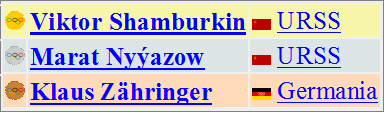
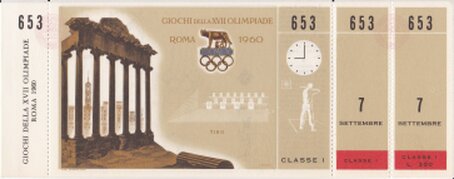
Il podio della gara della Carabina 50 metri tre posizioni

L'8 e il 9 settembre si svolse al Poligono romano la spettacolare specialità del tiro celere alla sagoma. Si tira da 25 metri in piedi, il bersaglio è costituito da un gruppo di cinque sagome a forma d'uomo. Si sparano in due giornate nelle varie piazzole, 60 colpi in due riprese da 30, ciascuna di sei serie da cinque colpi.
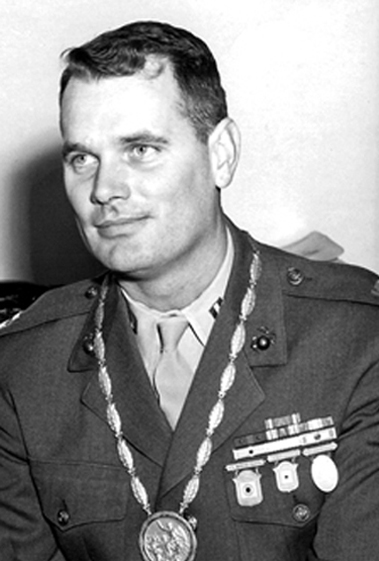

On September 8th and 9th, the spectacular specialty of rapid fire pistol at the Roman shooting range. It shoots from 25 meters standing, the target consists of a group of five human-shaped silhouettes. They fire in two days at the various sites, 60 shots in two rounds of 30, each of six sets of five shots.  
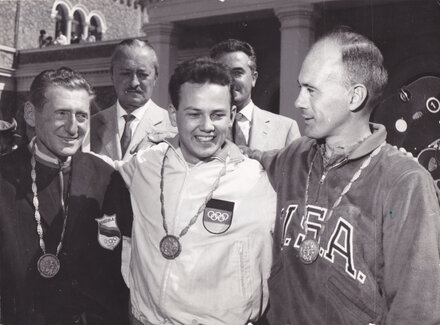
William McMilliam, il vincitore della gara di pistola 25 metri

Alla gara di Roma parteciparono circa 60 tiratori ed il favorito era il finnico Pentti Linnosvuo, suoi più pericolosi avversari erano il campione olimpico romeno Stefan Petrescu, i due sovietici Alexandr Zabelin ed Eugeny Cherkasov, lo svedese Stig Berntsson e gli americani William McMilan e Lawrence Mosely. La prima giornata vide Cherkasov al comando della classifica con 296 punti, avendo alle sue spalle tutti gli altri migliori tiratori. Nella seconda giornata Cherkasov finì fuori tempo nella serie da quattro secondi e perse clamorosamente un bersaglio. Ne approfittarono McMillan, Linnosvuo e Zabelin che conclusero tutti e tre a pari punti, 587. Il barrage vide vincitore McMillan, capitano dei Marine, ed alle sue spalle il finlandese ed il russo.
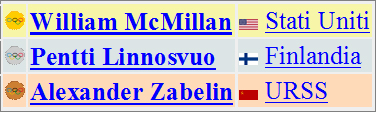
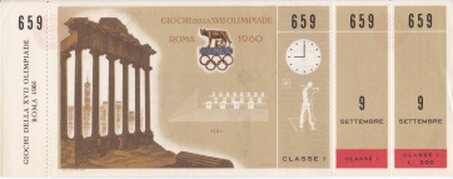
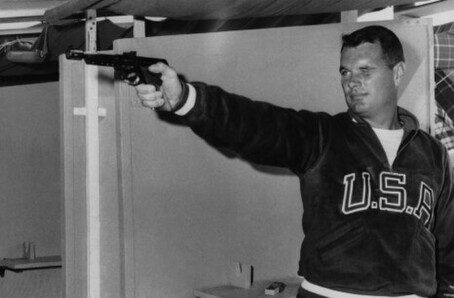
Around 60 shooters took part in the Rome race and the favourite was the Finn Pentti Linnosvuo, his most dangerous opponents were the Romanian Olympic champion Stefan Petrescu, the two Soviets Alexandr Zabelin and Eugeny Cherkasov, the Swede Stig Berntsson and the Americans William McMilan and Lawrence Mosely. The first day saw Cherkasov leading the standings with 296 points, with all the other top shooters behind him. On the second day Cherkasov finished out of time in the four-second series and sensationally lost a target. McMillan, Linnosvuo and Zabelin took advantage of this and all three finished tied on points, 587. The barrage was won by McMillan, captain of the Marines, and behind him the Finn and the Russian.
William Mcmillan (USA)
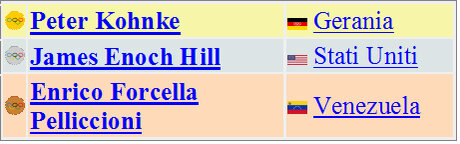
Il 9 e 10 settembre si svolse l'ultima gara in programma, la Carabina 50 metri a terra, che registrò la sorpresa più grossa. Nelle eliminatorie, quanto mai necessarie per scremare gli 85 concorrenti, tutto andò secondo le previsioni, con il canadese Edson Warner e i due rumeni Iosif Sirbu e Nicolae Rotaru (favoriti della vigilia), ai primi posti provvisori e con il sovietico Borisov (lo stesso che aveva vinto il bronzo nella gara con fucile da 300 metri) e l'americano Hill a seguirli da vicino. Ma la sorpresa arrivò nella giornata conclusiva, quando un altro nordico, il diciottenne tedesco Peter Kohnke, sbaragliò tutti. Il tedesco vinse con uno score di 590 punti, lasciando ad una lunghezza l'americano James Hill. Medaglia di bronzo al venezuelano Enrico Forcella Pelliccioni, figlio di emigranti italiani.

On September 9 and 10, the last scheduled race took place, the 50-meter pistol on the ground, which recorded the biggest surprise. In the preliminary rounds, which were more necessary than ever to skim the 85 competitors, everything went according to expectations, with Canadian Edson Warner and the two Romanians Iosif Sirbu and Nicolae Rotaru (pre-race favourites), in the provisional first places and with the Soviet Borisov (the same one who had won bronze in the 300-metre rifle race) and the American Hill following them closely. But the surprise came on the final day, when another Nordic, 18-year-old German Peter Kohnke, routed everyone. The German won with a score of 590 points, leaving American James Hill at one point. Bronze medal for Venezuelan Enrico Forcella Pelliccioni, son of Italian emigrants.
Torna ai contenuti