Vai ai contenuti

Programmi e Bollettini Ufficiali - Le Olimpiadi d'Italia

Salta menù
LE OLIMPIADI D'ITALIA
Salta menù

Programmi e Bollettini Ufficiali
CORTINA 1956 MUSEUM > DOCUMENTI CARTACEI
PROGRAMMI E BOLLETTINI UFFICIALI
PROGRAMMES AND OFFICIAL BULLETINS

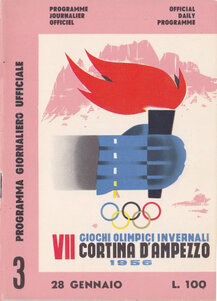
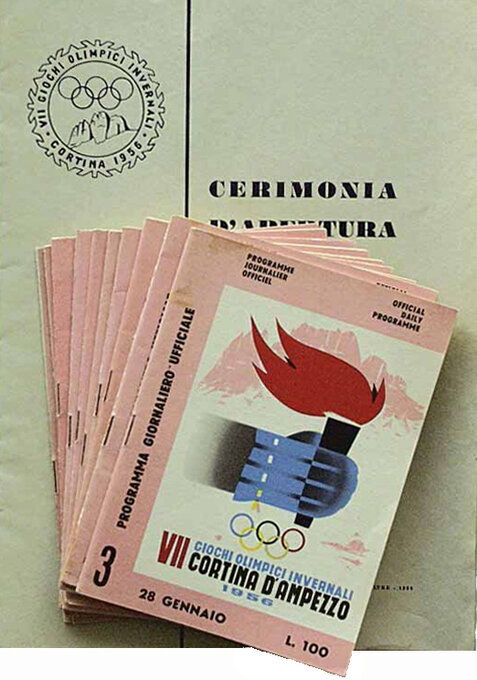
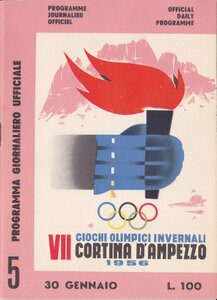
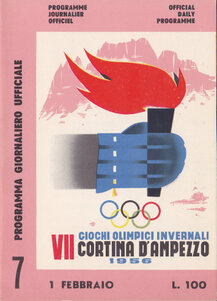
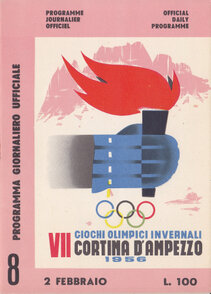
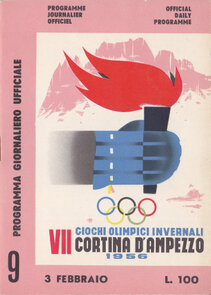
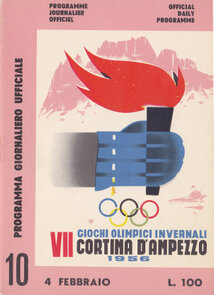
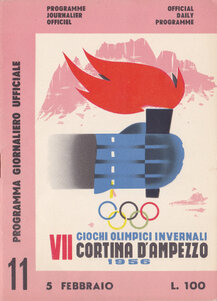
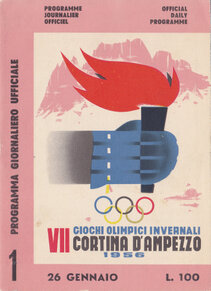
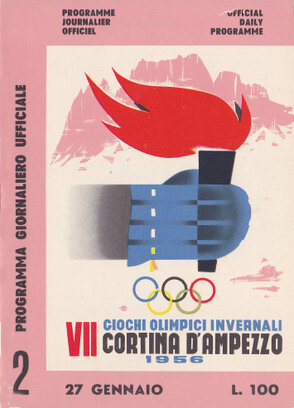
La pubblicazione del programma giornaliero, per il quale fu prevista una tiratura di 10.000 copie, in opuscolo di sedici pagine, non fu un problema di facile soluzione, non esistendo in Cortina un complesso tipografico di sufficiente potenziale. Il programma doveva essere allestito difatti, durante la notte, nel limite di cinque-sei ore di tempo, per essere posto in vendita alle sette del mattino, pur dovendo contenere i dati delle ultime partite di hockey, terminati, alcune volte, oltre l'una della notte. Per risolvere il problema furono interpellate due ditte residenti fuori Cortina, rispettivamente a Padova ed a Feltre; ma per ragioni di varia natura ambedue queste soluzioni furono scartate dopo approfondito esame. Furono perciò riprese le trattative con l'unica tipografia locale che, pur avendo una discreta attrezzatura, non era tuttavia in grado, sia per altri impegni, sia per insufficienza di macchine e di spazio, di assumere la stampa del programma giornaliero, senza provvedimenti di carattere straordinario. Sotto l'impulso del Comitato organizzatore, la Cooperativa Tipografica offri di risolvere il problema, acquistando in proprio un certo numero di macchine, da installare però in locali diversi da quelli dello stabilimento, perché in essi non v'era spazio sufficiente. Il Comitato organizzatore si assunse pertanto l'incarico e l'onere di procurare i locali per tutto il periodo necessario: essi furono reperiti nel pianoterra del Residence Palace, ancora in costruzione.
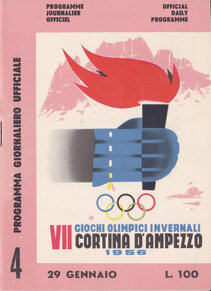
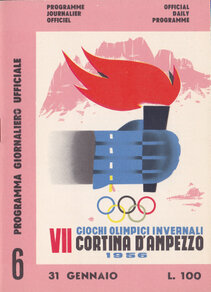
The publication of the daily program, for which a print run of 10,000 copies was planned, in a sixteen-page booklet, was not an easy problem to solve, as there was no typographical complex of sufficient potential in Cortina. The program had to be set up during the night, within five to six hours, to be put on sale at seven in the morning, even though it had to contain the data of the last hockey games, which ended, a few times, after one in the night. To resolve the problem, two companies residing outside Cortina, in Padua and Feltre respectively, were contacted; but for various reasons, both of these solutions were rejected after thorough examination. Negotiations were therefore resumed with the only local printing house which, despite having a decent amount of equipment, was nevertheless unable, both due to other commitments and due to insufficient machinery and space, to take over the printing of the daily program, without extraordinary measures. At the instigation of the Organizing Committee, the Typographic Cooperative offered to solve the problem by purchasing a certain number of machines on its own, but to be installed in premises other than those of the plant, because there was insufficient space in them. The Organising Committee therefore took on the task and burden of procuring the premises for as long as necessary: they were found on the ground floor of the Residence Palace, still under construction.

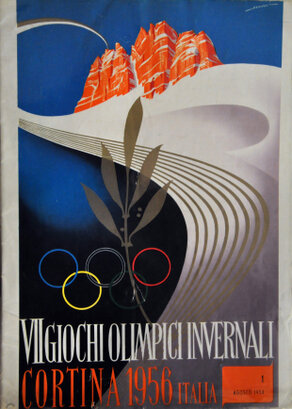
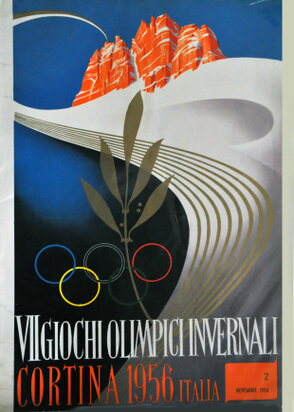
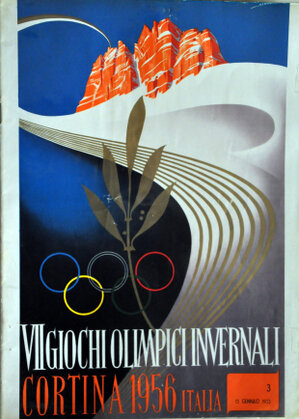
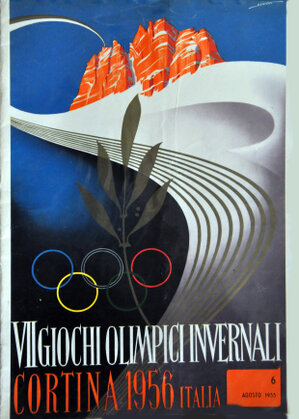
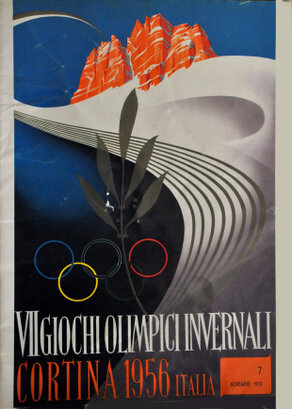
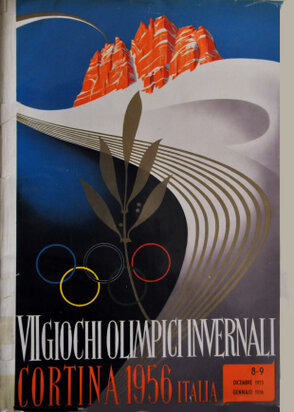
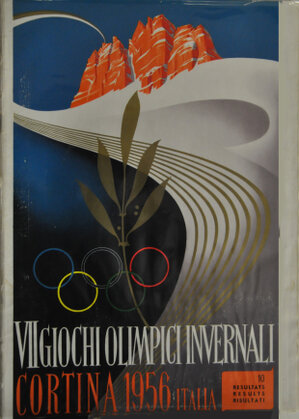
L'altro bozzetto vincitore del concorso per il «simbolo», di cui è autore l'artista Bonilauri, di Genova  fu assunto come copertina del Bollettino ufficiale dei Giochi, di cui il primo numero apparve nell'agosto del 1954. Era redatto in cinque lingue: italiano, francese, inglese, tedesco e spagnolo e veniva distribuito a tutti gli enti sportivi interessati, nazionali ed internazionali, nonché ai membri del C.I.O. Ne uscirono in complesso otto fascicoli variamente illustrati e documentati. Fra l'altro riportarono i primi sei classificati di ogni gara di tutti i precedenti Giochi invernali e le immagini dei rispettivi vincitori. Un fascicolo speciale del Bollettino, il nono, uscì immediatamente dopo la conclusione dei Giochi, riportando tutte le classifiche di Cortina e un prospetto generale contenente i nomi dei primi sei classificati per ciascuna gara. Di ogni numero furono stampate cinquemila copie; venivano spedite gratuitamente a chiunque ne facesse richiesta.
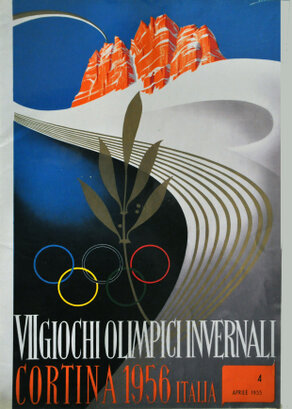
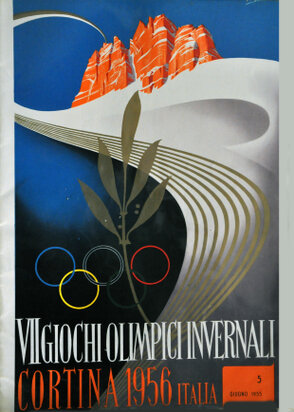
The other winning sketch of the competition for the «symbol», created by the artist Bonilauri, from Genoa, was used as the cover of the Official Bulletin of the Games, of which the first issue appeared in August 1954. It was written in five languages: Italian, French, English, German and Spanish and was distributed to all interested national and international sports bodies, as well as to members of the IOC. A total of eight issues were published, variously illustrated and documented. Among other things, they reported the top six finishers in each race of all previous Winter Games and images of their respective winners. A special issue of the Bulletin, the ninth, came out immediately after the conclusion of the Games, reporting all the Cortina rankings and a general prospectus containing the names of the top six finishers for each race. Five thousand copies of each issue were printed; they were sent free of charge to anyone who requested them.
IL RAPPORTO UFFICIALE
OFFICIAL REPORT
I DIPLOMI
DIPLOMAS
Torna ai contenuti