Vai ai contenuti

Quartetto d'oro - Le Olimpiadi d'Italia

Salta menù
LE OLIMPIADI D'ITALIA
Salta menù

Quartetto d'oro

ROMA 1960 > LE GARE > Ciclismo

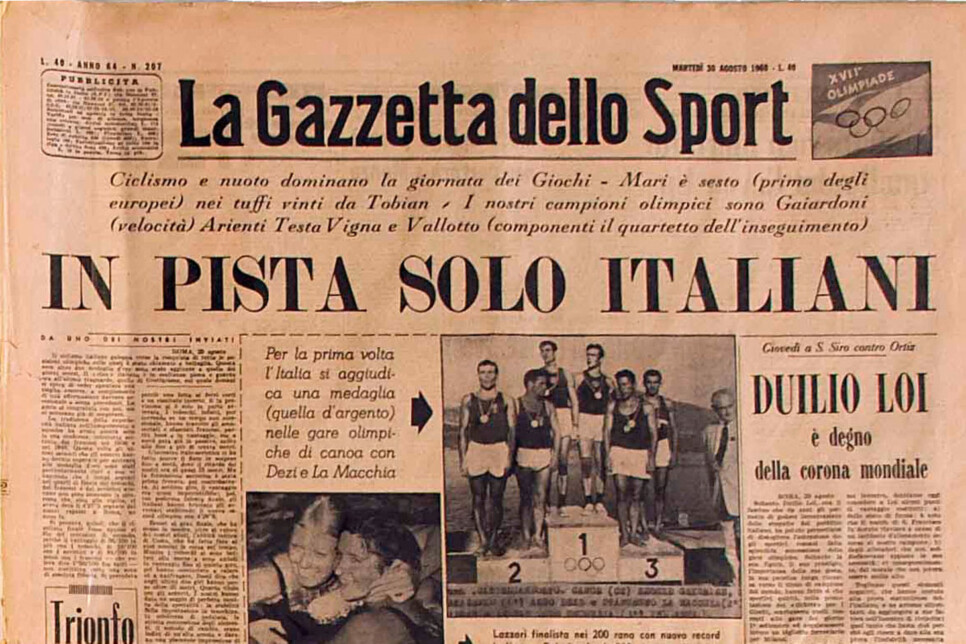
Il pomeriggio del 27 settembre cominciarono le eliminatorie della gara di inseguimento a squadre, sulla distanza dei 4 chilometri. I commentatori davano per favoriti i quartetti di Germania, Australia e Olanda con la Francia nel ruolo di outsider. Nonostante fosse campione in carica, la squadra italiana non veniva data tra le favorite..... si sbagliavano.
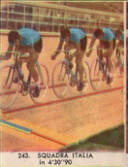
On the afternoon of September 27, the qualifying rounds for the 4-kilometer team pursuit began. Commentators considered the teams from Germany, Australia, and the Netherlands to be the favorites, with France as the underdog. Although the Italian team was the defending champion, it wasn’t considered among the favorites… but they were wrong.
il quartetto italiano campione olimpico a Melbourne 1956

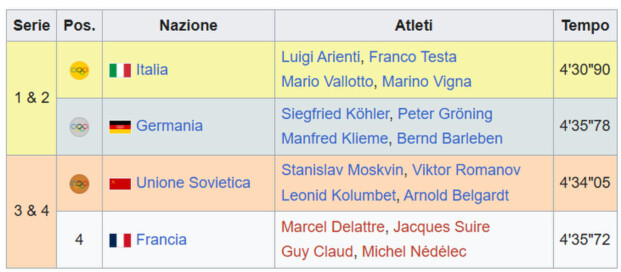
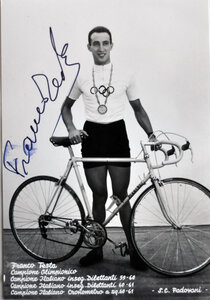
Il torneo si rivelò molto interessante già nelle otto sfide ad eliminazione diretta. Al termine delle qualificazioni, i tempi migliori furono quelli degli italiani (Franco Testa, Luigi Arienti, Marino Vigna, Mario Vallotto), dei francesi e degli olandesi. Nei quarti gli italiani batterono facile gli argentini, stessa cosa fecero i francesi con i cechi ed i tedeschi eliminarono i danesi. Molto combattuto l'ultimo quarto tra URSS e Olanda che si decise sul filo dei centesimi a favore dei sovietici. Le semifinali e le finali si svolsero la sera del 29 settembre. La prima semifinale, Francia contro Germania, vide i tedeschi travolgere i francesi che, pur partendo bene, si arresero verso il decimo giro. Nell'altra semifinale si scontravano Italia e URSS. fino al quinto giro i due quartetti tenevano gli stessi ritmi, poi gli italiani decisero di accelerare e da quel momento per i sovietici fu buio completo, vennero staccati all'arrivo di oltre 4 secondi, mentre gli azzurri conquistavano la finale con il nuovo record olimpico: 4'28"8. Nella finale contro la Germania, gli italiani utilizzarono la stessa tattica messa in atto nella semifinale: controllo nella prima parte e fuga nella seconda. Così anche i tedeschi si dovettero arrendere e l'Italia conquistò la sua quarta medaglia d'oro, dando l'impressione generale che in questa disciplina ci fosse ben poco da fare per arginare lo strapotere dei padroni di casa.
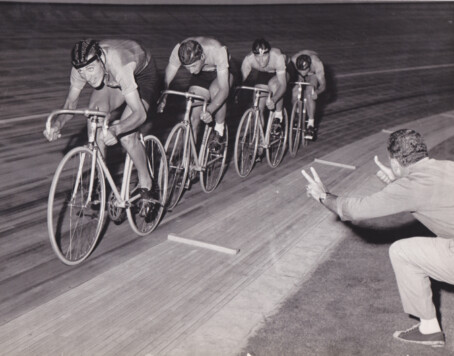
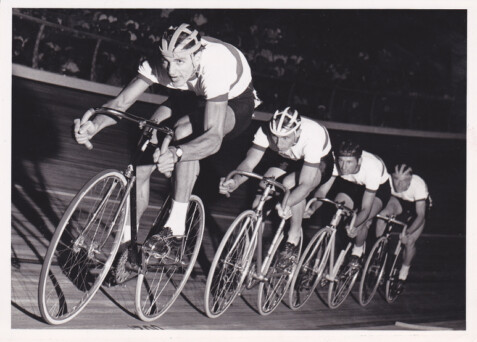
il quartetto italiano medaglia d'oro
il quartetto tedesco medaglia d'argento
The tournament proved to be very exciting right from the eight single-elimination matches. At the end of the qualifying rounds, the fastest times were posted by the Italians (Franco Testa, Luigi Arienti, Marino Vigna, Mario Vallotto), the French, and the Dutch. In the quarterfinals, the Italians easily defeated the Argentines; the French did the same against the Czechs; and the Germans eliminated the Danes. The final quarterfinal between the USSR and the Netherlands was a hard-fought race that was decided by a matter of hundredths of a second in favor of the Soviets. The semifinals and finals took place on the evening of September 29. The first semifinal, France versus Germany, saw the Germans overwhelm the French, who, despite getting off to a good start, faltered around the tenth lap. In the other semifinal, Italy faced the USSR. Until the fifth lap, the two teams maintained the same pace, but then the Italians decided to accelerate, and from that moment on, it was all downhill for the Soviets; they were left behind by more than 4 seconds at the finish, while the Azzurri secured their spot in the final with a new Olympic record: 4'28"8. In the final against Germany, the Italians employed the same tactic they had used in the semifinal: controlling the pace in the first half and breaking away in the second. Thus, the Germans, too, were forced to concede defeat, and Italy claimed its fourth gold medal, giving the general impression that in this discipline there was very little that could be done to stem the overwhelming dominance of the host nation.
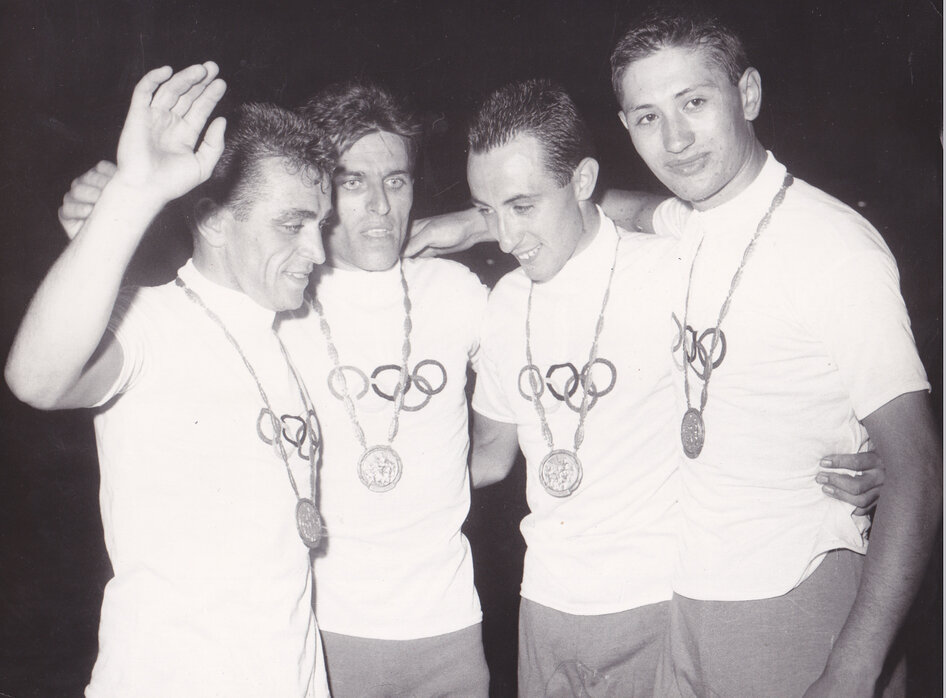
Marino Vigna. Luigi Arienti. Franco Testa e Mario Vallotto con la medaglia d'oro
Torna ai contenuti